
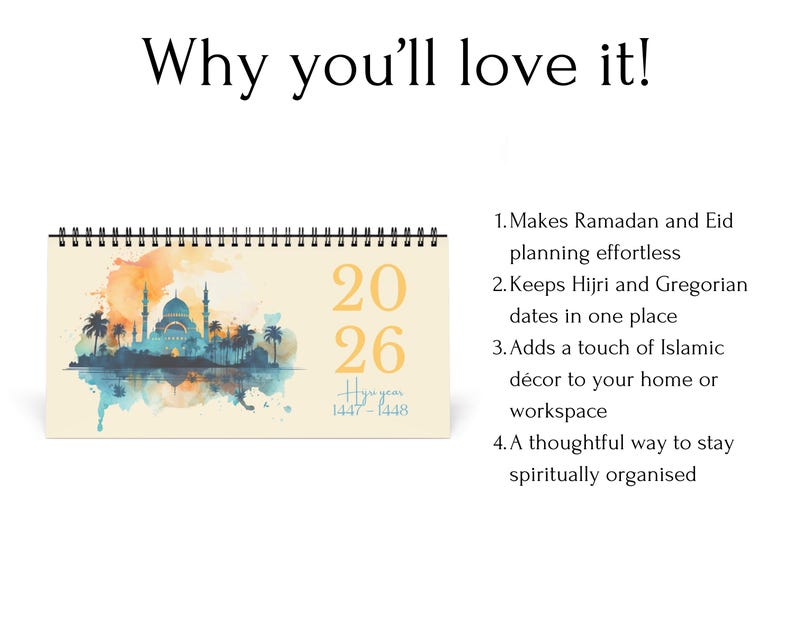
2026 Hijri Calendar: Major Islamic Festivals, Ramadan & Eid Dates -The Islamic Calendar 2026, also known as the Hijri Calendar, plays a central role in the spiritual, religious, and cultural life of Muslims around the world. Unlike the Gregorian calendar, the Islamic calendar is purely lunar, consisting of 12 lunar months based on the sighting of the moon. As a result, Islamic dates move approximately 10–11 days earlier each year in the Gregorian calendar.
This detailed guide presents the Islamic calendar for 2026 in English (Gregorian) format, covering:
-
Major Islamic festivals and holy days
-
Important Islamic nights (Laylat)
-
Hijri months and their significance
-
Month-wise breakdown from January to December 2026
Important note: Islamic dates are approximate and may vary by country depending on moon sighting.
Understanding the Islamic (Hijri) Calendar
The Islamic calendar begins with the Hijrah (migration) of Prophet Muhammad from Makkah to Madinah in 622 CE. It consists of 12 lunar months, each lasting 29 or 30 days.
The four most sacred months in Islam are:
-
Muharram
-
Rajab
-
Dhul Qa’dah
-
Dhul Hijjah
Islamic worship such as Ramadan fasting, Hajj pilgrimage, and Eid celebrations are all determined by this lunar system.
January 2026 – Sacred Beginnings
January 2026 falls during the early part of the Islamic year.
| Date (Approx.) | Islamic Observance | Significance |
|---|---|---|
| January 1–2 | 12–13 Rajab 1447 AH | Sacred month |
| January 13 | Isra and Mi’raj | Night Journey of the Prophet |
| January 30 | Beginning of Sha’ban | Preparation for Ramadan |
Isra and Mi’raj commemorates the miraculous night journey of Prophet Muhammad from Makkah to Jerusalem and his ascension to the heavens.
February 2026 – Spiritual Preparation
February is a spiritually preparatory month before Ramadan.
| Date (Approx.) | Observance | Significance |
|---|---|---|
| February 13 | Mid-Sha’ban (Shab-e-Barat) | Night of forgiveness |
| Late February | End of Sha’ban | Preparation for fasting |
Shab-e-Barat is widely observed as a night of prayer, forgiveness, and remembrance of the deceased.
March 2026 – The Holy Month of Ramadan
Ramadan is the most sacred month in Islam.
| Date (Approx.) | Observance | Significance |
|---|---|---|
| March 1 | First day of Ramadan | Start of fasting |
| March 26 | Laylat al-Qadr (Night of Power) | Revelation of the Quran |
During Ramadan, Muslims fast from dawn to sunset, engage in prayer, charity, and Quran recitation.
Laylat al-Qadr is believed to be better than a thousand months and falls during the last ten nights of Ramadan.
April 2026 – Eid al-Fitr and Gratitude
April marks the conclusion of Ramadan.
| Date (Approx.) | Islamic Holiday | Significance |
|---|---|---|
| April 1 | Eid al-Fitr | End of Ramadan |
| April 2–3 | Eid celebrations | Charity and community |
Eid al-Fitr is a joyous festival marked by special prayers, charity (Zakat al-Fitr), family gatherings, and gratitude.
May 2026 – New Hijri Month and Reflection
| Date (Approx.) | Observance | Significance |
|---|---|---|
| May 1 | Beginning of Shawwal | Continuation of Eid spirit |
| Mid-May | Fasting of six days of Shawwal | Spiritual reward |
Fasting six days in Shawwal is considered equivalent to fasting the entire year when combined with Ramadan.
June 2026 – Sacred Months Begin
| Date (Approx.) | Observance | Significance |
|---|---|---|
| June 9 | Beginning of Dhul Qa’dah | Sacred month |
| June 19 | Start of Dhul Hijjah | Hajj month |
Dhul Qa’dah is one of the four sacred months in Islam, emphasizing peace and restraint.
July 2026 – Hajj and Eid al-Adha
July is one of the most significant months in the Islamic calendar.
| Date (Approx.) | Islamic Holiday | Significance |
|---|---|---|
| July 6 | Day of Arafah | Peak of Hajj |
| July 7 | Eid al-Adha | Festival of Sacrifice |
| July 8–10 | Days of Tashreeq | Remembrance of Allah |
Eid al-Adha commemorates Prophet Ibrahim’s devotion to Allah and coincides with the annual Hajj pilgrimage in Makkah.
August 2026 – Islamic New Year
| Date (Approx.) | Observance | Significance |
|---|---|---|
| August 6 | Islamic New Year (1 Muharram 1448 AH) | Beginning of new Hijri year |
| August 15 | Ashura | Martyrdom of Imam Hussain |
Ashura is observed through fasting and remembrance, holding deep historical and spiritual meaning.
September 2026 – Reflection and Remembrance
September is marked by reflection on Islamic history and moral values.
| Date (Approx.) | Observance | Significance |
|---|---|---|
| September 3 | End of Muharram | Sacred observance |
| Late September | Safar continues | Patience and endurance |
October 2026 – The Prophet’s Life and Teachings
| Date (Approx.) | Observance | Significance |
|---|---|---|
| October 25 | Mawlid an-Nabi | Birth of Prophet Muhammad |
Mawlid celebrates the Prophet’s life, teachings, and compassion through sermons and prayers.
November 2026 – Gratitude and Balance
November falls in the month of Rabi al-Thani.
| Date (Approx.) | Observance | Significance |
|---|---|---|
| Mid-November | Continued Rabi al-Thani | Learning and spiritual growth |
This period emphasizes balance between worship and daily life.
December 2026 – Closing the Islamic Year Cycle
| Date (Approx.) | Observance | Significance |
|---|---|---|
| December | Jumada al-Awwal | Reflection and patience |
| End of December | Jumada al-Thani | Preparing for sacred months ahead |
Major Islamic Holidays Summary – 2026
-
Isra and Mi’raj – January 13
-
Shab-e-Barat – February 13
-
Ramadan Begins – March 1
-
Laylat al-Qadr – March 26 (approx.)
-
Eid al-Fitr – April 1
-
Day of Arafah – July 6
-
Eid al-Adha – July 7
-
Islamic New Year – August 6
-
Ashura – August 15
-
Mawlid an-Nabi – October 25
Living by the Islamic Calendar
The Islamic Calendar 2026 offers a spiritual rhythm centered on devotion, discipline, charity, and remembrance of Allah. Each month invites Muslims to reflect on faith, history, and moral responsibility while strengthening community bonds.
By understanding the Hijri calendar alongside the Gregorian system, Muslims and non-Muslims alike can better appreciate the depth and beauty of Islamic traditions.
Types of Rocks and Their Formation: Igneous, Sedimentary, Metamorphic | Maya
Wonderful blog! I found it while searching on Yahoo News.
Do you have any tips on how to get listed in Yahoo News?
I’ve been trying for a while but I never seem to get there!
Cheers