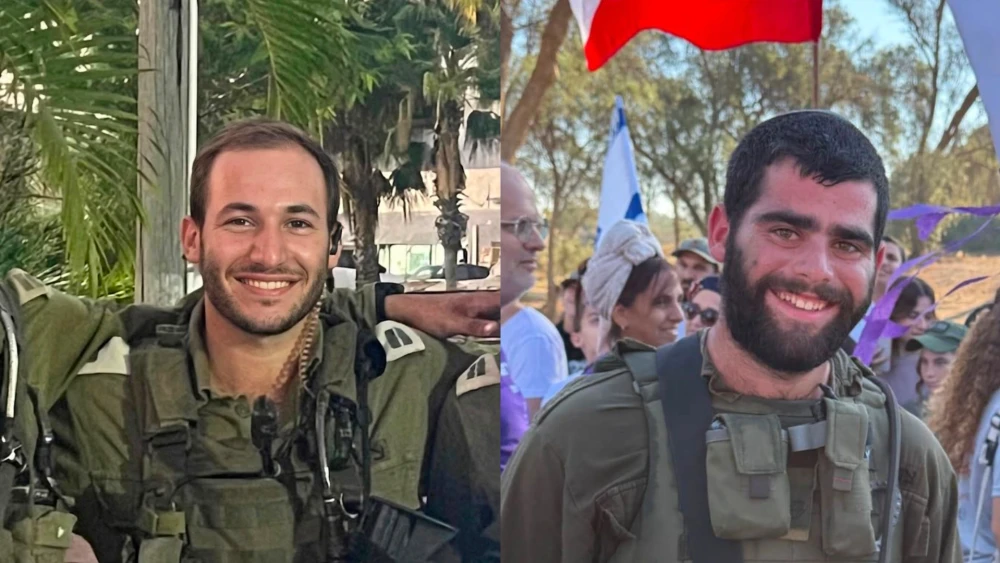
Two Israeli Soldiers Killed in Southern Lebanon, Marking First Fatalities Since June Hezbollah Truce- The fragile ceasefire between Israel and Hezbollah has suffered a major setback after two Israeli soldiers were killed in southern Lebanon, marking the first Israeli military fatalities since the June 26 truce aimed at ending months of cross-border fighting.
The incident has raised fresh concerns over the stability of the ceasefire, which was brokered amid intense international diplomatic efforts to prevent the conflict from escalating into a wider regional war.
Explosion Kills Two Israeli Soldiers
The Israel Defense Forces (IDF) confirmed on Thursday that two soldiers were killed and four others seriously wounded after an explosion occurred during an operation in the southern Lebanese village of Majdal Zoun.
According to an Israeli military official speaking on condition of anonymity, the soldiers entered a site in the village when an explosive device detonated. Military investigators are still examining the exact nature of the blast and whether it involved a pre-planted explosive or another type of munition.
Israeli media had reported the deaths a day earlier before the military officially confirmed them.
The fatalities represent the first Israeli military deaths since the June ceasefire agreement between Israel and Hezbollah, underscoring how fragile the truce remains despite weeks of relative calm.
Israeli Military Responds With Airstrikes
Following the deadly explosion, the Israeli military launched a series of airstrikes across southern Lebanon, accusing Hezbollah of violating the ceasefire agreement.
The IDF also issued an evacuation warning for residents of the village of Mansouri, urging civilians to leave the area ahead of military operations. It was the first evacuation warning issued by Israel in Lebanon in several weeks, signaling a significant escalation in military activity.
Israeli officials argued that Hezbollah’s continued military presence and activities in southern Lebanon violated the terms of the June agreement.
Hezbollah Remains Silent
As of Thursday, Hezbollah had not issued an official statement regarding either the explosion or Israel’s accusations.
The Iran-backed group has largely maintained a lower public profile since agreeing to the June ceasefire, although both sides have repeatedly accused each other of violating its terms.
The absence of an immediate response has left uncertainty over whether the explosion was the result of a deliberate attack, an old explosive device left behind during previous fighting, or another cause.
Diplomatic Talks Disrupted
The military escalation occurred while Lebanese and Israeli negotiators were meeting in Rome to discuss implementation of the June 26 ceasefire agreement.
The negotiations focus on several critical issues, including:
- The withdrawal of Israeli forces from remaining positions in southern Lebanon.
- Deployment of the Lebanese Army throughout the border region.
- The future disarmament of Hezbollah under the terms of the agreement.
- Mechanisms to prevent renewed cross-border hostilities.
According to reports, Wednesday’s discussions ended earlier than planned because of the fighting in southern Lebanon. Negotiators are expected to resume talks Thursday despite the deteriorating security situation.
Diplomats fear that continued violence could derail one of the most significant diplomatic efforts aimed at stabilizing Israel’s northern border since the conflict intensified earlier this year.
Lebanese Casualties Reported
Lebanese authorities also reported casualties resulting from the Israeli response.
According to Lebanon’s Health Ministry:
- One person was killed in an Israeli strike on the town of Tebnine.
- Twelve people were wounded in the same attack.
Lebanon’s state-run National News Agency also reported additional injuries during overnight strikes on Burj al-Shemali, although officials did not immediately release a confirmed casualty figure.
The agency further reported Israeli artillery shelling targeting Mansouri and Majdal Zoun, areas close to the Israeli border that have frequently witnessed clashes during previous rounds of fighting.
A Fragile Ceasefire Under Pressure
The June 26 agreement was intended to halt months of deadly exchanges between Israel and Hezbollah that threatened to trigger another full-scale Lebanon war.
Under the terms of the deal:
- Israeli forces are expected to gradually withdraw from occupied areas in southern Lebanon.
- The Lebanese Army would assume responsibility for security in those regions.
- Hezbollah would begin steps toward reducing and ultimately dismantling its military infrastructure near the Israeli border.
While the agreement significantly reduced large-scale hostilities, both Israel and Hezbollah have repeatedly accused one another of violating various aspects of the ceasefire.
Military analysts have warned that isolated incidents could quickly spiral into broader confrontations if diplomatic channels fail to contain tensions.
Conflict Continues to Exact Heavy Toll
The latest Israel-Hezbollah conflict erupted on March 2, when Hezbollah launched rockets into northern Israel two days after U.S. and Israeli military operations targeting Iran.
Since then, the fighting has inflicted heavy casualties on both sides.
According to available figures:
- More than 4,000 people have been killed in Lebanon by Israeli strikes, including hundreds of civilians.
- On the Israeli side, around 40 soldiers and three civilians, including a military contractor, have been killed during the conflict.
The humanitarian impact has also been severe, with thousands of families displaced from communities along both sides of the border and widespread damage to infrastructure.
What Comes Next?
The deaths of the two Israeli soldiers represent the most serious incident since the June ceasefire and could test whether both sides remain committed to the agreement.
With diplomatic negotiations continuing in Rome and military operations intensifying on the ground, regional observers warn that the coming days will be critical. If investigations conclude the explosion was a deliberate Hezbollah attack, Israel could face pressure to respond more forcefully. Conversely, if the blast resulted from unexploded ordnance or another cause, mediators may still have an opportunity to preserve the ceasefire.
For now, both military developments and diplomatic negotiations will determine whether the June truce survives or whether the Israel-Hezbollah conflict enters another dangerous phase.