
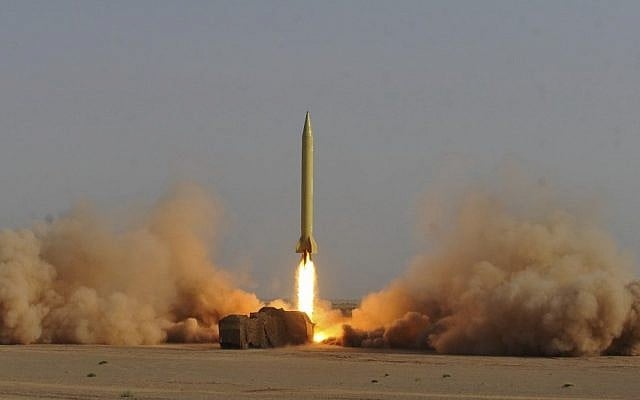
The assessment comes as US President Donald Trump considers his next steps in the conflict. The report also raises the possibility that the timing of further military action could be influenced by domestic political considerations ahead of the November midterm elections.
The central question is whether months of airstrikes have fundamentally dismantled Iran’s military capabilities or merely reduced its capacity to operate while leaving enough infrastructure intact to rebuild its arsenal.
Intelligence Assessment Challenges Washington’s Claims
The reported findings contrast with statements from senior Trump administration officials, who have repeatedly described the US-Israeli campaign as having inflicted extensive damage on Iran’s military infrastructure.
Trump has previously portrayed Iran’s armed forces as effectively destroyed. Defence Secretary Pete Hegseth also said on September 30 that US operations had eliminated Iran’s military-industrial capacity and its broader defence infrastructure.
However, the Western officials cited by Bloomberg offered a more complicated assessment. Their account suggests that, despite the destruction caused by the strikes, Iran retains important elements of its weapons-production network and the ability to replenish at least some of its depleted supplies.
The difference between these assessments highlights the difficulty of determining the long-term impact of an air campaign. Destroying individual missile sites, launch facilities or weapons depots does not necessarily eliminate the factories, technical expertise, equipment and supply networks needed to manufacture replacement weapons.
Military damage and the permanent elimination of a country’s weapons-production capabilities are two different outcomes. The reported intelligence suggests that Iran may have suffered substantial losses without losing its ability to manufacture additional weapons.
Nevertheless, the full extent of the damage remains uncertain. The public has not been given enough independently verifiable information to establish precisely how much of Iran’s production capacity survives or how quickly it could be restored.
Russia’s Alleged Assistance Adds Another Dimension
The Bloomberg report also cited a Western official who claimed that Russia had been supplying missiles to Iran. The assessment was said to be consistent with an earlier intelligence evaluation from June.
Russia’s Defence Ministry did not respond to Bloomberg’s request for comment, and the reported transfers should therefore be treated as an intelligence-based allegation rather than an independently established fact.
If confirmed, such assistance could complicate US efforts to restrict Iran’s ability to replenish its weapons stocks. Access to external supplies could help Tehran maintain certain capabilities while rebuilding domestic production facilities damaged during the strikes.
The reported possibility of Russian support also places the Iran conflict within the wider strategic competition between Moscow and Washington. Russia and Iran have developed closer military and political ties in recent years, although the precise nature and extent of any missile transfers would need further verification.
For Washington, the possibility of external assistance creates an additional challenge. Even extensive attacks on domestic production facilities may not permanently reduce a country’s military capabilities if it can obtain replacement equipment or components from foreign partners.
However, the reported Russian assistance does not establish how many missiles may have been transferred, what types were involved or how significantly such supplies have affected Iran’s operational capabilities.
White House Rejects the Assessment
The White House disputed the reported assessment, defending the results of the American military campaign.
Spokesperson Anna Kelly argued that Trump had destroyed Iran’s nuclear facilities during Operation Midnight Hammer, the operation cited by the administration as a major strike against Tehran’s nuclear infrastructure.
The response reflects Washington’s position that its military operations have significantly weakened Iran’s strategic capabilities. However, the destruction of nuclear facilities and the survival of conventional missile-production infrastructure are separate issues.
A country may suffer serious damage to its nuclear programme while retaining some capacity to manufacture ballistic missiles, drones or anti-ship weapons. Assessing these capabilities requires examining different facilities, production networks and military stockpiles rather than treating them as a single system.
The disagreement therefore concerns more than the scale of damage inflicted. It also concerns whether the campaign has achieved its broader strategic objectives and whether Iran can restore capabilities that the United States intended to eliminate.
The White House’s response and the intelligence assessment present competing accounts, but neither the administration’s public claims nor the anonymous officials’ assessment provides a complete picture of Iran’s remaining military strength.
Why Iran’s Remaining Missile Capacity Matters
Ballistic missiles and drones are important components of Iran’s military strategy. They provide Tehran with options for striking targets at considerable distances and placing pressure on adversaries without relying exclusively on conventional air power.
Anti-ship weapons also have implications for regional maritime security, particularly around strategically important waterways in the Middle East. Any continuing Iranian capability in this area could remain relevant to the security of commercial shipping and regional military operations.
The ability to manufacture replacement weapons is particularly important during a prolonged conflict. Even when airstrikes destroy existing stockpiles, a surviving industrial base can potentially replenish supplies over time.
However, retaining production capacity does not automatically mean Iran can restore its previous military strength quickly. Manufacturing weapons requires functioning facilities, components, trained personnel and reliable supply chains. Continued attacks, sanctions and disruptions could limit the scale or speed of any recovery.
The distinction between possessing some production capability and being able to sustain a large-scale military campaign is therefore essential when interpreting the reported findings.
Will Trump Order Further Military Action?
The report comes as Trump weighs whether to delay additional military operations until after the November midterm elections. The timing could have political implications, but the reported information does not establish that domestic electoral considerations will determine his decision.
Any decision to resume or expand strikes would involve several competing considerations, including military objectives, the remaining capabilities of Iran’s armed forces, the risks of retaliation and the potential consequences for regional stability.
If Iran retains significant weapons stocks and can replenish them, Washington may face a difficult strategic calculation. Further strikes could inflict additional damage, but they might not permanently eliminate the industrial infrastructure required to rebuild those capabilities.
At the same time, continued military action could increase the risk of a wider confrontation and create further uncertainty for regional security and international energy markets.
For now, the key issue is whether the surviving elements of Iran’s military-industrial network are sufficient to sustain its missile and drone programmes despite months of attacks.
In Summary
The reported intelligence assessment challenges the most sweeping claims about the destruction of Iran’s military capabilities. It suggests that Tehran may still possess important missile stocks and retain parts of the infrastructure needed to produce additional weapons.
However, the available information does not establish the full scale of Iran’s remaining arsenal or prove that its military strength has returned to pre-war levels. The White House continues to defend the effectiveness of its operations, while the intelligence claims cited by Bloomberg point to surviving capabilities that may complicate Washington’s objectives.
Ultimately, the question is not simply how much damage the strikes have caused, but whether that damage will prevent Iran from rebuilding its military capabilities over the longer term. The answer will depend on the condition of its surviving production infrastructure, the availability of external assistance and the decisions made by Washington and Tehran in the months ahead.
