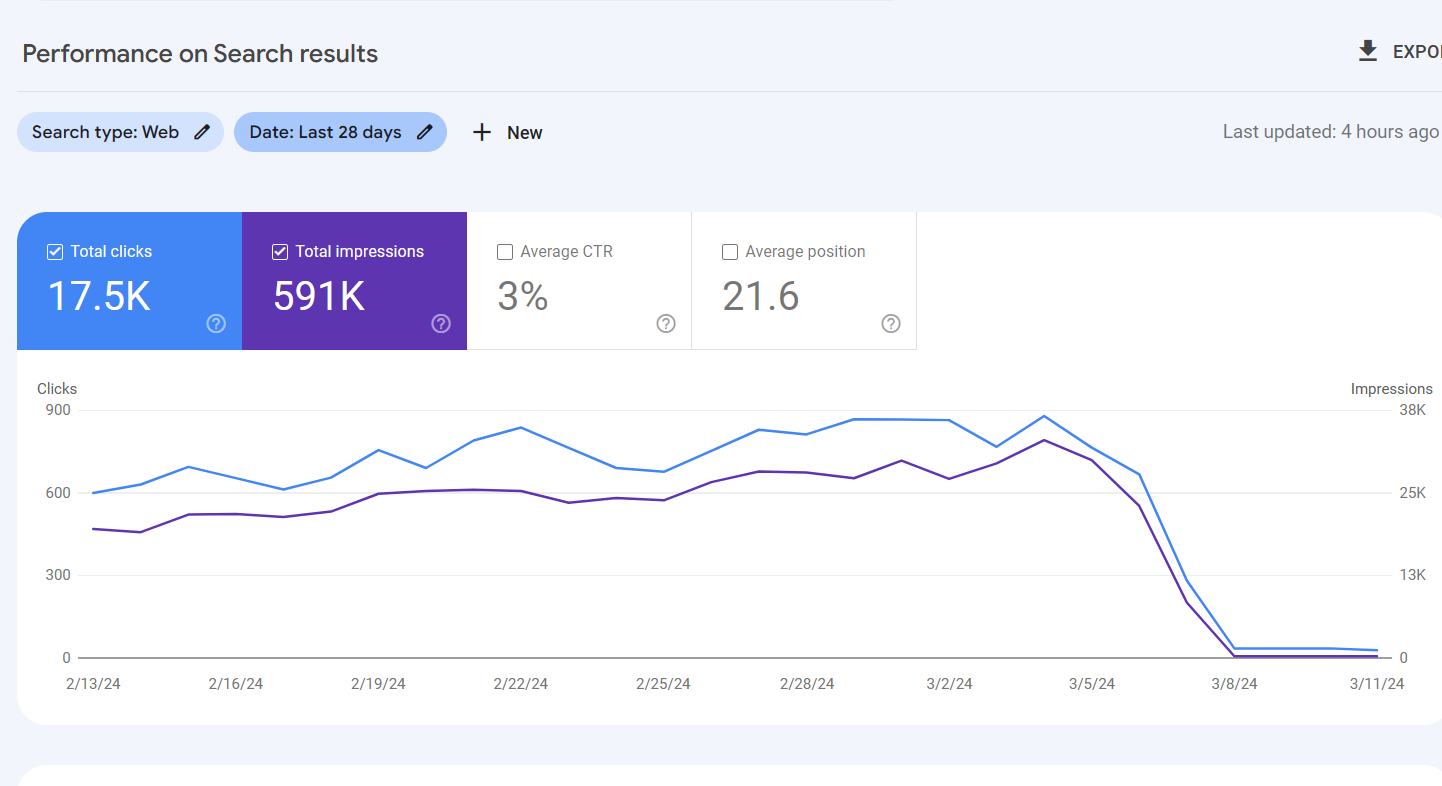
Google’s Search Traffic Decline Raises a Bigger Question: Who Benefits From Publishers’ Content in the AI Era?- For years, Google Search was one of the most dependable ways for publishers and independent writers to reach readers. A well-written article could attract visitors for months or even years, bringing audiences to news websites, blogs and specialist publications. In return, Google gained access to a vast library of information that made its search engine more useful.
According to Chartbeat data cited in Search Engine Journal’s report on the 2026 Publisher Playbook, Google Search referrals across its publisher network fell by 40.2% between July 2025 and July 2026, following a 21.9% decline in the previous year. Google Discover referrals also fell sharply, dropping 34.3% over the latest year.
Over two years, Google Search’s share of publisher pageviews declined from approximately 9% to 5%. Yet the overall volume of pageviews across the network remained relatively resilient, averaging around 31.1 billion per month during the first seven months of 2026.
These figures point to a fundamental change in how people access information online. Readers are not necessarily losing interest in journalism. Instead, they are increasingly encountering information through platforms that may answer their questions without sending them to the websites that produced the original reporting.
AI Answers Are Changing the Economics of the Open Web
Google’s AI Overviews and AI Mode are designed to provide direct answers within the search experience. Rather than simply presenting a list of websites, these features can summarise information, combine facts from multiple sources and help users explore questions through conversational responses.
For users, this can be convenient. For publishers, however, it creates a difficult economic question: if an AI system uses information from an article to answer a question, how many readers will still visit the original page?
A July 2025 Pew Research Center study offered an indication of the problem. Among the Google searches it examined, users clicked a traditional search result in 8% of visits when an AI summary appeared, compared with 15% when it did not. Links within the AI summaries themselves received clicks in approximately 1% of visits.
Google has challenged the study’s methodology and argued that overall organic clicks remain relatively stable and that the clicks websites receive are of higher quality. The debate is therefore not settled, but the findings highlight a genuine concern for publishers: visibility in an AI-generated answer is not the same as receiving a visitor.
When fewer readers reach a website, publishers may lose advertising impressions, subscriptions, registrations and opportunities to build direct relationships with their audiences.
Google Needs Publishers More Than the Traffic Numbers Suggest
There is another side to this story that deserves greater attention. Google is not merely a platform that sends traffic to websites. It is also a company whose search and AI products depend on access to a large and continually updated body of information.
Publishers, journalists, researchers, bloggers and independent writers produce much of that information. They investigate events, interview sources, verify claims, explain complex subjects, publish original analysis and update stories as circumstances change.
This work provides value far beyond an individual website visit. It helps establish the quality and usefulness of the wider information ecosystem from which search engines and AI systems benefit.
Google’s AI products are developed using multiple sources and training methods, and not every publisher article is necessarily used to train a particular model. Nevertheless, publicly accessible web content can play a role in AI development, while search and retrieval systems can use web pages to find information for generated answers. These are distinct processes, and the permissions and technical arrangements governing them can differ.
The broader issue remains: when companies use information created by publishers and writers to improve commercial AI products, what rights, recognition and economic benefits should flow back to those creators?
An article is not simply a collection of words available for a platform to reuse without consequence. It may represent hours of research, professional expertise, editorial oversight, reporting expenses and years of experience. Original journalism can be expensive to produce, even when the finished article is freely accessible.
AI systems can make information easier to find and understand, but they do not eliminate the cost of producing reliable information in the first place.
The Content Is Valuable Even When the Click Disappears
The emerging tension is that a publisher’s work can remain useful to Google even as the publisher receives fewer visitors from Google.
Consider a journalist who investigates a local environmental problem. The reporting requires interviews, document analysis, fact-checking and time in the field. An AI system might subsequently summarise the findings in response to a user’s question.
The user receives an answer. The AI platform gains a more useful response. But the publisher may receive no visit, no advertising revenue and no opportunity to turn that reader into a regular audience member.
The same issue applies to specialist writers, educational websites, independent researchers and bloggers who create detailed explanations that AI systems can summarise.
There is an important distinction between using information to discover a source and reproducing its value in a way that substitutes for visiting that source. Attribution helps, but a citation alone may not compensate a publisher for lost traffic or the costs of original reporting.
This does not mean every AI-generated answer should require payment. It does mean that the industry needs a more transparent and sustainable framework for how valuable content is accessed, reused and commercialised.
Why Publishers and Writers Deserve a Fairer Deal
A sustainable relationship between Google and content creators should address several issues.
1. Clear consent and meaningful opt-out controls
Publishers should be able to understand how their content is used for search indexing, AI-generated answers, retrieval and model training. These activities should not be treated as interchangeable. Creators need clear choices about the uses they permit, along with technical controls that work in practice rather than merely existing on paper.
2. Transparent attribution and useful links
When AI answers rely substantially on a publisher’s reporting, the source should be visible and easy to access. Links should provide a realistic opportunity for readers to discover the original article, rather than functioning as obscure references at the bottom of an answer.
3. Fair compensation for valuable content
Where commercial AI products systematically benefit from publishers’ work, licensing agreements, collective bargaining arrangements or other compensation models could help share that value. Not every use will justify the same arrangement, but the terms should be clear and the process should not depend entirely on the bargaining power of the largest media organisations.
4. Better reporting on how content is used
Publishers need meaningful data about how their pages appear in AI search, how often their sources are cited, whether those citations generate visits and how traffic changes when AI features are introduced. Without this information, it is difficult to evaluate whether a new feature provides meaningful value or simply reduces referrals.
5. Protection for independent writers and smaller publishers
Large news organisations may have the resources to negotiate commercial licensing deals. Individual journalists, specialist websites and small publishers often do not. Any framework that recognises content rights should also consider collective licensing and accessible tools that prevent smaller creators from being excluded.
These measures would not require Google to abandon AI innovation. They would help ensure that innovation does not undermine the financial foundations of the information ecosystem on which it depends.
AI Referrals Are Not Replacing Lost Search Traffic
The idea that AI chatbots would quickly become a major alternative source of traffic for publishers has not yet materialised.
In the Chartbeat figures cited in the 2026 reporting, chatbots including ChatGPT, Claude, Perplexity, Microsoft Copilot and Gemini collectively accounted for approximately 0.01% of publisher traffic. Their referrals had grown substantially from a very small base, but they remained insignificant compared with traditional search referrals.
This leaves publishers facing an uncomfortable transition. An established source of visitors is shrinking, while the emerging AI platforms are not sending enough traffic to replace it.
The publishers best positioned to withstand this shift are likely to be those with loyal audiences, distinctive reporting, strong newsletters, subscriptions, direct traffic and communities that return regularly. However, building these channels requires investment, and smaller publishers may struggle to make that transition.
The wider risk is that if original reporting becomes less financially viable, fewer organisations may be able to afford the work that produces trustworthy information.
Regulators Are Beginning to Address the Imbalance
Governments and competition authorities are increasingly examining the relationship between dominant technology platforms and content providers.
In December 2025, the European Commission opened formal antitrust proceedings concerning Google’s use of publisher and YouTube content in AI-related services. In June 2026, the UK’s Competition and Markets Authority introduced measures intended to give publishers greater control over the use of their content in Google’s AI search features.
These developments reflect a wider policy question: should dominant search platforms be able to use their position to benefit from third-party content while those content providers have limited control over the resulting loss of traffic or commercial value?
The precise legal obligations and outcomes of these proceedings will depend on their implementation. Nevertheless, the direction of the debate is clear. Content access, attribution, consent and compensation are becoming central issues in the future of AI search.
The Future Should Not Be a Choice Between AI and Publishers
Google has legitimate reasons to develop AI-powered search. Users want faster answers, better explanations and tools that can help them navigate increasingly complex information. Publishers also benefit when technology helps readers discover useful work.
But the relationship becomes unbalanced if platforms capture more of the value of published information while the organisations and individuals producing that information receive fewer visitors and less revenue.
The long-term success of AI depends not only on better models, faster computing or more sophisticated search interfaces. It also depends on the continued availability of fresh, accurate and original information.
That information must be researched, written, checked and maintained by people and organisations that need sustainable ways to fund their work.
Google’s challenge, therefore, is not simply to make AI answers more useful. It is to demonstrate that the evolution of search can also support the people and publishers whose work makes those answers possible.
The central question is no longer just how much traffic Google sends to publishers. It is how much value Google and other AI companies derive from publishers’ work, how much of that value returns to its creators, and whether the arrangement can sustain the production of reliable information over time.
If AI companies want a healthier and more useful web, they need more than access to its content. They need an ecosystem in which creating that content remains worthwhile. Google Chrome Strengthens Security With New Scam Detection and Enhanced Protection Features | Maya