
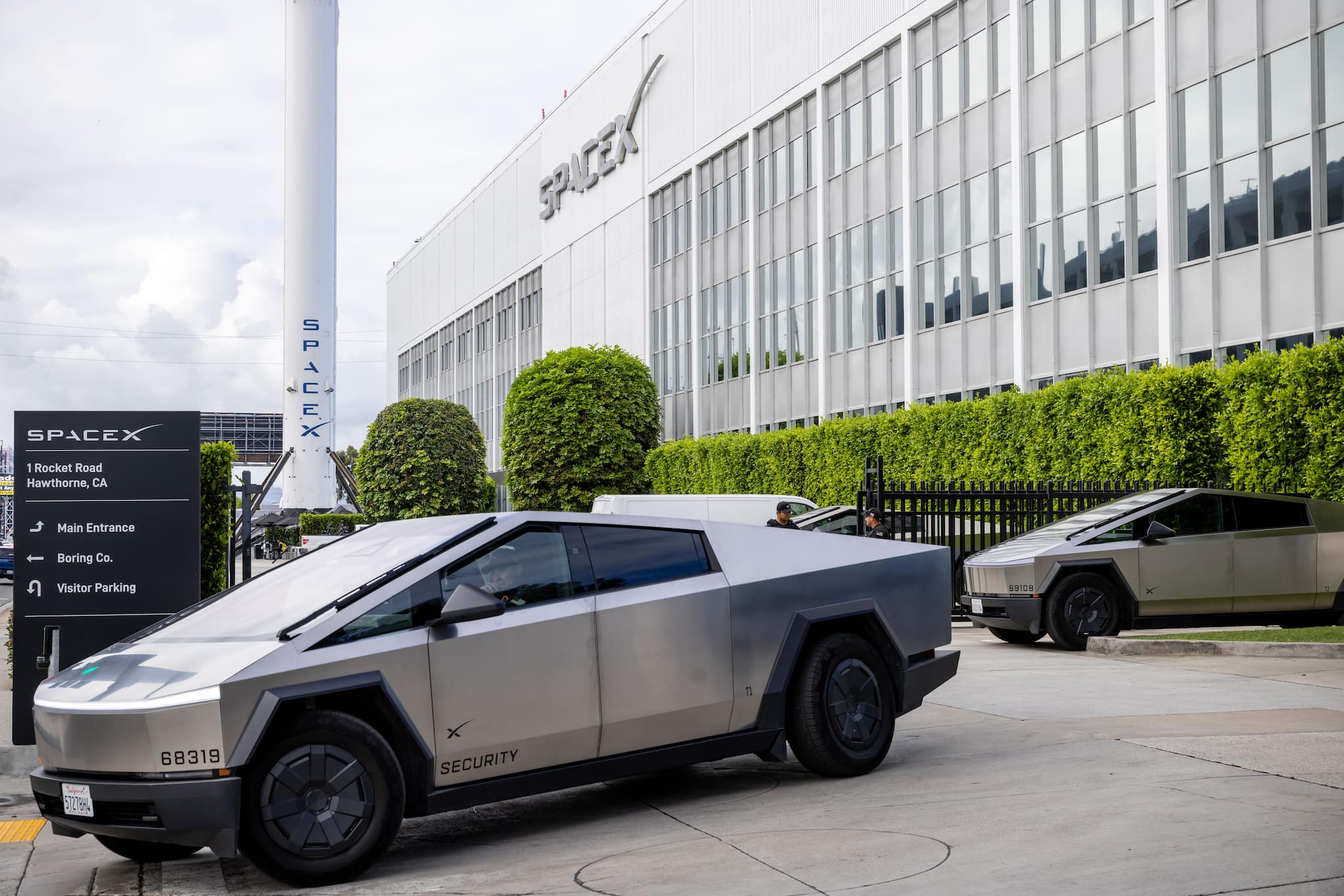
Elon Musk to Discontinue Tesla Cybertruck in 2027, Shifting Factory Space to Cybercab Robotaxis- Tesla CEO Elon Musk is preparing to end production of the controversial Cybertruck next year, bringing an early end to one of the company’s most ambitious electric vehicle projects as the automaker redirects its manufacturing capacity towards autonomous robotaxis.
Musk confirmed the decision in a post on X, saying Tesla would use the factory space currently dedicated to the futuristic electric pickup to manufacture more two-seat Cybercab robotaxis. The move signals another major shift in Tesla’s strategy as it increasingly positions itself as an artificial intelligence and robotics company rather than a traditional electric vehicle manufacturer.
The decision comes after the Cybertruck struggled to achieve the commercial success Musk had predicted. When Tesla began delivering the first vehicles in late 2023, the billionaire CEO projected annual sales of approximately 250,000 units. However, the company has sold only tens of thousands of Cybertrucks over the past three years, falling considerably short of those ambitions.
The pickup was once presented as a cornerstone of Tesla’s future and became closely associated with the company’s manufacturing expansion in Texas. Its eventual discontinuation highlights the gap between Musk’s ambitious promises and the vehicle’s performance in the marketplace.
Tesla Shifts Focus From Electric Trucks to Robotaxis
The Cybertruck production decision reflects Tesla’s growing commitment to autonomous transportation and artificial intelligence.
Over the past two months, the company has been deploying its two-seat Cybercab vehicles on public roads in Austin, Texas. Tesla has reported no major incidents during the initial rollout and plans to expand operations into additional cities.
Dallas is expected to become the next destination, with expansion planned for later this month. Tesla already operates robotaxi services using modified Model Y SUVs in Austin, Houston and Dallas, as well as three cities in Florida.
The Cybercab is designed around Tesla’s vision of a driverless transportation network, allowing passengers to travel without a conventional driver. By reallocating factory space from the Cybertruck programme, Tesla hopes to increase production capacity for vehicles that could eventually form the backbone of its autonomous mobility business.
The move also follows two other major product decisions. Earlier in 2026, Tesla announced plans to discontinue production of the Model S sedan and Model X SUV, intending to repurpose the manufacturing facilities for its Optimus humanoid robots.
Together, the decisions illustrate how Musk is reorganising Tesla’s manufacturing operations around robotics, autonomous driving and AI-related products.
Cybertruck Was Once Musk’s Most Ambitious Vehicle Project
First unveiled in 2019, the Cybertruck was a personal passion project for Musk, who repeatedly described it as a revolutionary alternative to conventional pickup trucks.
During an earnings call that year, he called the pickup his favourite upcoming product and promised that Tesla would build an extraordinary vehicle. Inspired by futuristic science-fiction aesthetics, particularly the visual style of Blade Runner, the truck featured an angular exterior, stainless-steel body panels and an unconventional design unlike anything offered by traditional automakers.
Tesla’s original promises helped generate enormous interest. During the November 2019 unveiling, Musk suggested the vehicle would start at less than $40,000 and offer a driving range of up to 500 miles.
However, the ambitious specifications proved difficult to deliver.
The Cybertruck suffered repeated delays, partly because of disruptions caused by the Covid-19 pandemic. Its launch was pushed back by approximately two years, and the vehicle finally reached customers in November 2023.
By then, the expected starting price had climbed to approximately $60,000, while the maximum advertised range had fallen by more than 100 miles compared with the original promise.
The first customer deliveries took place during an unusual event in December 2023. Musk presented the vehicle as an almost apocalyptic machine, describing it as the ultimate equipment for a collapsing civilisation.
Despite the dramatic unveiling, the truck entered the market with a considerably higher price and fewer capabilities than originally advertised.
Weak Sales and Controversy Hurt Cybertruck’s Prospects
The Cybertruck’s distinctive appearance initially generated considerable attention, but its unconventional styling also divided potential buyers.
Its high price, production challenges and questions surrounding its practical appeal made it difficult for Tesla to turn early excitement into sustained sales.
The vehicle also became caught up in political controversy after Musk emerged as a major financial supporter of Donald Trump during the 2024 US presidential election campaign.
As Musk became increasingly involved in the Trump administration’s Department of Government Efficiency initiative in 2025, which oversaw significant federal workforce reductions, the Cybertruck became a visible target for protesters opposing his political activities.
The pickup’s unmistakable design made it particularly recognisable, contributing to demonstrations and negative attention surrounding the brand.
These controversies added to the commercial challenges facing a vehicle that was already struggling to meet its original sales ambitions.
Tesla’s Future Increasingly Depends on AI and Robotics
The planned Cybertruck shutdown represents a broader transformation in Tesla’s business strategy.
Rather than concentrating exclusively on expanding its electric vehicle lineup, Musk is increasingly directing the company’s resources towards autonomous driving, robotaxis and humanoid robots.
The Cybercab programme is central to that ambition. Tesla hopes to develop a large autonomous transportation network that could generate revenue through driverless passenger services.
Meanwhile, the Optimus humanoid robot project represents another potential business opportunity, with Tesla seeking to use its manufacturing expertise and AI technology to develop robots capable of performing physical tasks.
However, both ambitions face significant technological and regulatory challenges, particularly around autonomous vehicle safety, commercial deployment and the practical capabilities of humanoid robots.
For Tesla, shifting production capacity towards these projects represents a major strategic gamble.
The Cybertruck was once promoted as a vehicle that could redefine the pickup market. Instead, its disappointing sales have helped accelerate a manufacturing transition towards products that Musk believes will shape the next phase of the company’s growth.
By preparing to discontinue the Cybertruck in 2027, Tesla is effectively closing one of its most high-profile electric vehicle experiments and making a bigger bet on robotaxis and artificial intelligence.


