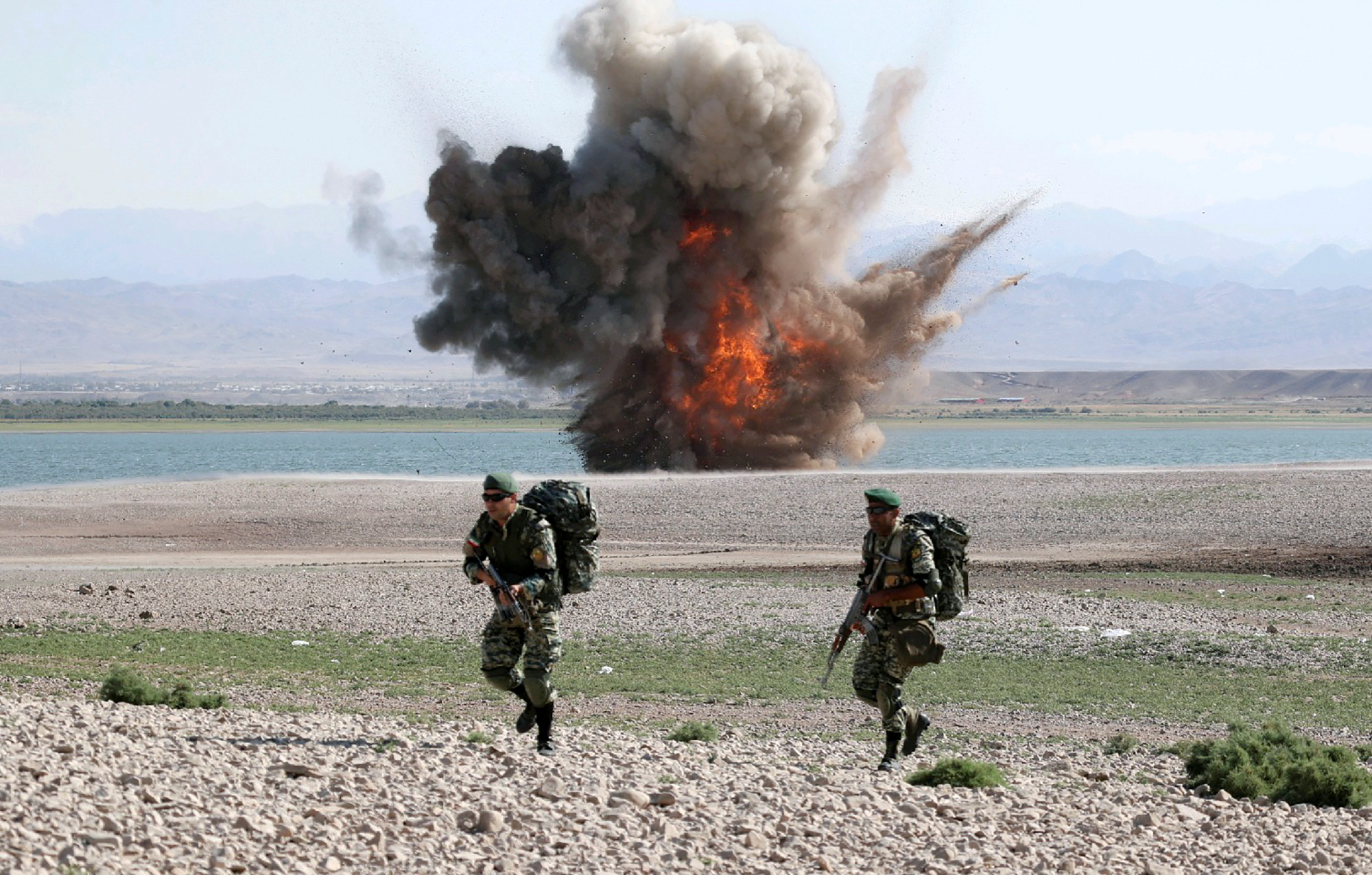
Iran Attacks Kuwait and Bahrain, Escalating Gulf Conflict as Strait of Hormuz Shipping Comes Under Fire KUWAIT CITY/MANAMA, November 18: The conflict between Iran and the United States is spreading across the Persian Gulf, with Tehran launching fresh attacks against Kuwait and Bahrain on Wednesday while continuing to threaten commercial shipping through the strategically important Strait of Hormuz. The latest escalation has raised concerns about a wider regional confrontation, particularly as American military operations against Iranian targets continue and diplomatic efforts to end the conflict struggle to make progress.
Iran’s latest attacks targeted a US military installation in Kuwait and several locations in Bahrain, expanding the geographical reach of the confrontation. The developments came after American forces struck an Iranian missile-launch facility on Qeshm Island near the Strait of Hormuz on Tuesday.
The attacks mark another dangerous phase in a conflict that has already disrupted maritime trade, increased pressure on international energy markets and drawn several Gulf countries into the confrontation.
According to reports, Kuwait’s air defence systems intercepted incoming drones during the early hours of Wednesday. Iran’s military claimed that its forces had targeted American air defence systems, along with drone and missile-launching facilities at Ali Al Salem Air Base, which hosts US military personnel.
Kuwait strongly condemned the attacks, describing them as a violation of its sovereignty and a direct threat to national security. Its Foreign Ministry warned that the repeated assaults represented a serious escalation and reserved the country’s right to defend its territory.
Bahrain also reported intercepting several Iranian aerial attacks. The kingdom’s authorities issued emergency alerts instructing residents to take shelter before subsequently announcing that the immediate threat had passed.
Bahrain hosts the headquarters of the US Navy’s Fifth Fleet, making it a strategically important location for American military operations across the Middle East.
US Strike on Iranian Island Triggers Fresh Retaliation
The latest confrontation followed an American military strike on Qeshm Island, located close to the Strait of Hormuz.
A US military official said American fighter jets struck a missile-launching facility associated with Iran’s Islamic Revolutionary Guard Corps. Washington described the operation as a response to Iranian attacks against American personnel and military assets in the region.
Iranian media reported that several locations were targeted but claimed that critical infrastructure had not suffered significant damage.
The exchange illustrates how attacks against military installations are increasingly triggering retaliatory operations across several countries. Washington and Tehran have repeatedly accused each other of escalating the conflict, while military deployments and air-defence operations continue throughout the Gulf.
Iran has maintained that it will respond to American military action and will not accept restrictions on its ability to defend itself.
The United States, meanwhile, has reinforced its military presence in the region. The arrival of a third American aircraft carrier has added to the growing military concentration, raising concerns about the possibility of further confrontation.
Strait of Hormuz Becomes a Dangerous Maritime Flashpoint
While military installations remain important targets, commercial shipping has emerged as another major front in the conflict.
The Strait of Hormuz, one of the world’s most important maritime energy corridors, has witnessed repeated attacks on commercial vessels attempting to navigate the waterway.
On Tuesday, a Panama-flagged liquefied petroleum gas tanker, Tara Gas, caught fire after being struck in the strait. According to India’s Ministry of External Affairs, 21 crew members were evacuated, two were taken to hospital and one remained unaccounted for.
A separate vessel operated by Abu Dhabi National Oil Company Logistics and Services was also attacked while travelling through the waterway. The incident left 11 crew members injured and another missing, according to the company.
Search-and-rescue operations were continuing in coordination with the relevant authorities.
The incidents have intensified concerns among shipping companies, energy producers and governments that commercial vessels could face increasing risks even when they are not directly involved in military operations.
Iran has claimed responsibility for several attacks on vessels in and around the strait, sometimes arguing that ships were using unauthorised routes or had encountered sea mines. However, attacks on commercial vessels have attracted international condemnation.
The disruption is particularly significant because the Strait of Hormuz normally carries approximately one-fifth of global oil and liquefied natural gas supplies. Prolonged restrictions could therefore affect energy prices, shipping costs and fuel supplies across multiple regions.
Gulf Countries Condemn Tehran’s Latest Attacks
The attacks against Kuwait and Bahrain have drawn criticism from neighbouring countries, increasing diplomatic pressure on Tehran.
The United Arab Emirates, Qatar and Jordan have condemned the latest developments, expressing support for Kuwait and Bahrain and warning against violations of national sovereignty.
Saudi Arabia has also expressed concern about the expanding conflict. The regional response reflects growing fears that the confrontation could extend beyond Iran, Israel and American military installations to involve additional Gulf states.
The situation is particularly sensitive because several countries in the region host American military facilities and play important roles in international energy exports.
Any further attacks could complicate the security calculations of Gulf governments, many of which are attempting to protect their territories while avoiding direct involvement in a prolonged regional war.
Meanwhile, Yemen’s Iran-aligned Houthi movement has added another dimension to the crisis. Saudi-led coalition forces reported intercepting a cruise missile launched towards Riyadh. The development has raised concerns about renewed disruption around the Bab el-Mandeb Strait, another important maritime route connecting international trade between the Red Sea and the Gulf of Aden.
Diplomatic Efforts Continue Despite Military Escalation
Despite the growing confrontation, diplomatic channels have not completely closed.
Qatari and Iranian officials held discussions on Tuesday aimed at narrowing differences between proposals for ending the conflict. Qatar has increasingly positioned itself as a diplomatic intermediary, maintaining communication with multiple parties.
Iranian Foreign Minister Abbas Araghchi also travelled to Oman, where he held discussions with Omani officials concerning regional security, maritime navigation and the future of the Strait of Hormuz.
Oman occupies an important diplomatic position because of its geographical location and longstanding communication channels with both Tehran and Washington.
Iran has reportedly presented conditions for ending the war, including a permanent halt to military operations, the lifting of economic restrictions, the release of frozen Iranian assets and guarantees concerning future American military action.
Tehran has also linked progress towards reopening the Strait of Hormuz to the broader negotiations.
However, the demands of the two sides remain far apart. Washington wants to protect regional security and ensure freedom of navigation, while Iran is seeking guarantees that it will not face renewed military attacks.
The diplomatic situation has become more complicated as military operations continue alongside negotiations.
Trump Faces Growing Political Pressure at Home
The conflict is also creating political difficulties for US President Donald Trump.
The November midterm elections resulted in major losses for Republicans, with Democrats securing majorities in both chambers of Congress. Voter dissatisfaction over the war and its economic consequences has increased pressure on the administration.
Trump appears increasingly interested in bringing the conflict to an end, but the latest attacks demonstrate that the situation remains far from resolved.
The administration faces a difficult choice. Continuing military operations could increase the risks of a wider confrontation, while reducing military pressure without a negotiated settlement could allow Tehran to maintain its leverage over regional security and maritime traffic.
The deployment of additional American military assets suggests that Washington is maintaining its ability to respond to further attacks even as diplomatic discussions continue.
US Secretary of State Marco Rubio has also sought to address security concerns, including reports of a potential Iranian threat against the American capital. He said he did not believe there was an imminent threat to Washington, while Tehran has rejected allegations of plans to attack the United States.
Oil Prices and Global Trade Face Uncertainty
The latest developments have implications far beyond the Middle East.
The Strait of Hormuz is a critical passage for energy exports from Saudi Arabia, Iraq, Kuwait, the UAE and Qatar. Any prolonged disruption could affect international oil and gas markets, particularly in countries heavily dependent on imported energy.
Brent crude was trading at approximately $93 per barrel on Wednesday, according to market reporting. Although prices have experienced fluctuations, the continued military activity and uncertainty surrounding shipping routes remain significant concerns for energy traders.
India, China, Japan and several European economies are particularly exposed to disruptions in Gulf energy supplies.
Higher oil prices could increase transportation and manufacturing costs, contribute to inflation and place additional pressure on household budgets. Shipping companies may also face higher insurance premiums and operational expenses as vessels navigate increasingly dangerous waters.
For India, the situation is particularly important because of its substantial dependence on imported crude oil and its economic and commercial connections with Gulf countries. Any prolonged disruption could affect fuel prices, trade flows and the safety of Indian nationals working across the region.
Gulf Crisis Raises Fears of a Wider War
Three major developments will shape the situation: Washington’s next military decisions, Tehran’s response to continued pressure and the willingness of regional governments to support diplomatic efforts.
If attacks on commercial shipping continue, international pressure on Iran could intensify. At the same time, additional American strikes could encourage further retaliation against military installations and energy infrastructure across the Gulf.
Diplomatic engagement through Qatar and Oman may provide an opportunity to reduce tensions, but a lasting settlement will require agreement on military operations, economic restrictions and the security of maritime routes.
For now, the Strait of Hormuz remains at the centre of the crisis. Its security is not simply a regional concern but an issue with direct consequences for the international economy.
With Kuwait and Bahrain facing fresh attacks, commercial vessels coming under fire and American forces maintaining military pressure on Iran, the confrontation is entering an increasingly unpredictable phase.
The central question is whether Washington and Tehran can find a diplomatic exit before further attacks turn an already damaging conflict into a much wider regional crisis.