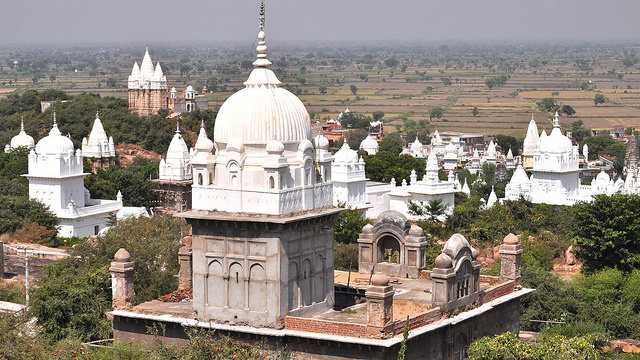
The Sacred Hill with 108 Temples: Why Sonagiri Is a Must-Visit for Every Jain Devotee!
Location and Significance:
Sonagiri, located in the state of Madhya Pradesh, India, is a revered pilgrimage destination, particularly for followers of Jainism. Situated about 30 kilometers from the city of Datia and approximately 120 kilometers from Gwalior, Sonagiri is nestled in the heart of the Indian subcontinent, amidst the beautiful Vindhya hills. It is widely recognized for its cluster of Jain temples, with a total of 108 temples scattered across the hilltop, making it one of the most significant Jain religious centers in India.
The name “Sonagiri” is believed to be derived from “Son” meaning gold and “Giri” meaning hill, alluding to the ancient legend that the hill was once a place of great wealth. The region’s natural beauty combined with its sacred temples draws pilgrims and visitors alike, seeking spiritual solace and tranquility.
The 108 Temples:
Sonagiri is famous for its 108 Jain temples, which are spread over a picturesque hill. The temples are dedicated primarily to Lord Adinatha, the first Tirthankara of Jainism, as well as other Tirthankaras, making it a crucial site for the Jain community. These temples vary in size and design, but they all share an architectural style reflective of traditional Jain craftsmanship, with intricate carvings, marble idols, and serene, peaceful surroundings.
The temples are scattered across a series of hills that can be accessed through a winding path or steps that lead visitors through the spiritual heart of Sonagiri. Pilgrims often embark on a ritualistic climb to the top of the hill, offering prayers and meditations along the way. The sheer number of temples symbolizes the sanctity of the site and is deeply connected to the concept of tirtha in Jainism, which refers to a place of pilgrimage that helps devotees attain spiritual liberation.
Jainism and Sonagiri:
Jainism, an ancient religious tradition that emphasizes non-violence (ahimsa), self-discipline, and spiritual enlightenment, has deep roots in the area. Sonagiri is especially significant to Digambara Jains, a sect that believes in the ascetic lifestyle of renunciation and austerity, where monks and nuns may wear no clothing to symbolize their detachment from material desires. It is said that Bhadrabahu, a revered Jain monk, meditated at Sonagiri, further adding to the spiritual importance of the site.
The temples at Sonagiri are not only architectural marvels but also symbolize Jainism’s spiritual ideals. Visitors often come here for meditation, prayer, and to seek blessings. The peaceful atmosphere of Sonagiri, surrounded by forests and hills, provides a perfect setting for introspection and spiritual growth.
Historical and Mythological Context:
There is a rich mythological history associated with Sonagiri, with tales of kings, sages, and gods. According to Jain beliefs, King Shrenik (also known as Ashok in some sources) played a role in establishing the temples at Sonagiri. Ashok, who ruled over the region in ancient times, is said to have been a great patron of Jainism, and it is believed that he made generous contributions to the construction of many Jain temples. Legend has it that Ashok, upon witnessing the immense beauty and sanctity of the hill, decided to build 108 temples to honor the teachings of Jainism.
In Jain mythology, Ashok is not just a political figure but a symbol of the possible transformation from worldly power to spiritual understanding. His patronage is significant in the religious history of the site, and his association with Sonagiri has further strengthened its place as a key pilgrimage destination for Jains.
Festivals and Pilgrimages:
Sonagiri is a lively site during important Jain festivals, including Mahavir Jayanti (the birth anniversary of Lord Mahavir, the 24th Tirthankara), Paryushana, and Dussehra. During these festivals, the temples come alive with devotees performing rituals, offering prayers, and partaking in fasting. These occasions see thousands of Jain pilgrims arriving from all over India to partake in the festivities, meditation, and prayers.
One of the most prominent aspects of visiting Sonagiri is the pilgrimage experience. Pilgrims undertake the arduous but spiritually enriching journey up the hill, reflecting on the teachings of Jainism, making vows, and offering obeisance to the Tirthankaras. The act of climbing the hill and visiting the temples is seen as a spiritual cleansing journey, and many pilgrims come to seek blessings for peace, prosperity, and liberation (moksha).
The Temple Architecture and Sacred Spaces:
The architecture of Sonagiri’s temples reflects traditional Jain styles, with marble idols, finely detailed carvings, and large courtyards. The main temple at Sonagiri houses a beautiful idol of Lord Adinatha, and the temple is adorned with intricate sculptures that depict various events from Jain history and mythology. Other temples are scattered throughout the hill, and while some are large, others are smaller but equally sacred, providing quiet spaces for meditation and prayer.
The hill itself is sacred in Jain belief. The act of climbing it and visiting the temples represents a spiritual journey toward enlightenment. The panoramic view from the hilltop is awe-inspiring, offering a sense of connection to the earth and the divine.
Summary :
Sonagiri is not only a beautiful pilgrimage site but also a key location for understanding Jainism’s rich history and spiritual teachings. The 108 temples, combined with the legendary connection to Ashok and the deep-rooted traditions of Jainism, make Sonagiri a landmark for followers of the faith and spiritual seekers from all walks of life. Whether it’s the breathtaking views, the historic temples, or the tranquil atmosphere, Sonagiri continues to be an integral part of India’s cultural and religious heritage.