Medieval History: Important Empires, Battles & Developments- The medieval period—roughly spanning from the 5th to the 15th century—was an era of dramatic change across Europe, Asia, and the Middle East. It witnessed the fall of ancient empires, the rise of new political powers, and the spread of religions and ideas across continents. The Middle Ages were far from static; they were a time of innovation, conflict, and cultural flourishing. This article explores the major empires, decisive battles, and key developments that shaped the medieval world.
1. Important Medieval Empires
The Byzantine Empire
After the fall of the Western Roman Empire in 476 CE, the Eastern Roman Empire—known as the Byzantine Empire—continued for nearly another thousand years. Centered in Constantinople, it preserved Roman law, Christian scholarship, and Greek culture.
Key features of Byzantine civilization:
-
Justinian Code: A comprehensive legal system compiled under Emperor Justinian.
-
Architectural achievements: The Hagia Sophia, a masterpiece of engineering and design.
-
Military strength: Use of “Greek fire,” a flame-throwing weapon, gave them naval superiority.
The Byzantines were a bridge between the classical and modern worlds and a buffer against early Islamic expansion into Europe.
The Islamic Caliphates
Beginning in the 7th century, Islamic civilization expanded rapidly, creating one of the most influential empires of the medieval era. Under the Umayyad and Abbasid caliphates, territories stretched from Spain to India.
Cultural and scientific contributions:
-
Advances in algebra, astronomy, medicine, and optics.
-
Translation of Greek and Persian works into Arabic, preserving classical knowledge.
-
Flourishing trade routes linking Asia, Africa, and Europe.
Cities like Baghdad, Córdoba, and Cairo became global centers of learning and culture.
The Carolingian Empire
In Western Europe, Charlemagne (Charles the Great) formed the Carolingian Empire in the 8th and 9th centuries. He supported education, unified several Germanic kingdoms, and strengthened Christianity in Europe.
Notable achievements:
-
Revival of learning known as the Carolingian Renaissance.
-
Standardization of writing through the Carolingian minuscule script.
-
Establishment of feudal bonds that shaped European society for centuries.
The Mongol Empire
One of the most transformative medieval powers, the Mongol Empire rose in the early 13th century under Genghis Khan. It became the largest contiguous land empire in history.
Key characteristics:
-
Superior horseback warfare and innovative communication networks.
-
Protection of trade along the Silk Road, boosting global exchange.
-
Cultural tolerance, allowing diverse religious and ethnic groups to coexist.
The Mongol era linked Asia and Europe more closely than ever before.
The Holy Roman Empire
Emerging in Central Europe in the 10th century, the Holy Roman Empire combined Germanic kingdoms under a ruler crowned by the Pope. Though not a unified nation-state, it played a significant role in European politics.
Key elements:
-
Frequent power struggles between emperors and the papacy.
-
Influence over medieval universities, law, and religious reform.
-
Military cohesion during the Crusades.
2. Significant Medieval Battles
The Battle of Tours (732 CE)
This battle in present-day France saw Frankish leader Charles Martel halt the northward expansion of the Umayyad Caliphate. It became symbolic of the defense of Christian Europe, though its long-term significance is debated.
The Battle of Hastings (1066 CE)
One of the most famous medieval battles, Hastings marked the Norman conquest of England. William the Conqueror defeated King Harold II and introduced Norman culture, architecture, and political structures that reshaped English history.
The Crusades (1096–1291 CE)
Although not a single battle, the Crusades were a series of military campaigns launched by European Christians to reclaim Jerusalem and other holy sites from Muslim control.
Consequences of the Crusades:
-
Increased trade between Europe and the Middle East.
-
Exchange of knowledge, including science, medicine, and mathematics.
-
Strengthening of monarchies as nobles were weakened by overseas warfare.
The Battle of Ain Jalut (1260 CE)
This pivotal conflict saw the Mamluks defeat the Mongols in Palestine, stopping Mongol expansion into Egypt and North Africa. It was the first major Mongol defeat and reshaped Middle Eastern politics.
The Hundred Years’ War Battles (1337–1453 CE)
A long conflict between England and France featured important battles like Agincourt, where English longbowmen devastated French knights. The war concluded with French victory and the rise of national identity in both kingdoms.
3. Major Developments of the Medieval Era
Feudalism and Manorialism
During much of the Middle Ages, European society was organized under feudalism, a system based on land ownership, loyalty, and military service.
Features:
-
Kings granted land to nobles in exchange for service.
-
Peasants and serfs worked the land in return for protection.
-
Manors became self-sufficient economic units.
This system shaped political and economic life for centuries.
The Growth of Cities and Trade
By the High Middle Ages (1000–1300 CE), Europe began shifting from rural to urban life.
Factors contributing to growth:
-
Revival of long-distance trade after the Crusades.
-
Formation of merchant guilds and artisan guilds.
-
Development of banking systems in Italian city-states like Florence and Venice.
Cities became centers of commerce, learning, and cultural exchange.
The Spread of Religions
Religion played a powerful role in shaping medieval societies.
Christianity spread across Europe, supported by monastic institutions and missionary work.
Islam expanded across the Middle East, Africa, and parts of Asia through trade, conquest, and cultural influence.
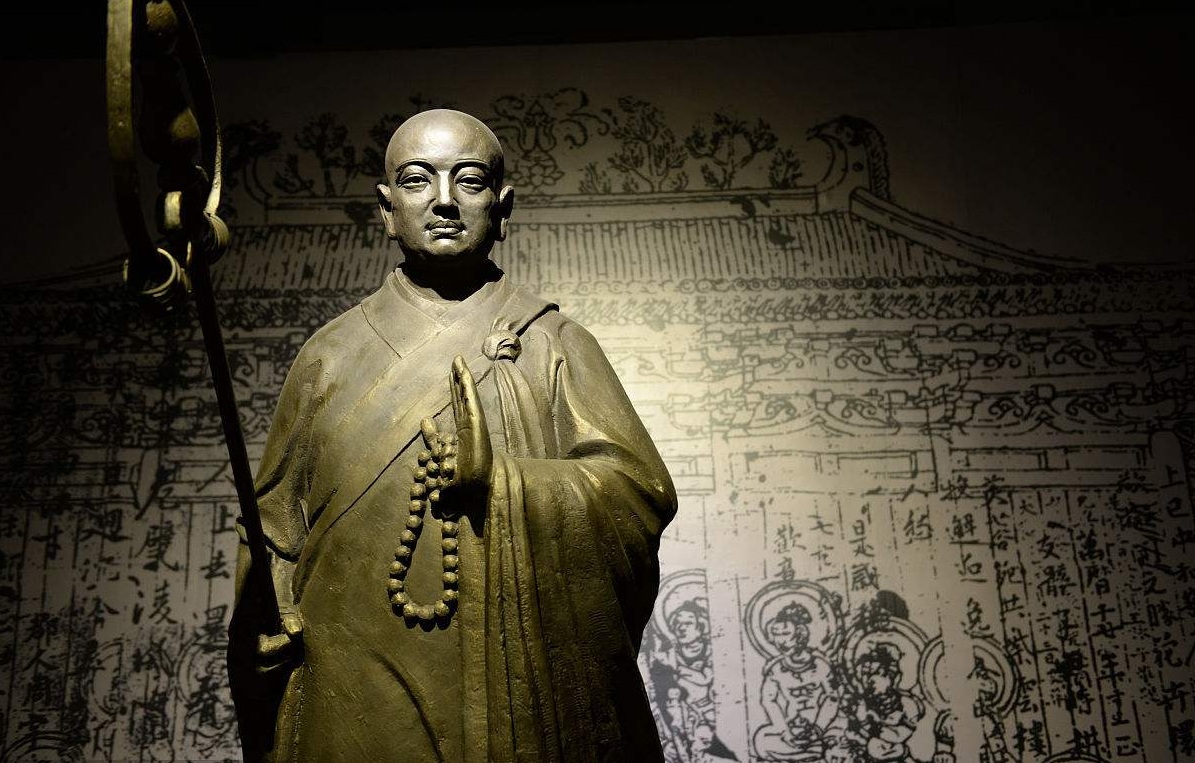
Buddhism thrived in parts of Southeast Asia and East Asia, supported by state patronage and trade routes like the Silk Road.
Religious institutions influenced education, art, politics, and social life.
Intellectual and Cultural Revival
The medieval world saw several important cultural developments:
-
Islamic Golden Age: Scholars preserved ancient texts and made original contributions to mathematics, medicine, and philosophy.
-
Scholasticism in Europe: Thinkers like Thomas Aquinas blended Christian theology with Greek philosophy.
-
Gothic architecture: Cathedrals such as Notre Dame and Chartres showcased innovations like flying buttresses and pointed arches.
-
Medieval literature: Works like Dante’s Divine Comedy and the Epic of Gilgamesh copies spread through manuscripts.
These developments bridged ancient knowledge and Renaissance innovation.
The Black Death (1347–1351)
One of the most devastating events in human history, the Black Death killed millions of people across Europe, Asia, and Africa.
Effects:
-
Severe labor shortages that weakened feudalism.
-
Social and religious upheaval.
-
Expansion of medical curiosity and public health measures.
The plague reshaped European society and accelerated economic change.
Conclusion
Medieval history was a dynamic period marked by rising empires, powerful battles, and transformative developments. From the scholarly brilliance of the Islamic Golden Age to the political complexities of feudal Europe, and from the conquests of the Mongols to the cultural rebirth of the late Middle Ages, the era laid crucial foundations for the modern world. Studying medieval history helps us understand how warfare, trade, religion, and innovation worked together to create the societies we know today.
The Hidden Potential of GLP-1 Drugs You Haven’t Heard About | Maya