When Goddesses Destroy to Restore- The Paradox of Female Power Across Cultures
In mythology, female deities are often simplified—either nurturers, mothers, or symbols of chaos. Yet across cultures, there exists a rare archetype: the goddess who destroys not out of malice, but to restore balance, renew life, or enforce cosmic justice.
These goddesses challenge the human tendency to label destruction as evil. Their stories remind us that sometimes, the world must be broken to be made whole again.
Kali: The Cosmic Dissolver
In Indian Shaiva and Shakta traditions, Kali is one of the most iconic examples.
-
She embodies time, death, and ultimate dissolution.
-
When demons and adharma threaten cosmic balance, Kali steps in with ferocious power.
-
Her dance of destruction is not chaos—it is the clearing away of corruption and stagnation.
The Kali of the Devi Mahatmya and later Shaiva texts illustrates that creation and destruction are inseparable. By dissolving the old and the corrupt, she makes space for regeneration. Her terrifying form is a reminder that fear is sometimes necessary for awakening.
Sekhmet: The Lioness Who Almost Ended Humanity
In Egyptian mythology, Sekhmet, the lion-headed goddess of war and vengeance, nearly destroys humankind.
-
Sent by Ra to punish humans for disobedience, her rage becomes uncontrollable.
-
She slaughters endlessly until Ra intervenes with a clever ploy: he turns the Nile red with beer to resemble blood, tricking her into drinking it and calming her fury.
Sekhmet’s story shows that divine wrath is not mindless cruelty. It is a tool for enforcing cosmic law. Without her decisive action, humanity could continue in imbalance, unchecked by moral consequence.
Pele: Fire and Renewal in Hawaii
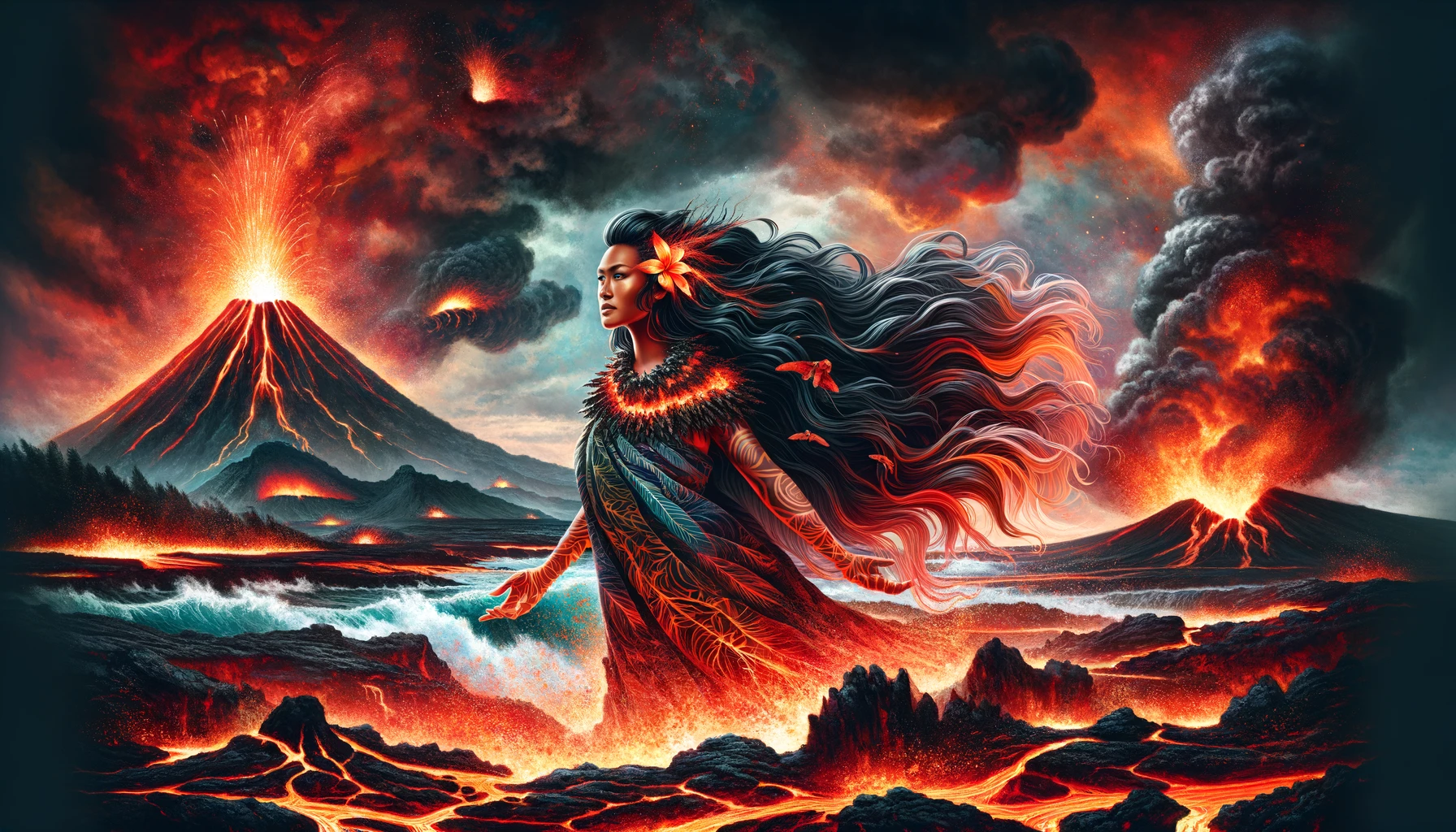
Hawaiian mythology presents Pele, the goddess of volcanoes.
-
She embodies fire, lava, and volcanic creation.
-
Her eruptions destroy forests, villages, and land—but in doing so, she creates new land and fertile soil for future generations.
Pele’s destruction is simultaneously terrifying and generative. She reminds communities that destruction can be life-affirming, and that resistance to change often provokes the very upheaval we fear.
Morrigan: Fate, War, and Transformation in Celtic Mythology
In Celtic myths, Morrigan is a complex figure associated with war, fate, and sovereignty.
-
Often appearing as a crow, she influences battles, sometimes ensuring the fall of heroes or kings.
-
Her interventions may seem violent or cruel, but they preserve cosmic and political balance.
-
Morrigan represents the inevitability of fate: destruction is not personal; it is structural and necessary.
Through her, the Celts acknowledged that loss and change are essential to maintaining harmony, even if the process is frightening or tragic.
Common Threads Across These Goddesses
Across these four mythologies, we can observe key patterns:
-
Destruction as Restoration
-
Their actions eliminate stagnation, corruption, or imbalance.
-
The goal is renewal, not annihilation for its own sake.
-
-
Fear as a Tool for Awareness
-
Their terrifying aspects command attention.
-
They force mortals and gods alike to recognize limits and consequences.
-
-
Creation Linked to Destruction
-
Kali dissolves to regenerate.
-
Pele destroys land to create new soil.
-
Morrigan and Sekhmet enforce fate so society can endure.
-
-
Misunderstood Power
-
These goddesses are often labeled “evil” by simplistic readings.
-
In reality, their wrath is purposeful, ethical, and aligned with cosmic justice.
-
Why This Archetype Matters
These stories challenge assumptions about power, gender, and morality. In human societies, destruction is usually feared or condemned. Yet these goddesses remind us:
-
Sometimes breaking patterns is necessary to create space for growth.
-
Power, when wielded responsibly—even violently—can restore equilibrium.
-
Fear is a catalyst for transformation, not proof of malevolence.
In short, destruction is not inherently immoral; it can be a sacred duty.
Reflection for Modern Readers
In a modern context, these goddesses offer profound lessons:
-
Change can be painful, but pain often precedes renewal.
-
Power must be acknowledged even when it intimidates or unsettles.
-
Misunderstood actions—whether by nature, fate, or authority—may carry hidden wisdom.
Kali, Sekhmet, Pele, and Morrigan teach us that balance sometimes requires force, and that destruction, like creation, is part of the same cycle.
Closing Thought
Female gods who destroy to restore balance are neither evil nor capricious. They are essential agents of transformation, wielding force with precision, purpose, and ethical intent.
When the world feels broken, remember that even divinity sometimes must tear down to let life flow anew.