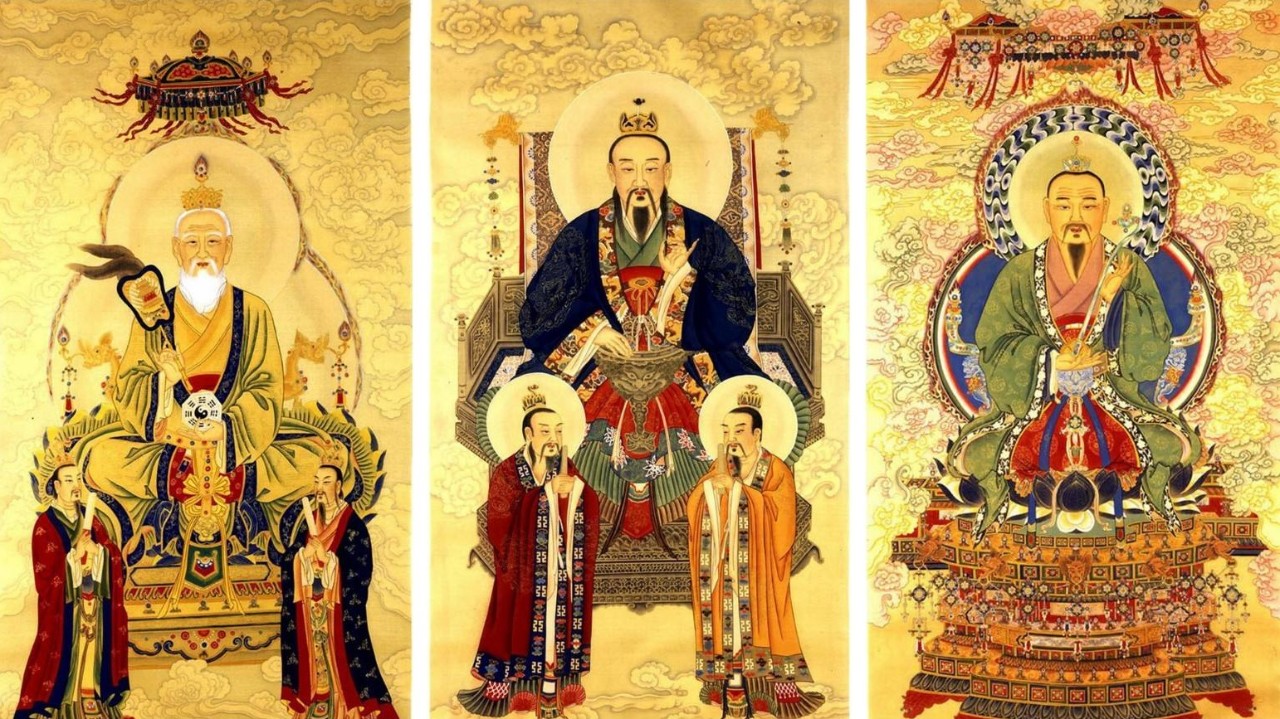
Gods Who Teach Through Silence- In a world overflowing with noise—literally and metaphorically—it can be startling to think that some of the greatest spiritual teachers communicate not with words, but with silence. Across cultures and centuries, numerous spiritual traditions have revered figures who embody this profound truth: wisdom often speaks most clearly when spoken least, or not at all. From the serene stillness of Dakshinamurti in India to the subtle whispers of the Tao in Chinese philosophy, silence itself becomes a sacred language, offering lessons that no words could capture.
Silence as a Spiritual Medium
Most of us are trained to think that teaching requires speech, explanation, or argument. Yet, some spiritual paths suggest the opposite: that truth can be transmitted without utterance, through presence, action, or simply being. Silence is not emptiness; it is a kind of listening, a fertile space where insight can grow. The gods and spiritual figures who teach through silence demonstrate that wisdom is often experiential rather than intellectual. Their lessons invite us to slow down, to pay attention, and to discover meaning in the spaces between words.
Dakshinamurti: The Teacher Who Does Not Speak
In Hindu tradition, Dakshinamurti is the archetype of the silent guru. Often depicted seated under a banyan tree, facing south, he imparts wisdom not through discourse, but through stillness. Devotees are encouraged to meditate upon him, to observe his serene countenance, and to experience understanding arising spontaneously.
Dakshinamurti’s silence is deeply symbolic. In Sanskrit, his name means “the one facing south,” which signifies the direction of death and transformation in Vedic cosmology. By facing the inevitable truths of existence without fear, he teaches that ultimate knowledge is not about accumulating facts—it is about inner realization. The learner is invited into a direct encounter with reality, bypassing the distractions of verbal reasoning. In this way, Dakshinamurti embodies the principle that silence itself can be instructive, carrying messages that words cannot convey.
Tao: The Way That Speaks Through Stillness
Chinese philosophy offers a parallel vision in the figure of the Tao, often described as the ultimate, ineffable principle underlying the universe. Laozi, in the foundational text Tao Te Ching, writes in riddles and paradoxes, intentionally avoiding direct instruction. The Tao teaches by pointing to the natural order, encouraging observation, attunement, and quiet reflection.
The Tao is not a god in the anthropomorphic sense, yet it functions as a spiritual guide whose lessons are inherently silent. Its wisdom is found in flowing rivers, rustling leaves, and the effortless rhythm of the seasons. To follow the Tao is to learn the art of non-action (wu wei), not as passivity, but as a harmonious alignment with life’s natural processes. Here, silence is not only a method of teaching but the very medium through which understanding unfolds.
The Great Spirit: Wisdom in Nature
Across Native American traditions, the Great Spirit embodies a similar ethos of silent instruction. Often conceptualized as an all-encompassing force in nature, the Great Spirit communicates not with human language, but through the environment itself: the whispering wind, the songs of birds, the rustle of leaves in the forest. These natural signs carry guidance for those who are attentive.
In many Indigenous teachings, humans are considered students of the Earth. The Great Spirit teaches by example, showing the cycles of life, death, and renewal, and the interconnectedness of all beings. Observing the patterns of nature, one can glean ethical principles, spiritual insights, and practical wisdom. Here, silence is not merely a pedagogical choice—it is a reflection of the cosmos’ own quiet intelligence.
Buddha: The Noble Silence
Even within the Buddhist tradition, silence holds a central place. Historical accounts suggest that the Buddha often responded to questions not with direct answers, but with silence, gestures, or contemplative pauses. This approach, sometimes called the “noble silence,” is designed to provoke self-inquiry rather than rote learning.
The Buddha recognized that some truths—impermanence, suffering, and the nature of mind—cannot be fully captured by words. Language, after all, is linear and abstract, while reality is fluid and immediate. By remaining silent, the Buddha allowed his disciples to experience the truth directly, to internalize it through meditation, reflection, and mindful observation. In this sense, silence becomes an active, transformative force, encouraging personal insight rather than passive reception of knowledge.
Why Silence Speaks So Loudly
At first glance, the idea that silence can teach may seem paradoxical. How can a lack of words convey meaning? The answer lies in attention. When a teacher remains silent, it forces the learner to engage more deeply, to observe subtle cues, and to enter a state of heightened awareness. Silence creates a space where the mind is free from distraction, allowing understanding to arise naturally rather than being imposed externally.
Psychologically, silence allows for introspection. It is a mirror in which one can see oneself more clearly. Spiritually, it can be a bridge between the finite human mind and the infinite nature of reality. Whether it is the serene gaze of Dakshinamurti, the flowing waters of the Tao, the natural signs of the Great Spirit, or the meditative quiet of the Buddha, silence serves as a conduit for deeper comprehension.
Silence as an Invitation
Another reason these figures employ silence is that it shifts responsibility to the seeker. Words can provide answers, but they can also create dependency. A silent teacher, in contrast, invites the learner to engage, explore, and participate actively in the discovery of truth. The lessons are not handed down—they are uncovered. This makes the learning more profound, more personal, and more enduring.
Silence also teaches patience. In a culture addicted to immediacy, where every question demands an instant answer, the examples of Dakshinamurti, the Tao, and the Buddha remind us that understanding unfolds in its own time. Wisdom cannot be rushed. By sitting with silence, we cultivate stillness, presence, and receptivity—the very qualities that allow insight to blossom.
Modern Implications: Learning from the Silent Masters Today
Even in contemporary life, where distraction is constant and information abundant, the lessons of silent teachers remain relevant. Mindfulness practices, meditation, and contemplative retreats all echo the same principle: that stepping away from chatter—both external and internal—opens the mind to new levels of clarity and understanding.
We can also look to silence as a pedagogical tool in everyday interactions. Listening deeply without interrupting, observing without judgment, and allowing space for reflection are all forms of teaching by silence. In families, workplaces, and friendships, these practices can foster empathy, insight, and meaningful connection.
Conclusion
Gods and spiritual figures who teach through silence challenge our assumptions about communication, authority, and knowledge. Dakshinamurti, the Tao, the Great Spirit, and the Buddha demonstrate that the deepest truths are often found not in elaborate discourse, but in quiet presence. Silence is not absence—it is a language in itself, one that calls us to observe, reflect, and participate in the unfolding of understanding.
To sit with silence is to enter a dialogue with the universe, to tune into rhythms that words can never fully capture, and to discover that wisdom often speaks loudest when it says nothing at all. In learning to listen to silence, we learn to hear not only the world but also ourselves, and perhaps glimpse the eternal stillness at the heart of existence.
Hydrogen, Oxygen, and the Genius Minds Who Found Them | Maya