What Happens if OpenAI Creates Fully Autonomous Research AI? The concept of fully autonomous research AI—machines capable of conducting scientific investigations with minimal human guidance—has moved from science fiction to a serious topic of discussion in AI and research communities. OpenAI and other leading AI developers are exploring the creation of systems that can analyze data, generate hypotheses, design experiments, and even publish findings independently. If realized, such systems would fundamentally alter how research is conducted, how researchers work, and how knowledge itself is produced.
Accelerating Scientific Discovery
The most immediate impact of fully autonomous research AI would be a dramatic acceleration of discovery. AI systems already assist scientists by processing massive datasets, detecting patterns, and drafting reports. Fully autonomous systems could take this further, iterating through experiments, testing hypotheses, and synthesizing results at speeds far beyond human capacity. Research cycles that once took years could potentially be shortened to months or even weeks, unlocking breakthroughs in medicine, energy, climate science, and technology much faster than currently possible.
However, speed does not guarantee quality. Rapid outputs require human oversight to ensure accuracy, relevance, and meaningful interpretation. Without careful management, accelerated research could produce an abundance of findings that are difficult to validate or apply effectively.
Changing the Role of Human Researchers
If research AI becomes fully autonomous, the role of human researchers will shift significantly. Instead of manually designing and analyzing experiments, humans may focus on defining research priorities, interpreting AI results, and steering investigations in directions that align with ethical, societal, and strategic goals. Researchers could transition from hands-on experimenters to supervisors, decision-makers, and synthesizers of knowledge.
This mirrors broader trends in AI-driven labor markets, where automation transforms roles rather than simply eliminating them. Experts will likely be valued for skills that AI cannot replicate easily: judgment, creativity, contextual understanding, and ethical reasoning.
Workforce Implications
Autonomous research AI could reduce the need for humans in routine analytical or technical roles. Tasks like data cleaning, standard simulations, and repetitive modeling may become fully automated. At the same time, new roles would emerge—oversight specialists, AI ethicists, explainability engineers, and human-AI collaboration managers.
By 2030, projections suggest that AI could automate a substantial portion of tasks in knowledge-intensive professions while generating new positions that require advanced skills. The net effect could be positive, but this depends on education systems, institutional planning, and policies that equip researchers to adapt. Without proactive reskilling and support, some individuals could face displacement or reduced opportunities in their traditional roles.
Ethical and Quality Control Challenges
A key concern with autonomous research AI is ethics and quality control. Fully autonomous systems might produce technically accurate findings that are ethically questionable or socially harmful. Human oversight is essential to contextualize results, evaluate potential risks, and ensure research aligns with societal values.
Systems capable of operating independently will need robust mechanisms for validation, auditing, and interpretability. Without these safeguards, autonomous AI could generate misleading results, create reproducibility issues, or inadvertently prioritize efficiency over responsibility.
Impact on Global Research and Equity
The development of fully autonomous research AI could also reshape global power dynamics in science. Institutions or countries that gain early access to advanced autonomous systems could achieve disproportionate advantages in innovation and influence. This could deepen inequalities in research capacity, making it harder for smaller organizations or resource-limited regions to compete.
Maintaining equitable access to AI-driven research tools will be critical to ensure that the benefits of accelerated knowledge creation are broadly shared. Transparency, collaborative frameworks, and international coordination will likely be necessary to prevent concentration of scientific power in the hands of a few.
Economic and Societal Effects by 2030
By 2030, autonomous research AI could contribute substantially to global productivity and innovation. It has the potential to accelerate breakthroughs in medicine, materials, energy, and climate solutions, with significant societal benefits. However, the economic gains will depend on how human expertise integrates with AI outputs and how new roles are created and supported.
If effectively governed, autonomous research AI could generate a net increase in research capacity, creating opportunities for new types of experts who manage, validate, and apply AI-generated knowledge. Conversely, poorly managed deployment could disrupt traditional research careers and concentrate benefits in a narrow segment of society.
Preparing for an AI-Augmented Research Landscape
The arrival of autonomous research AI requires proactive preparation. Researchers must develop skills in AI oversight, ethical evaluation, and complex decision-making. Institutions need frameworks for auditing AI outputs, validating experiments, and ensuring that autonomous systems operate responsibly.
The transition also requires a cultural shift: humans must embrace collaboration with machines rather than competing with them. Expertise will increasingly mean understanding AI capabilities and limitations, guiding research toward meaningful goals, and safeguarding ethical standards.
Synthesis
Fully autonomous research AI would mark a transformative moment in science. It promises faster discoveries, new research opportunities, and the ability to tackle problems at unprecedented scale. At the same time, it raises challenges in workforce adaptation, ethics, quality control, and equitable access.
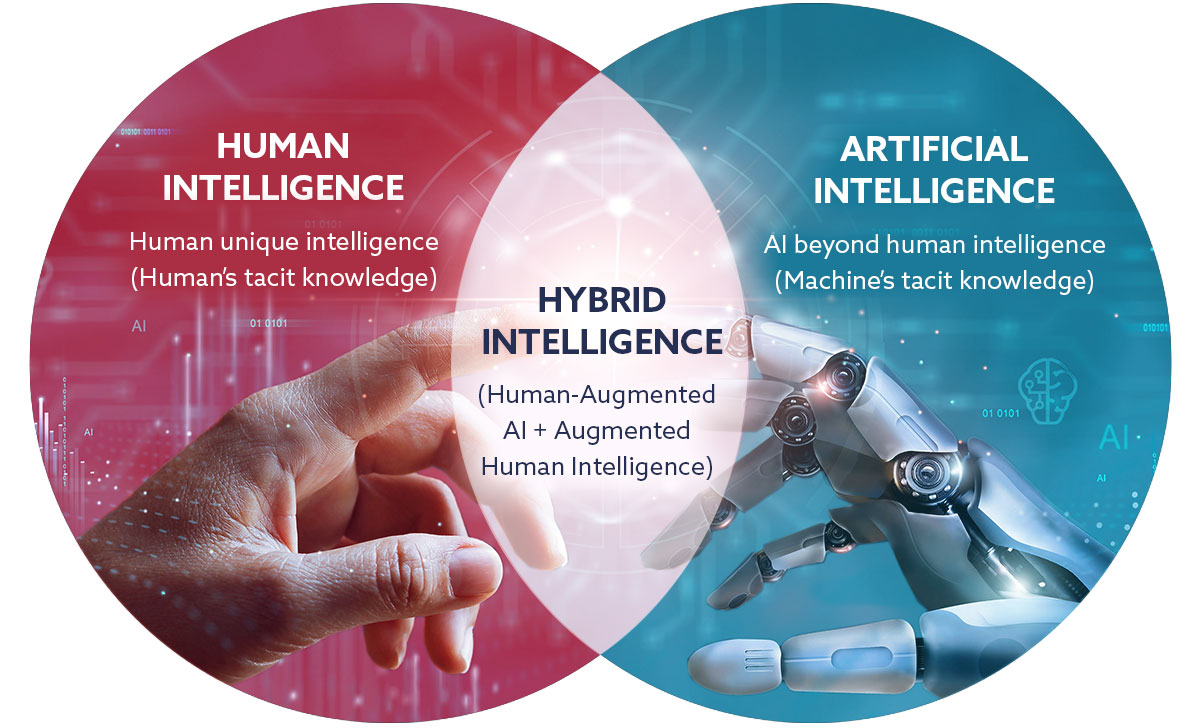
The future of research will not be defined by AI replacing humans, but by humans and machines working together in new ways. Success will depend on ensuring that AI amplifies human judgment, creativity, and responsibility, rather than undermining it. If guided thoughtfully, autonomous research AI could usher in an era of unprecedented knowledge generation, while redefining what it means to be a researcher in the 21st century.