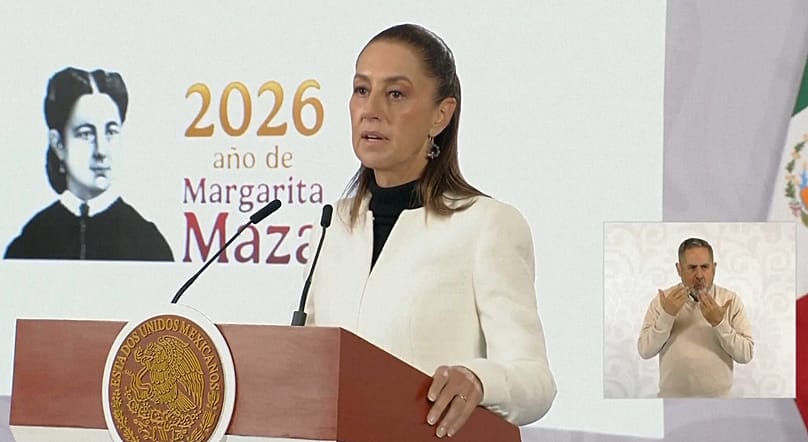
6.5-Magnitude Earthquake Shakes Southern Mexico, Briefly Halts Presidential Briefing – A powerful earthquake rattled southern Mexico early Friday morning, briefly halting a live news conference by President Claudia Sheinbaum and reminding millions of residents of the country’s long history with seismic activity. The tremor, measured at magnitude 6.5, originated off the Pacific coast in the state of Guerrero and was felt across a wide area, including Mexico City and the popular resort city of Acapulco.
President Sheinbaum was in the middle of what was her first news conference of the year when the shaking began. As the room trembled, the country’s earthquake alert system sounded, prompting an immediate pause. The president remained calm, waiting as aides and journalists assessed the situation. Within minutes, it became clear that the quake, while strong, had not caused serious damage, and the briefing was later able to continue.
The epicenter of the earthquake was located near the town of San Marcos, a coastal community in Guerrero not far from Acapulco. Guerrero is one of Mexico’s most seismically active states due to its position along the boundary where the Cocos tectonic plate slides beneath the North American plate. This geological setting makes earthquakes a frequent occurrence in the region, ranging from mild tremors to devastating events.
In Mexico City, hundreds of kilometers from the epicenter, the shaking was strong enough to be clearly felt. Videos shared on social media showed office buildings swaying, light fixtures rocking, and residents standing in open areas after evacuating their homes and workplaces. In Acapulco, cars were seen shaking as the ground moved, and some people ran into the streets as a precaution.
The Mexican Seismic Alert System played a key role during the event. The system, which uses sensors along the Pacific coast to detect earthquakes, is designed to provide residents with precious seconds of warning before shaking reaches major population centers. Sirens sounded in many cities, alerting people to take cover or evacuate buildings. The alert system was created and expanded following the catastrophic 1985 earthquake, which struck Mexico City and killed thousands, leaving a lasting impact on the nation’s approach to disaster preparedness.
Despite the strength of Friday’s quake, authorities reported no deaths, injuries, or major structural damage in the immediate aftermath. Emergency services conducted inspections in affected areas, checking bridges, roads, hospitals, and public buildings for signs of damage. Local officials urged residents to remain cautious, noting that aftershocks are common following earthquakes of this size.
President Sheinbaum later addressed the quake, acknowledging the interruption and thanking emergency responders and citizens for following safety protocols. Her composed reaction during the tremor was widely noted and shared online, with many praising the importance of staying calm and following established procedures during emergencies.
Earthquakes are an ever-present reality in Mexico, particularly along the Pacific coast. Each year, the country experiences thousands of seismic events, most of them too small to be felt. However, larger earthquakes serve as reminders of the importance of preparedness, building standards, and public awareness. Regular earthquake drills, strict construction codes, and public education campaigns have become part of daily life in many parts of the country.
Friday’s quake also highlighted how modern technology and planning can reduce risk. While the alert system does not prevent earthquakes, it can save lives by giving people time to move away from dangerous areas, stop trains, shut down industrial operations, and take cover. Even a warning of a few seconds can make a significant difference.
As daylight spread across Guerrero and neighboring states, daily routines gradually resumed. Schools, businesses, and government offices continued operating while authorities monitored the situation. For many residents, the experience was unsettling but familiar—a brief moment of fear followed by relief that the damage was limited.
While no major destruction was reported, the earthquake served as a clear reminder that Mexico’s seismic risks remain very real. Events like this reinforce the need for continued investment in early warning systems, emergency training, and resilient infrastructure. For now, the country has avoided tragedy, but vigilance remains essential in a land where the ground itself can suddenly come alive.