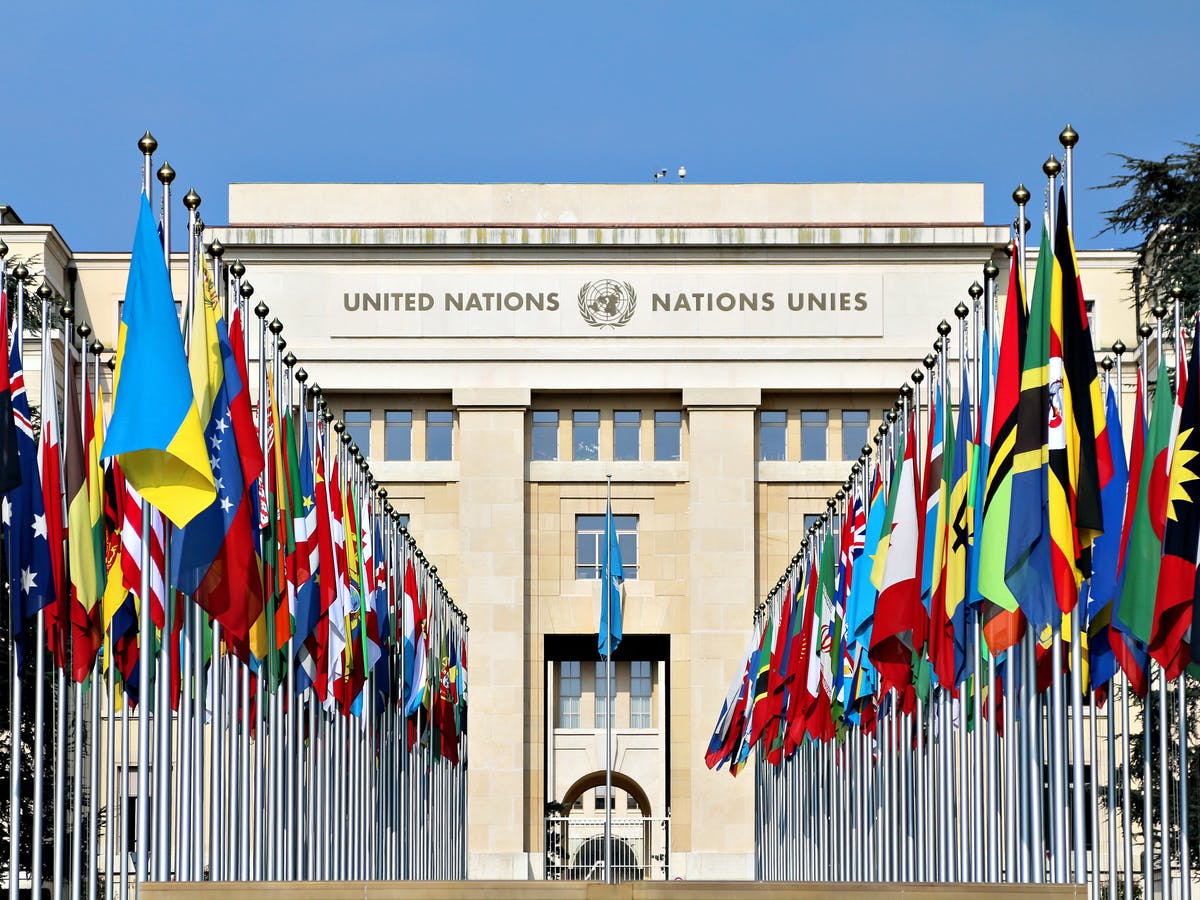
Does the United Nations Protect the Powerful More Than the Weak? Since its creation after World War II, the United Nations (UN) has presented itself as a guardian of peace, international law, and equality among nations. Its founding promise was simple but ambitious: prevent future wars, protect sovereignty, and ensure that no country—large or small—would dominate others through force. Yet decades of conflict, selective enforcement, and political paralysis have led many to question a hard truth: does the United Nations protect the powerful more than the weak?
A History of Selective Action and Inaction
Throughout its history, the UN has repeatedly failed to act decisively in moments where strong nations violated international norms. From wars and invasions to economic sanctions and regime pressure, responses have often depended not on legality or morality, but on who holds power.
One of the UN’s most criticized structures is the Security Council, where five permanent members—the United States, Russia, China, the United Kingdom, and France—hold veto power. This system effectively allows the world’s most powerful states to block action against themselves or their allies. As a result, international law is enforced unevenly: weaker states face condemnation, sanctions, or intervention, while stronger ones often face little more than debate.
This imbalance has fueled the perception that the UN is less an enforcer of justice and more a political stage, where power determines outcomes.
The Russia–Ukraine War: A Clear Example of UN Paralysis
The Russia–Ukraine war has become one of the strongest modern examples of the UN’s limitations. Russia’s invasion of Ukraine was widely condemned in the General Assembly, yet the UN has been unable to stop the war or impose binding consequences. The reason is clear: Russia is a permanent member of the Security Council and can veto any resolution against itself.
It is also important to recognize that Russia is not fighting Ukraine alone. Ukraine has received extensive political, financial, and military support from the European Union and the United States, including ammunition, weapons, intelligence, and training. This has turned the conflict into a proxy war, where global powers influence the battlefield without directly fighting each other.
While this support has helped Ukraine defend its sovereignty, it has also exposed failures in global leadership. Major powers prioritize strategic interests over peace, while the UN stands largely sidelined—issuing statements, coordinating aid, but unable to enforce its own principles. The war highlights how leaders on all sides have contributed to escalation, while civilians bear the consequences.
Venezuela and the Limits of UN Influence
Another example lies in the situation between the United States and Venezuela. Over the years, Venezuela has faced heavy economic sanctions imposed primarily by the U.S. and its allies. UN experts and humanitarian bodies have repeatedly raised concerns that these sanctions worsen living conditions for ordinary citizens, contributing to shortages of food, medicine, and essential services.
Yet despite these warnings, the UN has been largely powerless to challenge or reverse the actions of a major global power. This reinforces the criticism that when powerful countries act unilaterally, the UN can observe and report—but not intervene. For smaller or economically weaker nations, this reality undermines trust in the UN as a fair and protective institution.
Leadership Failures and Moral Inconsistency
Beyond institutional flaws, the crisis of the UN is also a crisis of global leadership. World leaders often use the UN to defend their own narratives while ignoring its principles when inconvenient. Wars are justified in the name of security, sanctions in the name of democracy, and inaction in the name of “complexity.”
This hypocrisy damages the UN’s credibility. When international law is applied selectively, it stops being law and becomes political leverage. Small and developing nations notice this pattern clearly: rules are strict for them, flexible for the powerful.
Is the UN Useless—or Just Limited?
Despite these criticisms, it would be unfair to say the UN has done nothing. It continues to provide humanitarian aid, document war crimes, support refugees, and coordinate global health and development efforts. For many vulnerable populations, UN agencies remain essential.
However, when it comes to preventing wars, holding powerful states accountable, and enforcing international law, the UN has repeatedly fallen short. Its structure reflects a post–World War II power balance that no longer represents today’s world, yet still protects those at the top.
Final Thoughts
The United Nations was built on the idea of equality among nations, but in practice, power often outweighs principle. From Ukraine to Venezuela and beyond, history suggests that the UN struggles to restrain the powerful while the weak suffer the consequences. Wars continue, sanctions persist, and justice remains selective.
The question is no longer whether the UN protects the powerful more than the weak—but whether global leaders are willing to reform a system that benefits them. Until that happens, the UN will remain a symbol of hope on paper, but frustration in reality.
Understanding GLP-1 Weight Loss Medications: Side Effects and Key Facts | Maya