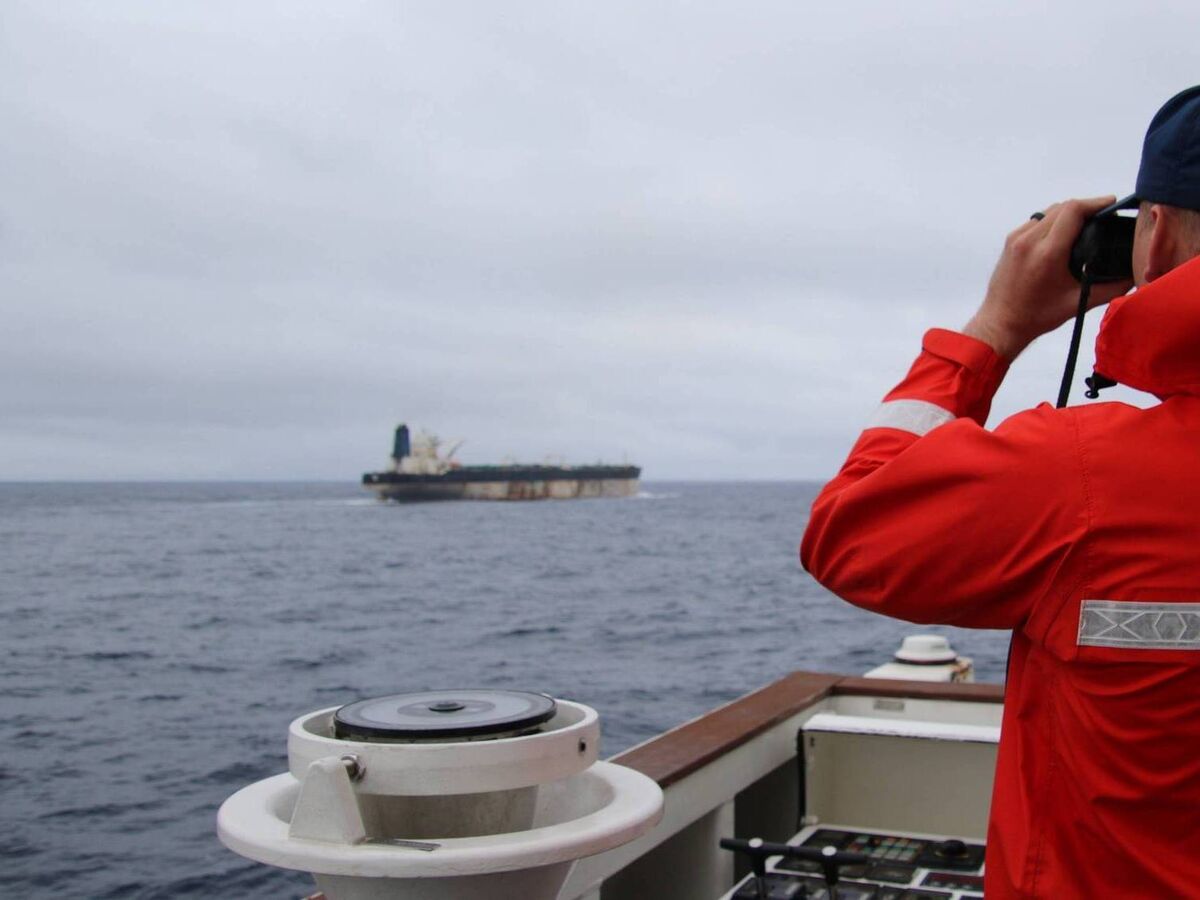
Marinera Seizure: High-Seas Standoff Adds Strain to U.S.-Russia Relations
Washington / North Atlantic, Jan. 7, 2026 — The seizure of a Russian-flagged oil tanker by U.S. forces in the North Atlantic has sparked a tense diplomatic standoff, intensifying already strained relations between Washington and Moscow. The vessel, known as the Marinera (previously the Bella‑1), was boarded by U.S. Coast Guard personnel in international waters between Iceland and the United Kingdom as part of an effort to enforce sanctions on Venezuela-linked oil shipments.
U.S. officials said the operation, coordinated by the Coast Guard and backed by military surveillance, followed weeks of tracking the tanker after it evaded prior enforcement measures in the Caribbean. The Marinera, now registered under the Russian flag, had reportedly attempted to bypass U.S. restrictions on oil shipments from Venezuela by altering its identity and sailing routes.
“This was a law enforcement action conducted in accordance with U.S. legal authority,” said a U.S. official who requested anonymity. “The vessel had been involved in illicit oil transfers that violate sanctions, and the operation was carefully planned to minimize risks to the crew and other vessels in the area.”
Russian Reaction: Piracy Allegations and Legal Protests
Moscow immediately denounced the seizure, calling it a violation of international law and labeling the U.S. action “outright piracy.” Russia’s Transport Ministry emphasized that the ship was operating legally under its flag, citing the 1982 U.N. Convention on the Law of the Sea, which guarantees freedom of navigation on the high seas and prohibits the use of force against vessels registered in another state’s jurisdiction.
Senior Russian lawmakers echoed these accusations. Andrei Klishas, a prominent member of the ruling United Russia party, criticized the U.S. operation as a direct assault on Russian sovereignty and urged Washington to guarantee the “humane and safe return” of the tanker’s crew.
Russia also reported that its naval forces, including a submarine and several surface ships, were monitoring the Marinera during its transatlantic journey, although no confrontations occurred with U.S. forces.
Background: The Vessel and the Venezuela Connection
The Marinera has a history of eluding U.S. maritime enforcement. Previously sailing as the Bella‑1, the tanker successfully bypassed a U.S. blockade in the Caribbean aimed at preventing the export of Venezuelan oil, which Washington has sanctioned as part of its ongoing pressure campaign against President Nicolás Maduro’s government.
Last week, the U.S. carried out a high-profile operation in Venezuela resulting in the capture of Maduro and his wife, who now face charges in the United States. The operation was accompanied by announcements that Venezuelan oil reserves would be brought under U.S. control and transferred to the U.S. market.
Although the Marinera was not carrying oil at the time of its seizure, U.S. authorities believe it was en route to load Venezuelan crude before being intercepted. The vessel is part of a network of ships sometimes referred to as a “shadow fleet,” which attempt to disguise ownership and flag states to avoid sanctions enforcement.
International Law and Geopolitical Stakes
Legal experts are divided over the legality of the boarding. Russia asserts that the U.S. violated UNCLOS protections for high-seas navigation, while U.S. officials contend that vessels engaged in sanctions evasion may be subject to enforcement actions, even if they fly a foreign flag. The situation highlights a gray area in international maritime law where enforcement intersects with geopolitical objectives.
The incident also underscores the fragile state of U.S.-Russia relations. Although ties had shown some improvement under President Trump’s second term, particularly through attempts to negotiate peace in Ukraine, the tanker seizure threatens to reverse any progress. Diplomatic exchanges between Washington and Moscow are expected to intensify in the coming days.
Energy and Strategic Implications
The capture of the Marinera carries broader implications for global energy markets. Venezuela is a major oil exporter, and U.S. control over sanctioned shipments shifts the balance of influence in the Western Hemisphere. By intercepting tankers linked to sanctioned networks, the United States aims to curb revenues for Maduro’s government while securing strategic access to energy supplies.
The operation also demonstrates the logistical reach and capabilities of U.S. maritime enforcement, including coordination with allied surveillance platforms. British aircraft reportedly assisted in tracking the tanker across northern Atlantic waters, further emphasizing the multinational dimension of these enforcement actions.
Looking Ahead
While the Marinera is now in U.S. custody, Russia has vowed to pursue legal remedies and continues to demand the immediate return of its crew. Analysts say the episode could set precedents for future high-seas enforcement operations, particularly where sanctions enforcement intersects with foreign-flagged vessels.
The standoff also serves as a reminder of the risks involved when maritime law, geopolitical strategy, and energy security intersect. As Washington and Moscow engage in diplomatic negotiations, the outcome of the Marinera case could influence international norms governing high-seas enforcement and the treatment of foreign vessels in disputed contexts.
For now, the seizure of the Marinera stands as a high-profile flashpoint — a dramatic illustration of the evolving and often contentious intersection of law, geopolitics, and energy policy on the high seas.
Wave Ripples on Mars Rock Could Rewrite the History of Water on the Red Planet | Maya