
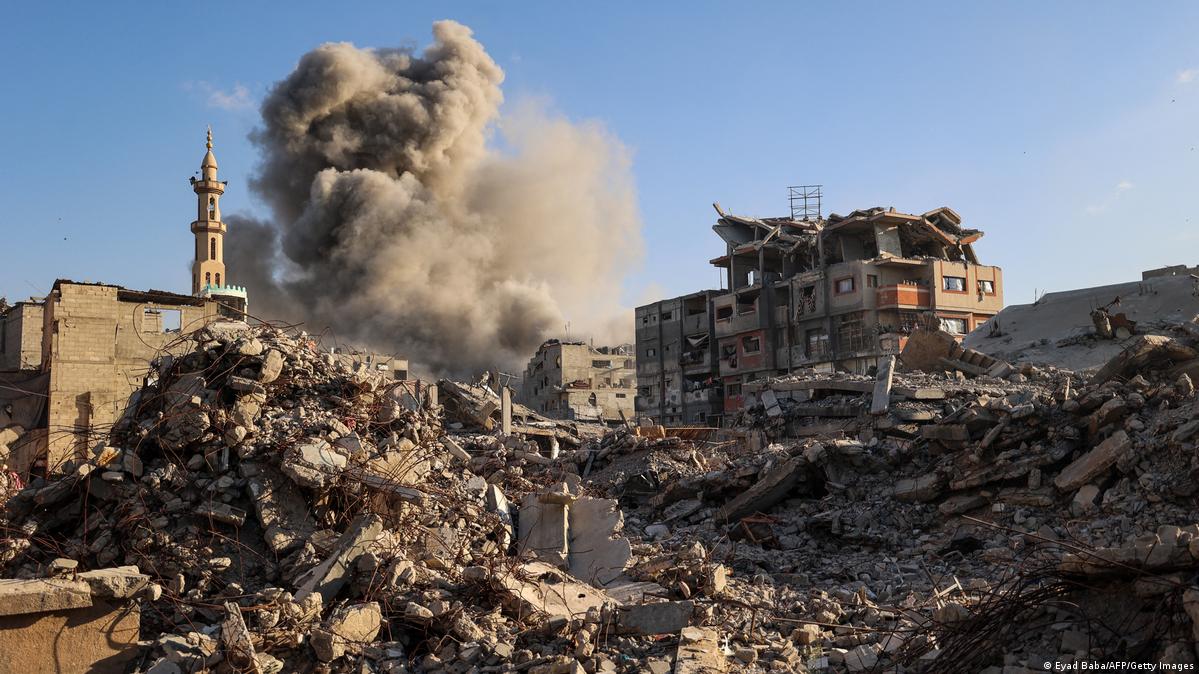
Deadly Gaza Strikes Continue as Second Phase of Ceasefire Announced
Israeli military attacks continued across the Gaza Strip on Friday, killing civilians and wounding others, despite a United States announcement that the second phase of a ceasefire agreement had come into effect. Palestinians on the ground expressed deep scepticism, saying ongoing strikes and mounting casualties contradicted claims that hostilities were easing.
In northern Gaza, a 10-year-old girl was killed after an Israeli drone dropped a bomb near the Abu Tammam school complex in Beit Lahiya, according to medical sources. The child was rushed to al-Shifa Hospital in a civilian vehicle in critical condition but died shortly after arriving. The area around the schools has been sheltering displaced families, many of whom fled earlier bombardments.
Further south, Israeli airstrikes hit residential buildings in the central Gaza city of Deir el-Balah on Thursday evening, killing at least six people, including a 16-year-old, Gaza health officials said. Two homes were struck in separate attacks, leaving families trapped under rubble and neighbours scrambling to rescue survivors using their hands and basic tools.
Raafat Abu Samra, a displaced Palestinian whose family was sheltering in one of the homes, said his teenage daughter was studying in a room when the strike occurred. “We spent more than 15 minutes searching for her,” he said. “Nothing was visible except her legs. We kept digging until we reached her. She was killed.”
Another displaced resident, Ahmed Salman, said he rushed to the scene after hearing the explosion. “A girl was killed, may God have mercy on her,” he said. “The owner of the house, his wife and my uncle’s wife were also killed.” Local residents said several others were injured in the attack, some critically.
Earlier on Friday, the Nasser Medical Complex in Khan Younis reported that an elderly woman was killed and others injured after Israeli fire struck an area west of the city. Hospital officials said the victims were brought in amid ongoing shelling and gunfire in nearby neighbourhoods.
Gaza’s Health Ministry said that at least 14 bodies were received by medical facilities across the Strip over the past 24 hours, reflecting continued violence despite diplomatic statements suggesting a reduction in hostilities. Health officials added that overstretched hospitals are struggling to cope, citing shortages of fuel, medical supplies and staff after months of sustained attacks.
The latest casualties come as Washington announced that the second phase of a ceasefire agreement between Israel and Hamas had begun. The agreement is intended to expand humanitarian access, allow for further prisoner exchanges and move toward a more durable halt in fighting. However, details of the implementation remain unclear, and neither Israeli authorities nor Palestinian armed groups have publicly confirmed that a full ceasefire is being observed on the ground.
Palestinians in Gaza said daily realities sharply contradict official statements. “Where is the ceasefire?” Abu Samra asked. “We are civilians in our homes, and we are dying.”
Humanitarian agencies have repeatedly warned that Gaza remains on the brink of collapse. Much of the territory’s housing has been damaged or destroyed, hundreds of thousands of people remain displaced, and access to clean water, food and healthcare is severely limited. Aid groups say sporadic pauses in fighting have failed to address the scale of the crisis or provide meaningful relief for civilians.
Israeli military officials have not commented on the specific incidents reported on Friday. Israel has maintained that its operations target militant infrastructure and armed groups, accusing Hamas of operating from within civilian areas, a claim Hamas denies.
The renewed violence has raised questions about the durability of the ceasefire process and the prospects for de-escalation. Analysts say that without clear enforcement mechanisms and guarantees on the ground, announcements of new ceasefire phases risk losing credibility among civilians who continue to bear the brunt of the conflict.
As rescue workers searched through debris and hospitals treated the wounded, residents said fear and uncertainty continued to dominate daily life. “We hear about agreements on television,” said one displaced man in Deir el-Balah. “But what we see here is death, every day.”


