Why Barnea’s Meeting with Trump’s Envoy Matters for Iran and Gaza
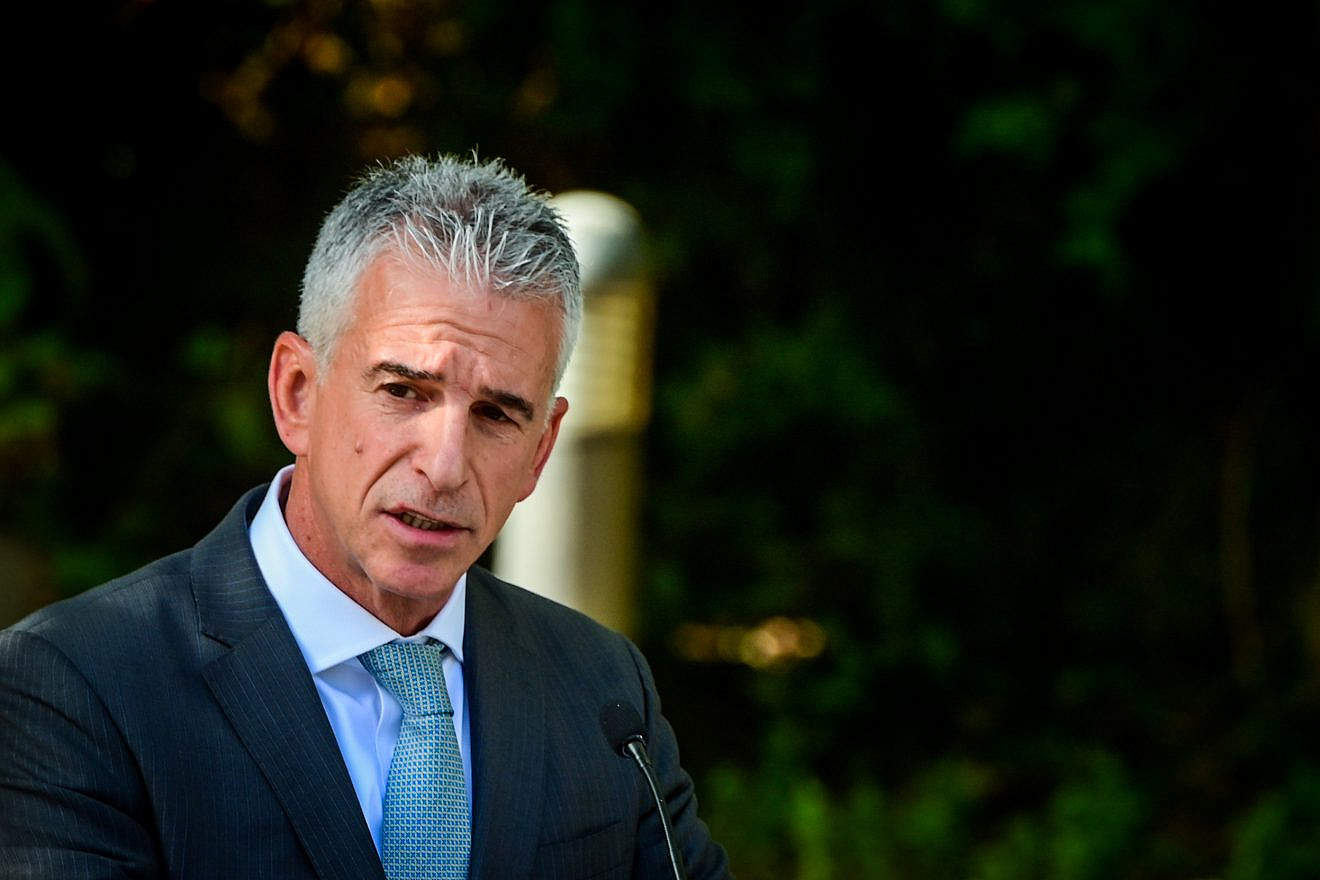
Mossad Director David Barnea’s visit to the United States, and his meeting with U.S. special envoy Steve Witkoff, comes at a moment when several regional fault lines are converging. Iran’s nuclear trajectory, the role of Iranian-backed proxies, and the fragile post-war reality in Gaza are no longer separate issues. They are increasingly part of the same strategic equation, and Barnea’s presence signals how seriously Israel views this moment.
At its core, the meeting reflects growing urgency around Iran. After years of sanctions, covert action, and intermittent diplomacy, Tehran remains closer to nuclear threshold status than Israel or the United States are willing to accept. For Israel, the issue is existential; for Washington, it is strategic but global, tied to nonproliferation norms and regional stability. Barnea’s role is not diplomatic in the classic sense, but intelligence-driven: shaping how the U.S. understands Iran’s real capabilities, intentions, and red lines.
One reason the meeting matters is the evolving U.S. approach under President Trump. Unlike previous administrations that emphasized multilateral frameworks and incremental confidence-building, Trump’s team has leaned toward direct channels, clear ultimatums, and high-pressure bargaining. Witkoff has become the face of this approach, combining diplomacy with the implicit threat of escalation if talks fail. Barnea’s engagement with him suggests Israel wants to influence not just the outcome of any talks with Iran, but the very structure of U.S. decision-making — what Washington is prepared to accept, and what it is not.
From Israel’s perspective, the fear is not only a formal nuclear agreement that leaves Iran with enrichment capacity, but also a de facto situation in which Iran inches forward under the cover of diplomacy. Israeli intelligence has long argued that Tehran excels at buying time, exploiting gaps between political agreements and on-the-ground enforcement. Barnea’s presence allows Israel to press this argument directly, backed by classified assessments that go beyond public statements.
But Iran is only part of the story. The regional dimension — particularly Iranian-backed militias and proxy forces — is just as critical. Tehran’s influence across Lebanon, Syria, Iraq, Yemen, and Gaza gives it leverage even without a nuclear weapon. These networks allow Iran to raise the cost of confrontation for Israel and its allies, opening multiple fronts or threatening escalation at moments of its choosing. Any serious discussion about Iran’s nuclear future inevitably touches on these proxy forces, because they are the mechanism through which Iran translates strategic ambition into daily pressure.
This is where Gaza enters the picture. While Hamas is a Sunni Islamist movement with its own agenda, its ties to Iran are long-standing and resilient. The recent war in Gaza, and the precarious calm that followed, have reinforced concerns in both Jerusalem and Washington that Gaza could again become a trigger for wider regional escalation. If Iran sees advantage in reigniting conflict — directly or indirectly — it has channels to do so.
Barnea’s meeting with Witkoff therefore sits at the intersection of two questions: how to prevent Iran from crossing the nuclear threshold, and how to prevent regional crises like Gaza from spiraling into broader confrontation. These issues cannot be compartmentalized. A miscalculation on Iran could embolden its allies; instability in Gaza could constrain U.S. and Israeli freedom of action on the Iranian file.
Another layer to the talks is coordination — and managing differences — between Israel and the United States. Despite close ties, the two countries do not always see eye to eye on timing, risk tolerance, or the balance between diplomacy and force. Israel tends to operate on shorter timelines, shaped by proximity and vulnerability. The United States, with global commitments, often weighs second- and third-order consequences more heavily. Barnea’s mission is partly about narrowing that gap: ensuring that Israeli threat perceptions are fully understood at the highest levels of U.S. policymaking.
For Trump’s administration, the meeting also carries political significance. Trump has positioned himself as a leader who can deliver decisive outcomes where others stalled — whether through pressure, deal-making, or both. Engagement with Israel’s intelligence chief reinforces the image of toughness on Iran, while also signaling that Washington remains closely aligned with its key regional ally. At the same time, it raises expectations: if diplomacy fails, the administration will be judged on whether it was prepared for what comes next.
The Gaza dimension adds further complexity. The United States has invested diplomatic capital in stabilizing the situation after the fighting, preventing humanitarian collapse, and laying groundwork for longer-term arrangements. Any renewed escalation would undermine these efforts and weaken U.S. credibility in the region. From Israel’s standpoint, preventing Hamas’ rearmament and restoring deterrence are inseparable from the broader struggle against Iranian influence. Barnea’s discussions are likely to emphasize that Gaza is not a standalone theater, but part of Iran’s wider regional posture.
Ultimately, the importance of Barnea’s meeting with Witkoff lies less in any immediate announcement and more in the strategic signaling it represents. It signals to Iran that Israeli-American coordination remains tight. It signals to regional actors that intelligence assessments, not just political narratives, are shaping policy. And it signals that decisions taken in the coming months — on Iran’s nuclear program, on proxy forces, and on Gaza — will be interconnected.
Whether this convergence leads to a renewed diplomatic framework, intensified pressure, or a more confrontational path remains uncertain. What is clear is that Barnea’s presence underscores a shared recognition in Jerusalem and Washington: the margin for error is shrinking. In that sense, the meeting is not just about Iran or Gaza individually, but about managing a region where crises increasingly bleed into one another, and where the cost of misjudgment could be exceptionally high.