
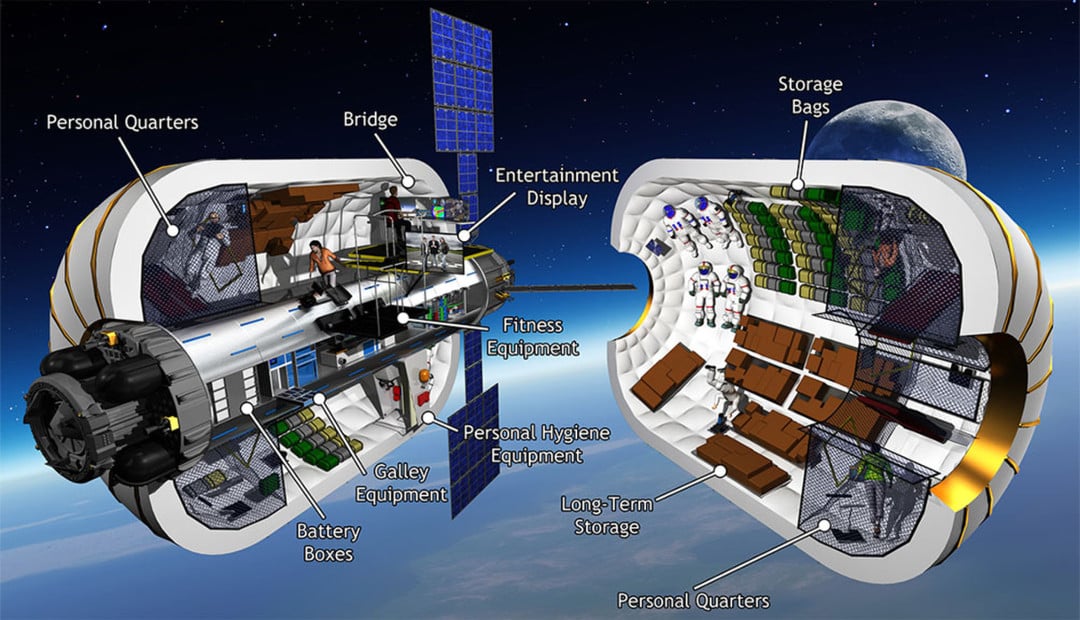
Reusable Space Habitats: The Future of Long-Term Living in Orbit- Space travel has come a long way. Rockets that used to burn up on reentry are now landing vertically. Satellites are being reused. And now, our next frontier isn’t just visiting space—it’s living there for long stretches of time. That’s where reusable space habitats come in, a concept that could completely change life in orbit and make long-term human presence in space practical, affordable, and even comfortable.
But what exactly are reusable space habitats, and why are they important? Let’s explore.
What Are Reusable Space Habitats?
Simply put, a reusable space habitat is a living and working space in orbit that can be used multiple times. Unlike the International Space Station (ISS), which was assembled gradually and relies heavily on resupply missions, these habitats are designed to be modular, durable, and capable of hosting humans for months or even years with minimal intervention from Earth.
Think of them like space hotels or floating research stations, but built with cutting-edge technology that allows them to be refurbished, upgraded, or repositioned as needed.
The goal is simple: reduce cost, increase safety, and make long-term space living sustainable.
Why Reusability Matters
Space is expensive. Sending supplies, building structures, and maintaining life support systems requires enormous budgets. Right now, the ISS costs tens of billions of dollars to operate each year.
Reusable habitats change the economics:
-
Modular upgrades: You don’t need to build a completely new station every decade. Parts can be replaced or upgraded in orbit.
-
Lower launch costs: Using rockets designed to return and relaunch, the cost per kilogram of cargo drops significantly.
-
Long-term experiments: Scientists can conduct research over years without waiting for the next supply mission.
In short, reusability turns orbit from a temporary outpost into a viable long-term home.
What Could These Habitats Look Like?
While prototypes are still in development, several concepts are emerging:
-
Inflatable modules – Companies like Bigelow Aerospace have explored habitats that expand once in orbit. They’re lightweight, durable, and offer more living space than traditional metal modules.
-
Rigid modular stations – Similar to the ISS but designed for easy docking, reconfiguration, and upgrades.
-
Rotating or artificial-gravity habitats – Future habitats may use rotation to simulate gravity, reducing the long-term health effects of microgravity.
Some designers even imagine a hub-and-spoke model, where a central habitat connects to smaller pods for labs, farms, or recreation. Imagine a floating city in orbit!
Living in Orbit: What Would It Be Like?
Life aboard a reusable habitat isn’t just about surviving—it’s about thriving. Think:
-
Autonomous life support – Water recycling, oxygen generation, and waste management systems would allow inhabitants to live months without resupply.
-
Green spaces – Plants for food and mental well-being, similar to how astronauts grow small gardens on the ISS.
-
Artificial gravity zones – Spinning sections of the habitat could simulate gravity for exercise and comfort.
-
Entertainment and social areas – Crew morale is critical. Expect VR spaces, observation decks with stunning Earth views, and shared lounges.
While microgravity will remain a challenge, reusable habitats are designed to make long-term living feasible and less stressful for human physiology.
Q&A: Reusable Space Habitats
Q: Why can’t we just keep using the ISS?
A: The ISS is aging and wasn’t designed for indefinite use. Reusable habitats are cheaper to maintain, can be upgraded easily, and may even allow private companies to operate them, reducing dependence on government budgets.
Q: How will reusability reduce costs?
A: Instead of building a new habitat from scratch for each mission, reusable modules can be refurbished, refueled, and relaunched, spreading the cost over multiple uses. Rockets that land and fly again further reduce launch costs.
Q: Will humans experience health problems in these habitats?
A: Microgravity can affect bones, muscles, and the cardiovascular system. That’s why future habitats may include rotating sections for artificial gravity and dedicated exercise areas. Life support systems also help maintain clean air, water, and temperature control.
Q: Can these habitats support large populations?
A: Initially, habitats may host crews of 4–10 for research or industry. Long-term, modular designs could scale up to support dozens or even hundreds, depending on technology, resupply, and life support innovations.
Q: Could private companies run these habitats?
A: Absolutely. Think of space tourism, manufacturing, or research hubs. Reusable habitats could make commercial orbital living practical, with companies leasing space to researchers, governments, or tourists.
Technology Behind the Reusable Revolution
Several technologies are converging to make reusable habitats feasible:
-
Reusable rockets – SpaceX’s Falcon 9 and Starship, Blue Origin’s New Glenn, and others make frequent launches cheaper.
-
Advanced life support – Closed-loop systems that recycle air, water, and waste reduce resupply needs.
-
Autonomous maintenance – Robots and AI can repair modules, check systems, and even help expand habitats without sending humans on risky spacewalks.
-
Inflatable structures – Expandable habitats offer more living space per kilogram launched.
These technologies together could bring permanent, reusable habitats into orbit within the next decade or two.
The Future: Living in Orbit by 2030
By 2030, we might see a few early-stage reusable habitats in orbit:
-
Research hubs – Hosting experiments for medicine, biology, materials science, and AI in microgravity.
-
Tourist destinations – Private citizens experiencing weightlessness while floating above Earth.
-
Industrial outposts – Factories producing materials or products only possible in microgravity, like advanced pharmaceuticals or fiber optics.
Modular, reusable habitats could eventually evolve into self-sustaining orbital communities, where humans live, work, and even grow food in space without constant supply shipments from Earth.
Challenges Ahead
As exciting as it sounds, reusable habitats face hurdles:
-
Radiation protection – Earth’s magnetic field shields us, but beyond LEO, radiation exposure increases. Habitats may need shielding or underground-like modules.
-
Supply chain logistics – Even reusable habitats will need periodic resupply for food, spare parts, and fuel. Efficient supply strategies are key.
-
Human factors – Long-term isolation, microgravity, and confined spaces can affect mental and physical health. Design must prioritize comfort, privacy, and recreation.
-
Cost and regulation – Governments and private companies will need agreements on orbital real estate, traffic management, and safety standards.
Despite these challenges, the potential rewards are enormous: permanent human presence in orbit, new scientific discoveries, and the foundation for interplanetary colonization.
Why It Matters
Reusable space habitats aren’t just a luxury—they’re a necessity if humans want to live in space for long periods. They:
-
Make orbital living more affordable and sustainable.
-
Enable continuous scientific research in microgravity.
-
Lay the groundwork for Mars missions and beyond.
-
Open the door for commercial space ventures and tourism.
In short, these habitats are the first step toward normalizing human life in orbit, making space more than just a fleeting adventure.
Thinking Bigger
If we look further ahead, reusable habitats could evolve into space cities. Imagine:
-
Linked habitats forming orbiting neighborhoods.
-
Industries operating entirely in microgravity.
-
Families living part of their lives in orbit, commuting via reusable spacecraft.
Science fiction is inching closer to reality. By focusing on reusability, we don’t just cut costs—we make long-term space living achievable, scalable, and even enjoyable.
Final Thoughts
Reusable space habitats represent the next frontier in human spaceflight. They’re not just stations—they’re platforms for life, work, and discovery. By combining modular design, reusable rockets, advanced life support, and smart AI, humans could live in orbit for months, years, or even indefinitely.
The 2030s might see the first wave of orbital residents who experience space as a home rather than a research post. And once that happens, Earth will no longer be the only place humans can truly live.
Space is becoming a place to thrive, not just survive. And reusable habitats are the key.
Dubai-Inspired Chocolates: The Rise of Exotic Flavors | Maya
:max_bytes(150000):strip_icc()/GettyImages-151541875-adcfc13d221e40e4946f571b57180f3d.jpg "How Sputnik 1 Sparked the Space Race")
