Extreme Snowfall Brings Life to a Halt in Russia’s Kamchatka Capital
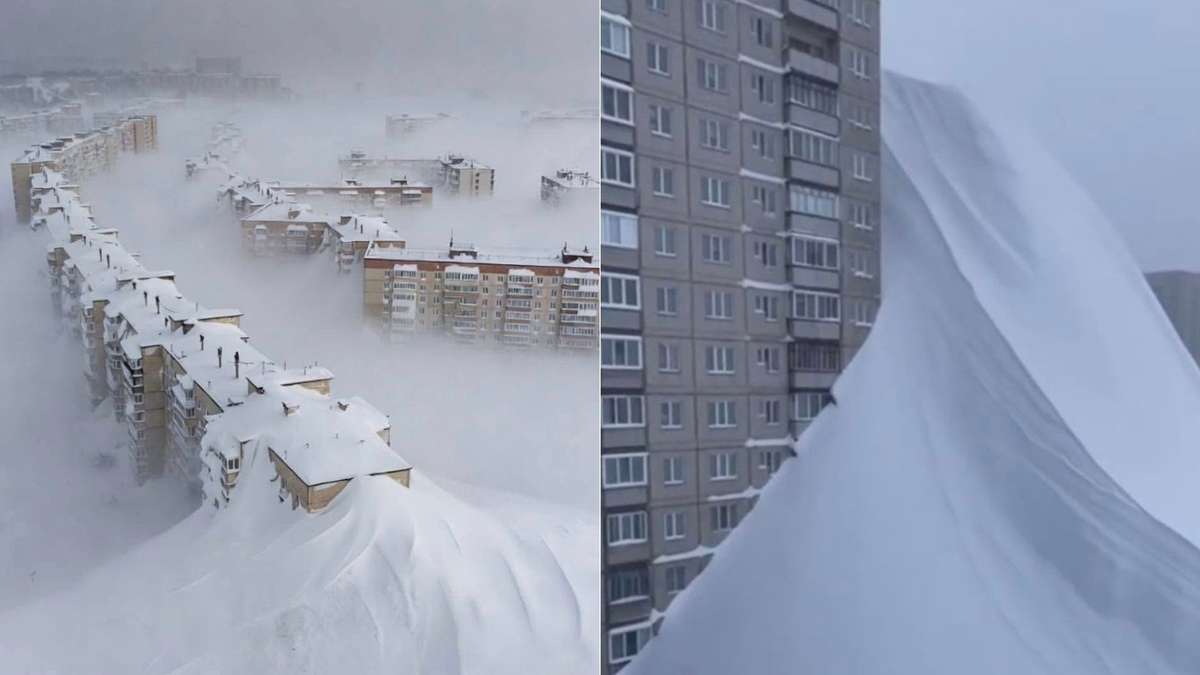
Unprecedented snowfall has paralyzed Petropavlovsk-Kamchatsky, the capital of Russia’s remote Kamchatka Peninsula, burying neighborhoods under meters of snow and forcing authorities to declare a state of emergency.
Over the past six weeks, the city has been hit by a series of powerful winter storms that delivered far more snow than is typical for the region. In December alone, Petropavlovsk-Kamchatsky recorded 37 centimeters (14.5 inches) of precipitation — more than three times the monthly average — according to regional meteorological data. Heavy snowfall continued into January, with an additional 16.36 centimeters (6.5 inches) falling in the first half of the month, roughly 150 percent of the seasonal norm.
As a result, snow cover across the city has reached 170 centimeters (5 feet 7 inches). In some districts, entire buildings are partially submerged, with snowdrifts exceeding 2.5 meters (over 8 feet). Residents have shared images and videos on social media showing snowbanks towering as high as five meters (about 16.5 feet), blocking entrances, roads, and vehicles.
Local authorities remain on high alert. A municipal state of emergency is still in effect, and avalanche warnings have been issued across the region. Although the storms that fueled the relentless snowfall began to ease by January 17, cleanup efforts face enormous challenges. That night, regional officials reported that crews had removed more than 2,500 cubic meters (nearly 88,300 cubic feet) of snow from city streets — a fraction of what remains.
Meteorologists say the scale of the snowfall is exceptionally rare. Vera Polyakova, head of Kamchatka’s Hydrometeorology Center, described the recent conditions as extreme, noting that comparable snowfall was last recorded in the early 1970s, when several months’ worth of precipitation fell in a compressed period. “For the modern period of observation, these conditions are exceptionally rare,” she said at a regional emergency response meeting.
The snow crisis has severely disrupted daily life. Public transportation ground to a halt as passenger buses were suspended, leaving residents to rely on National Guard police vans and shift-worker buses typically used at remote industrial sites. Limited bus service resumed on January 17, but many routes remain inaccessible due to snow-clogged streets.
Emergency responders and military personnel have been deployed to help dig out residential buildings and clear access routes. At the same time, demand for private snow removal services has surged. On Avito, Russia’s largest classified advertisements platform, prices for clearing homes and vehicles have climbed as high as 80,000 rubles (over $1,000), putting the service out of reach for many residents.
Basic services have also been affected. Trash collection in the regional capital has nearly stopped, as garbage trucks are unable to navigate courtyards buried under deep snow. Residents report mounting piles of uncollected waste as cleanup crews struggle to reach residential areas.
While weather conditions have begun to stabilize, authorities warn that recovery will take time. With vast amounts of snow still blanketing the city and avalanche risks persisting, Petropavlovsk-Kamchatsky faces a long and difficult effort to return to normal life.