
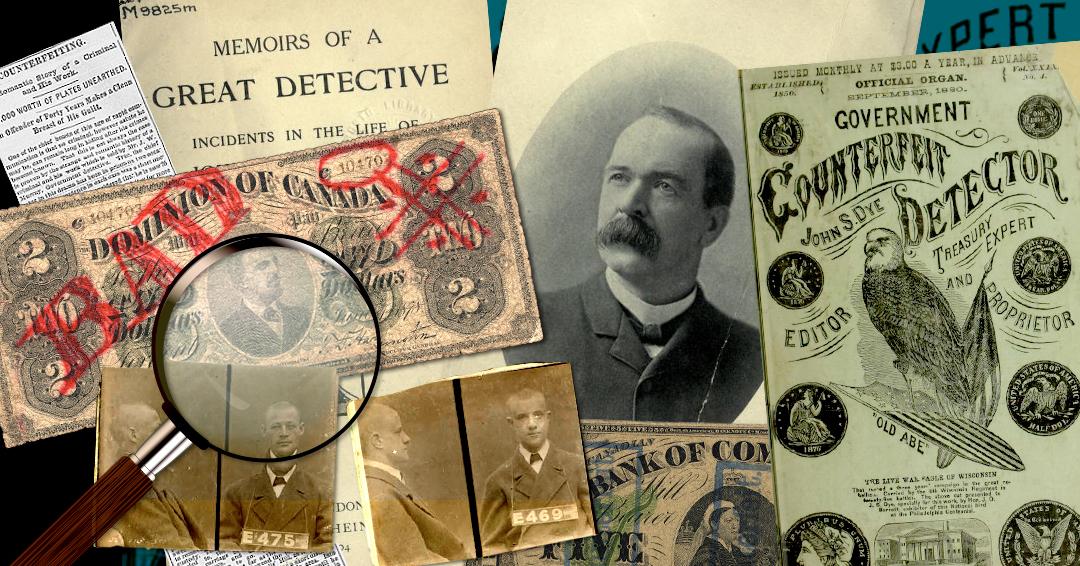
How Counterfeit Money Shook Empires Throughout History- Money is more than coins or paper—it’s trust. Every empire that minted currency depended on the belief that its money held value. When that trust was undermined by counterfeit coins or bills, the consequences could ripple through economies, destabilize governments, and even contribute to the fall of empires. From ancient kingdoms to early modern Europe, counterfeit money has repeatedly proved that crime and finance are deeply intertwined.
Ancient Times: Coins and Deception
Even the earliest civilizations had money, and even then, forgery was a problem.
-
Ancient China: As far back as the 7th century BCE, Chinese states used bronze coins as currency. Counterfeit coins were common, prompting rulers to issue severe penalties, including execution, for those caught forging currency. The proliferation of fakes sometimes caused local markets to reject certain coins entirely, disrupting trade.
-
Roman Empire: Rome’s vast economy depended on silver denarii. As emperors debased the currency—reducing silver content to fund wars—counterfeiting became easier and widespread. Combined with inflation from official debasement, this helped destabilize the economy in the 3rd century CE, fueling social unrest and weakening the empire.
In these early cases, counterfeit money didn’t just harm merchants—it threatened the stability of entire empires, showing that monetary trust was crucial for governance.
Medieval Europe: Gresham’s Law in Action
The famous economist Thomas Gresham later summarized a phenomenon observed in medieval Europe: “Bad money drives out good.” When counterfeit coins circulated alongside genuine currency, people hoarded the real coins and spent the fakes, accelerating economic problems.
-
England and France: Kings issued coins with gold or silver content carefully controlled, but counterfeiters often imitated these coins. When fakes flooded the market, prices rose and trade slowed. Authorities responded with harsh laws, public punishments, and frequent recoinages, but the cycle often repeated.
-
Italy’s City-States: In wealthy trading cities like Florence and Venice, counterfeiters could profit immensely, sometimes using their gains to fund wars or political maneuvering. However, widespread counterfeiting could erode confidence in the state itself, forcing rulers to act decisively or risk economic collapse.
The lesson was clear: money isn’t just metal—it’s a social contract. When that contract was broken, empires felt it almost immediately.
The Early Modern Era: Paper Money and New Risks
The introduction of paper money in the 17th and 18th centuries created a whole new landscape for counterfeiters. Unlike coins, paper notes were lighter, easier to transport, and harder to verify. This opened the door to more sophisticated fraud.
-
China’s Ming Dynasty: Paper money had been in use for centuries, but during the late Ming period, counterfeit notes became widespread. Inflation surged, and the government struggled to enforce currency controls, contributing to economic instability and social unrest.
-
Colonial America: Early American colonies issued paper money to fund wars and local economies. Counterfeiters, sometimes even employed by opposing forces like the British during the Revolutionary War, deliberately flooded the market with fake bills, undermining colonial finances and making it harder to fund troops.
-
France and the Revolutionary Assignats: During the French Revolution, paper money called assignats was massively overissued, and counterfeiters exploited this by creating fakes. Inflation spiraled, the economy destabilized, and public trust in revolutionary finances eroded—showing how counterfeit money could amplify political crises.
Counterfeiting as Economic Warfare
In some cases, counterfeit money was weaponized intentionally:
-
Napoleon and Britain: British intelligence reportedly counterfeited French currency during the Napoleonic Wars to weaken the French economy. Similarly, during WWII, the Nazis planned Operation Bernhard, flooding Britain with forged banknotes to destabilize the economy. These examples show how counterfeiting could be used strategically, not just for personal gain.
-
American Civil War: Both the Union and Confederate governments faced counterfeit notes that complicated financing the war. Confederate notes were especially vulnerable, as the South lacked industrial printing capacity, allowing Union sympathizers and opportunists to circulate fakes.
In these scenarios, counterfeit money acted almost like a weapon of mass economic disruption, undermining the financial foundations of entire nations.
Why Counterfeit Money Mattered
Across history, counterfeit money mattered for several key reasons:
-
Erosion of Trust: Currency relies on confidence. When people suspect money might be fake, commerce slows and hoarding increases.
-
Inflation and Price Instability: Counterfeit money increases the money supply artificially, driving prices up and destabilizing economies.
-
Political Consequences: In some cases, economic instability from counterfeiting led to riots, revolts, and even regime changes.
-
Military Impact: Armies need reliable funding. Counterfeiting could reduce the ability to pay troops or purchase supplies, directly affecting war outcomes.
Even small-scale counterfeiting could have cascading effects on trade, taxation, and public order.
Famous Counterfeiters and Their Legacy
Some counterfeiters became legendary figures:
-
William Chaloner (England, 17th century): Chaloner was notorious for producing fake coins and manipulating the money supply. His exploits even caught the attention of Sir Isaac Newton, who pursued him as Master of the Mint.
-
Operation Bernhard (WWII): This massive Nazi operation employed skilled forgers to produce high-quality British banknotes, aiming to flood and destabilize the economy. Although it never fully succeeded, the scale and ambition were unprecedented.
These stories highlight how counterfeiting has often been a mix of criminal ingenuity, political manipulation, and economic sabotage.
Conclusion
Counterfeit money has shaped history in ways that go far beyond petty crime. From ancient Rome to Revolutionary France, from colonial America to World War II, forgeries of coins and paper notes weakened economies, undermined empires, and even altered the outcomes of wars.
Empires rise and fall on trust—and currency is one of the earliest forms of social trust codified in metal or paper. When that trust is broken, whether by greedy counterfeiters or intentional economic warfare, the consequences can be catastrophic. Counterfeit money reminds us that the stability of empires often depends not only on armies and leaders but also on the integrity of what people hold in their hands every day—their money.
+(4)_13122022001446.png&ehk=uHLDsOXcbLm5eKKvQbnL2vx0u53OEnxai%2bpDCG5ARS4%3d&risl=&pid=ImgRaw&r=0 "Jadonang's Vision, Rani Gaidinliu's Legacy - The Jiyatarang Movement")
