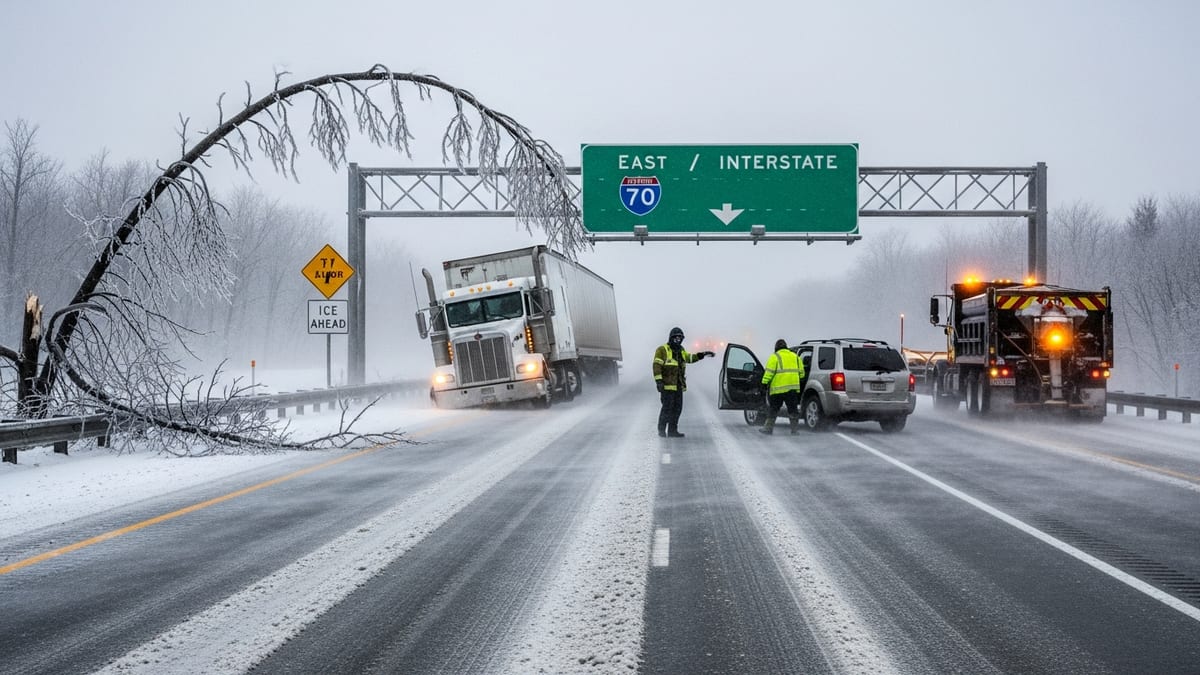
A Massive Winter Storm Paralyzes U.S. Travel and Daily Life
A powerful and unusually wide-reaching winter storm has brought large portions of the United States to a standstill, disrupting air travel, threatening millions of residents, and leaving officials scrambling to manage its aftermath. Stretching across much of the eastern half of the country, the storm has already caused the cancellation of more than 13,000 flights and is expected to continue affecting transportation, infrastructure, and emergency services for days.
From Saturday through Monday, airports across the country faced mounting delays and cancellations as heavy snow, sleet, and freezing rain made safe travel nearly impossible. Aviation analytics firm Cirium reported that flight disruptions were approaching levels not seen since the height of the coronavirus pandemic, a striking comparison that underscores the scale of the event. Airlines struggled not only with grounded planes, but also with displaced crews, icy runways, and cascading delays that rippled across the national air traffic system.
The storm’s reach has been immense. According to the National Weather Service (NWS), nearly 180 million people—more than half of the U.S. population—were under some form of winter weather alert. Conditions varied by region, but the combination of snow, ice, and freezing rain posed significant risks from the Rocky Mountains all the way to New England. In many areas, roads became slick and treacherous, power outages were reported, and emergency responders urged residents to stay off the roads unless absolutely necessary.
Meteorologists warned that the storm’s impact would not end once the snow stops falling. Allison Santorelli, a meteorologist with the NWS, explained that extremely cold temperatures following the storm would slow the melting process. Ice accumulation, in particular, is expected to linger. This could delay recovery efforts, keep roads hazardous, and prolong airport shutdowns as crews work to clear runways and de-ice equipment.
By the time the system fully winds down late Monday, forecasters expect it to leave behind a nearly continuous trail of winter precipitation spanning more than 2,000 miles. The storm’s path is projected to run from New Mexico through the central United States and up into Maine, making it one of the most geographically expansive winter weather events of the season. Such a broad footprint complicates response efforts, as multiple states must manage emergency resources simultaneously.
Air travel has been among the hardest-hit sectors. Even flights operating far from the storm’s center have felt the effects due to aircraft and crew being out of position. Travelers reported long waits, sudden cancellations, and limited rebooking options as airlines attempted to manage an overwhelmed system. Many airports advised passengers to check flight statuses frequently and avoid traveling unless essential.
Beyond aviation, the storm has disrupted everyday life for millions. Schools and government offices closed in several states, businesses adjusted operating hours, and utility crews prepared for the risk of downed power lines caused by ice-laden branches. In rural areas and smaller towns, emergency services faced challenges reaching residents as snow and ice made roads impassable.
In response to the widespread disruption, President Donald Trump approved emergency declarations for multiple states, allowing them to access federal assistance through the Federal Emergency Management Agency (FEMA). These declarations help states mobilize resources more quickly, cover emergency costs, and support recovery efforts once the storm passes.
Officials at both the state and federal levels emphasized preparedness and caution. Residents were encouraged to stock up on essentials, keep phones charged, and monitor local weather updates. Drivers were warned that even treated roads could remain dangerous due to refreezing, especially overnight.
As climate patterns continue to shift, weather experts note that storms of this scale—marked by extreme conditions over vast regions—may become more common. For now, communities across the affected areas are focused on weathering the immediate impacts and beginning the long process of recovery.
While the storm will eventually move on, its effects are likely to linger in the form of delayed travel, economic losses, and ongoing cleanup efforts. For millions of Americans, this winter system serves as a stark reminder of how quickly severe weather can disrupt modern life—and how critical preparation and coordination are when nature takes control.