The $5,000 Gold Surge Nobody Saw Coming—And What It Means For Your Money
When financial analysts gathered last January to make their 2025 predictions, not a single major Wall Street firm forecast gold would breach $5,000 per ounce. Most predicted modest gains, perhaps nudging toward $3,000 by year’s end. They were spectacularly wrong.
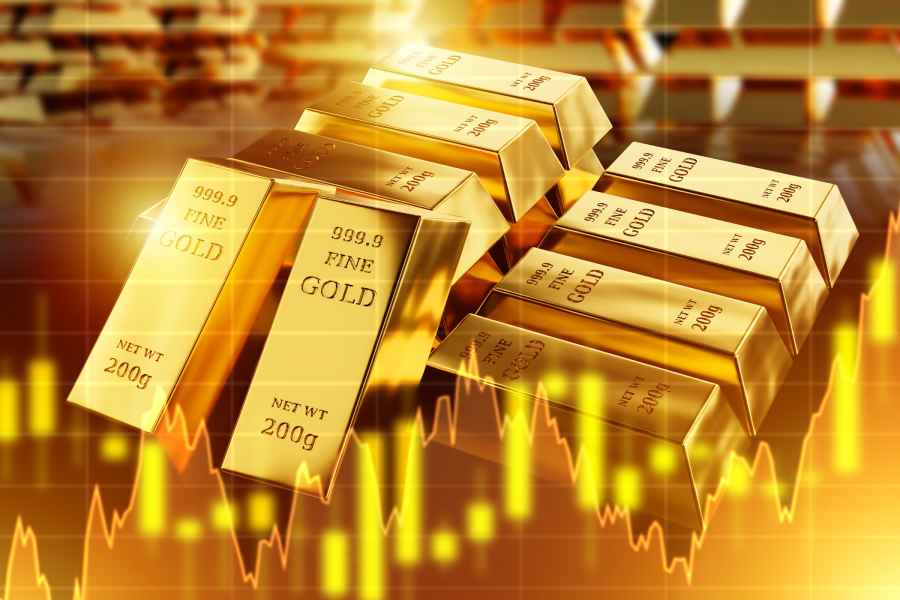
Gold didn’t just reach $5,000—it blew past it with the kind of momentum usually reserved for tech stocks during a bubble. On Monday, the precious metal crossed $5,080, capping a rally that has left professional investors scrambling to explain what happened and everyday savers wondering whether they’ve missed the boat entirely.
The answer to what’s driving this unprecedented surge is more complex and more concerning than simple market dynamics. It reveals fundamental cracks in the global financial architecture that could reshape how we think about money, wealth, and economic security for decades to come.
The Wall Street Consensus Was Dead Wrong
Let’s be clear about how badly the experts miscalculated. At the start of 2025, the consensus gold price target sat around $2,400-$2,600 per ounce. The most bullish forecasts barely touched $3,200. Even three months ago, when gold had already rallied substantially, major investment banks were counseling caution and suggesting the metal had gotten ahead of itself.
Those warnings now look absurdly conservative. Gold has delivered returns exceeding 100% since early 2024, outperforming virtually every major asset class including stocks, bonds, real estate, and even most cryptocurrencies. A simple $10,000 investment in gold at the beginning of 2024 would be worth over $20,000 today—and that’s for an asset supposedly known for stability, not explosive growth.
So what did Wall Street miss? Everything, apparently.
Trump’s Davos Disaster
While gold’s rally began long before last week, President Trump’s appearance at the World Economic Forum in Davos functioned as an accelerant on an already raging fire.
Instead of delivering a reassuring message about American economic strength and global partnership, Trump used the world’s most prestigious business gathering to threaten allies, demand territorial concessions, and double down on his most controversial economic policies. His insistence that Denmark sell Greenland to the United States—backed by threats of punitive tariffs against European partners—sent shockwaves through diplomatic and financial circles.
The message to global investors was unmistakable: American foreign policy has become unpredictable, transactional, and potentially destabilizing. For those holding dollar-denominated assets, that’s a problem.
Markets responded immediately. The S&P 500 posted its worst single-day performance in months. The dollar extended its slide against major currencies. And gold? It surged another $100 per ounce as investors rushed for the exits.
Your Dollar Is Dying (Slowly)
Here’s something most people don’t fully grasp: the U.S. dollar has lost over 9% of its value against other major currencies over the past year. That might not sound catastrophic until you consider what it means for your purchasing power and savings.
If you’re holding cash in a bank account earning 4% interest while the dollar declines 9%, you’re not preserving wealth—you’re watching it evaporate in real time. That $100,000 in savings? It’s worth roughly $91,000 in actual purchasing power compared to a year ago, even before accounting for domestic inflation.
The dollar’s decline isn’t some temporary blip. It reflects deep structural problems: a national debt approaching $39 trillion, annual deficits exceeding $1.8 trillion, political dysfunction that produced the longest government shutdown in history, and growing doubts about whether America can maintain its role as the world’s economic anchor.
Foreign governments are taking note. China has been systematically reducing its holdings of U.S. Treasury bonds while simultaneously buying gold at a record pace. They’re not alone. Central banks from India to Poland to Singapore have been net buyers of gold for thirteen consecutive months, diversifying away from dollar reserves at a rate not seen in generations.
When the world’s central banks—the ultimate insiders—are abandoning your currency, perhaps individual investors should pay attention.
The Debt Time Bomb
Gold’s rally isn’t primarily about inflation, despite what many assume. U.S. inflation has actually moderated substantially from its 2022 peaks. Interest rates, while high by recent historical standards, aren’t at levels that traditionally drive massive gold buying.
Instead, gold is surging because of something more insidious: debt debasement.
Governments worldwide, but especially the United States, have accumulated debt loads that cannot be repaid through conventional means. The mathematics simply don’t work. With interest payments on federal debt now consuming over $1 trillion annually—more than the entire defense budget—there are only two possible outcomes: default or debasement.
Since outright default would trigger global financial catastrophe, debasement becomes the politically palatable alternative. Print more money, inflate away the real value of debt, and let savers and bondholders bear the cost. It’s been done before, and it’s almost certainly what’s coming.
Smart investors understand this dynamic. That’s why they’re rotating into assets that can’t be printed, debased, or inflated away by government decree. Gold is the oldest and most liquid of these assets, which explains its extraordinary performance.
What This Means for Your Retirement
If you’re a typical American with retirement savings invested in a 401(k) or IRA, the gold surge presents both opportunity and warning.
The opportunity: Gold’s inclusion in a diversified portfolio has proven remarkably effective at preserving wealth during periods of currency instability and policy chaos. Financial advisors traditionally recommended 5-10% gold exposure; many are now quietly increasing those allocations.
The warning: If gold is rallying this hard, it’s signaling that traditional assets may be more vulnerable than conventional wisdom suggests. A stock market that looks expensive, bonds yielding negative real returns after inflation, and a currency losing purchasing power create a toxic combination for long-term wealth accumulation.
Consider what happened to retirees who held conventional 60/40 stock-bond portfolios during periods of high inflation in the 1970s. Their nominal account values might have held steady or even grown, but their purchasing power collapsed. They could afford less in retirement than they’d planned because their assets didn’t keep pace with the rising cost of living.
Today’s environment bears uncomfortable similarities. Official inflation figures may be moderate, but anyone buying groceries, paying insurance premiums, or seeking healthcare knows the real cost of living continues to climb substantially faster than government statistics suggest.
The Bubble Question Everyone’s Asking
At $5,000 per ounce with momentum still building, the obvious question emerges: Is gold in a bubble?
The honest answer is: maybe, but probably not yet.
Bubbles occur when asset prices disconnect completely from fundamentals and are driven purely by speculation and greater fool theory. Think Dutch tulips, dot-com stocks in 2000, or housing in 2007. In each case, buyers purchased not because of intrinsic value but because they expected to sell to someone else at a higher price.
Gold’s current rally, by contrast, appears driven by rational assessment of genuine risks. Currency debasement is real. Debt levels are unsustainable. Political instability is increasing. Central bank buying is massive and continuing. These aren’t speculative fantasies—they’re observable facts.
That said, gold at $5,000 offers less margin of safety than it did at $2,000 or $3,000. Late entrants chasing performance could get hurt if sentiment shifts or if governments take unexpected steps to stabilize currencies and restore confidence in traditional financial systems.
The real bubble risk isn’t that gold has gone up too much—it’s that other assets haven’t adjusted downward enough to reflect deteriorating fundamentals.
What Should You Actually Do?
This is where most financial articles offer generic advice about “consulting your financial advisor” or “doing your own research.” That’s useless. You need specific, actionable guidance.
If you have zero gold exposure: Don’t panic buy at all-time highs, but don’t ignore the signal either. Consider starting a position with 5-10% of your investable assets, scaled in over several months to average your entry price. Physical gold, gold ETFs, or shares in major gold mining companies all offer different risk-reward profiles.
If you already own gold: Congratulations, you were ahead of the curve. Resist the temptation to sell into strength unless you need liquidity. The forces driving this rally—debt, debasement, geopolitical instability—aren’t resolving anytime soon.
If you’re entirely in stocks and bonds: You’re taking more risk than you probably realize. Diversification isn’t just about owning different stocks; it’s about owning different asset classes that respond differently to various economic scenarios. Gold provides insurance against scenarios where traditional financial assets struggle.
If you’re holding significant cash: You’re losing purchasing power daily. At minimum, consider Treasury Inflation-Protected Securities (TIPS), diversified real assets, or yes, some gold allocation to preserve what you’ve accumulated.
The Bigger Picture
Gold’s surge past $5,000 represents more than a market phenomenon. It’s a vote of no confidence in the existing monetary system, a warning sign that the post-World War II financial architecture built on dollar dominance may be reaching its limits.
For seventy years, the world operated on the assumption that U.S. Treasury bonds were the ultimate safe asset and the dollar was as good as gold—better, actually, because it paid interest. That assumption is being tested like never before.
What replaces it remains unclear. Perhaps a reformed monetary system with renewed discipline and credibility. Perhaps a multipolar world where no single currency dominates. Perhaps digital currencies issued by central banks. Or perhaps a return to gold-backed currencies that constrain government spending.
What seems increasingly unlikely is that the status quo simply continues unchanged.
The Bottom Line
Nobody saw $5,000 gold coming because it requires accepting uncomfortable truths about American economic management, political stability, and global power dynamics that most people prefer to ignore.
But markets don’t care about our preferences. They care about reality. And the reality is that the world’s central banks, sovereign wealth funds, and sophisticated investors are voting with their wallets—and they’re voting for gold.
Whether this represents the early stages of a multi-year rally that could push gold to $10,000 or higher, or a spectacular top that will reverse violently, remains to be seen. What’s certain is that gold’s message about the health of the global financial system cannot be ignored.
Your money is trying to tell you something. The question is whether you’re listening.