Trump Signals Openness to Talks With Iran Amid Rising Military Tensions
U.S. President Donald Trump has indicated that he hopes to avoid military confrontation with Iran, even as tensions between the two countries escalate and American forces strengthen their presence in the Middle East. His remarks highlight a moment of high uncertainty, where diplomacy and the threat of force appear to be advancing in parallel.
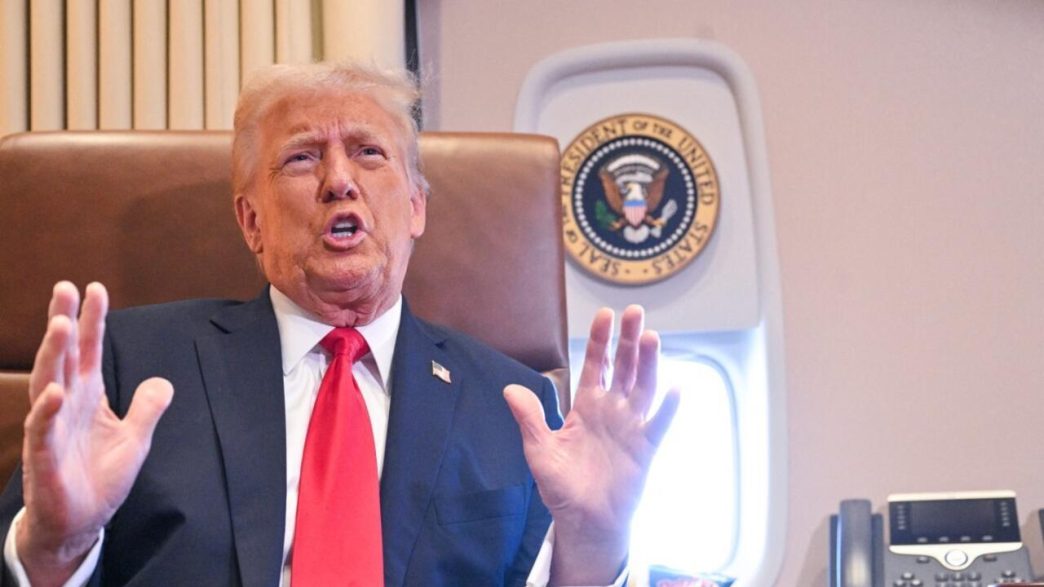
Speaking on January 29, 2026, President Trump acknowledged that communication with Iran is ongoing and may continue, suggesting that dialogue remains possible despite the sharp exchange of warnings between Washington and Tehran. When questioned about the prospects for talks, Trump said he had already engaged in discussions and planned to do so again. At the same time, he warned that time was limited, reinforcing the sense that the current standoff has reached a critical phase.
The president’s comments came as the United States deployed a sizable naval force to the region, including aircraft carriers and accompanying warships. While Trump framed the deployment as a precautionary measure rather than a prelude to war, its scale has heightened concerns about the risk of miscalculation. He remarked that the U.S. military is prepared to act if necessary, but emphasized that he would prefer not to use force. According to Trump, the goal of the deployment is deterrence — to ensure Iran understands the seriousness of U.S. warnings while still leaving room for a diplomatic solution.
Iran, however, has responded with strong and defiant rhetoric. Senior Iranian military officials have warned that any U.S. attack would be met with a swift and decisive response. Unlike past confrontations, they claim Iran’s reaction would not be limited in scope. Iranian commanders have highlighted what they describe as vulnerabilities in U.S. aircraft carriers and have pointed out that American military bases across the Gulf region are within range of Iranian missiles. These statements underscore Tehran’s determination to signal readiness and strength amid growing pressure.
Iranian leaders have also pushed back against the idea of negotiations conducted under threat. Officials in Tehran have repeatedly stated that diplomacy cannot succeed if it is paired with military intimidation. While Iran has not completely ruled out talks, it has insisted that any meaningful negotiations must be based on mutual respect rather than coercion. This position reflects Iran’s longstanding stance in previous disputes over its nuclear program and regional influence.
The rising tensions have drawn significant international concern. United Nations Secretary-General António Guterres has urged both sides to return to nuclear negotiations, warning that failure to do so could trigger a crisis with devastating consequences for the Middle East. His appeal reflects fears shared by many global leaders that even a limited military exchange could spiral into a broader regional conflict.
European leaders have also stepped up pressure on Tehran. The European Union recently designated Iran’s Islamic Revolutionary Guard Corps as a terrorist organization, citing its role in suppressing mass protests and engaging in destabilizing activities. While largely symbolic in military terms, the move adds diplomatic strain and further complicates any effort to ease tensions between Iran and the West.
At the regional level, neighboring countries are watching developments with unease. Gulf states that host U.S. military facilities have expressed concern that they could become targets if conflict breaks out. One Gulf official described fears of a U.S. strike on Iran as “very clear,” reflecting widespread anxiety that escalation could draw the entire region into turmoil.
In response, some regional and international actors have attempted to play a mediating role. Qatar’s leadership has held discussions with Iran aimed at reducing tensions and promoting stability. Turkey has also offered to facilitate dialogue between Washington and Tehran, positioning itself as a potential intermediary capable of helping both sides step back from the brink.
President Trump’s messaging has been notably mixed — combining warnings of overwhelming force with expressions of hope for a peaceful outcome. Speaking at a public event, he suggested that the U.S. military deployment was intended as leverage rather than an immediate plan for action. Still, his earlier remarks that “time is running out” for Iran have kept speculation alive that military options are being actively considered.
For now, the situation remains fluid. U.S. warships continue to move into strategic positions, Iranian officials maintain a posture of readiness, and diplomats across the globe work quietly to prevent open conflict. The challenge lies in managing the gap between rhetoric and reality, where a single misjudgment could trigger consequences neither side claims to want.
Ultimately, Trump’s openness to talks signals that diplomacy has not yet been abandoned. Whether those talks materialize — and whether they succeed — will depend on how both Washington and Tehran navigate the narrow space between deterrence and dialogue in the days ahead.