
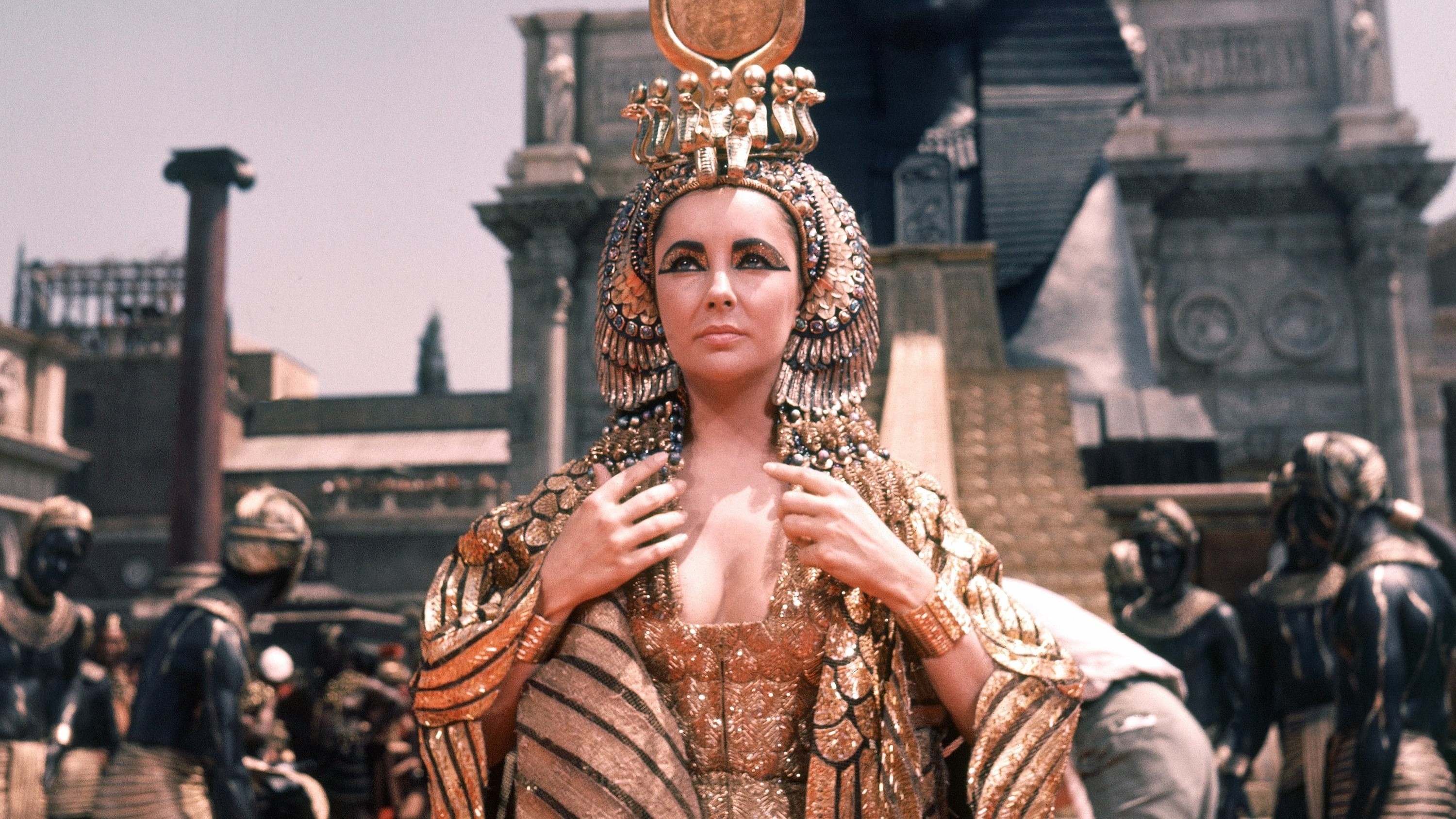
What Made Cleopatra Worth $96 Billion? The Ancient Economic Empire That Controlled 95% of Mediterranean Trade: When you hear “Cleopatra,” you probably think of seduction, asp bites, and doomed romance. But here’s what Hollywood never told you: Cleopatra VII wasn’t just Egypt’s last pharaoh—she was one of the richest, most economically powerful individuals in human history, commanding a fortune estimated at $96 billion in today’s money.
While her legendary relationships with Julius Caesar and Mark Antony dominated the gossip of ancient Rome, the real story of Cleopatra’s power lies in something far more dangerous than beauty: her absolute control over the ancient world’s most valuable economic resources.
The Richest Woman in the Ancient World
Let’s talk numbers. When Cleopatra ascended to Egypt’s throne in 51 BCE, she inherited more than just a crown—she inherited the wealthiest kingdom in the Mediterranean. Egypt’s annual revenue under her rule was approximately 12,500 talents of silver (roughly $750 million annually in modern terms). Over her 21-year reign, that accumulated to staggering wealth.
But it wasn’t just about what she inherited. Cleopatra actively managed, expanded, and weaponized Egypt’s economic resources in ways that would make modern billionaires envious. She understood something fundamental: real power doesn’t come from armies or alliances—it comes from controlling what everyone else needs.
Egypt’s Economic Chokehold on the Ancient World
Here’s what made Egypt—and therefore Cleopatra—so impossibly wealthy:
The Breadbasket Monopoly
Egypt was the ancient world’s primary grain producer, supplying up to 95% of Rome’s wheat. Think about that. Rome, the superpower of the ancient world, was completely dependent on Egyptian grain to feed its million citizens. Without Egypt’s wheat, Rome would starve.
Cleopatra didn’t just control this grain—she weaponized it. The annual grain shipment from Alexandria to Rome was approximately 20 million modii (about 135,000 metric tons). She used this dependency as political leverage, essentially holding Rome’s food supply hostage during negotiations.
When Julius Caesar needed grain to feed his armies during the civil war? He had to go through Cleopatra. When Mark Antony required supplies for his eastern campaigns? Cleopatra controlled the tap.
The Papyrus Empire
Before paper existed, the ancient world ran on papyrus—and Egypt had a complete monopoly on its production. Every contract, every letter, every legal document, every book in the ancient Mediterranean was written on Egyptian papyrus.
Cleopatra controlled the entire papyrus industry from cultivation in the Nile Delta to manufacturing and export. The profit margins were astronomical. A single roll of quality papyrus could cost the equivalent of a week’s wages for a skilled worker, and the entire literate world needed a constant supply.
This was the ancient equivalent of controlling all computer chips, all paper, and all petroleum simultaneously. You simply couldn’t run a civilization without Egyptian papyrus.
Nubian Gold Mines: The Ancient Fort Knox
Egypt’s gold mines in Nubia (modern-day Sudan) were legendary. These weren’t small operations—they were industrial-scale mining complexes employing thousands of workers, extracting tons of gold annually.
Cleopatra’s gold reserves were so vast that when she needed to demonstrate her wealth to Mark Antony, she famously dissolved a pearl worth 10 million sesterces (approximately $5 million today) in vinegar and drank it just to prove she could throw away more wealth in a single gesture than most kingdoms possessed in their entire treasuries.
The gold wasn’t just decorative. It was the reserve currency of the ancient world. Cleopatra could mint coins, manipulate currency values, and finance entire military campaigns. Her access to Nubian gold gave her economic power that even Rome envied.
The Perfume and Cosmetics Industry
This is the part history usually ignores: Cleopatra wasn’t just a consumer of luxury goods—she was a manufacturer and innovator. She personally owned perfume factories and cosmetics production facilities, and she was actively involved in their development.
Ancient sources credit Cleopatra with writing treatises on cosmetics, medicines, and weights and measures. She wasn’t playing at being a merchant—she was a hands-on businesswoman who understood her products at a technical level.
Egyptian perfumes, oils, and cosmetics were luxury goods that commanded premium prices throughout the Mediterranean. Cleopatra’s monopoly on production, combined with Egypt’s exotic ingredients (frankincense, myrrh, balsam), created a luxury brand that the ancient world’s elite couldn’t resist.
Taxation and Trade Routes
Egypt sat at the crossroads of three continents. All trade between India, Arabia, Africa, and the Mediterranean had to pass through Egyptian territory. Cleopatra controlled the ports, the trade routes, and the taxation infrastructure.
The port of Alexandria was the busiest in the Mediterranean. Goods flowing through included:
- Indian spices and gems
- Arabian frankincense and myrrh
- African ivory, ebony, and exotic animals
- Mediterranean wine, olive oil, and manufactured goods
- Asian silks and precious stones
Every single transaction was taxed. Every ship paid port fees. Every merchant paid customs duties. The revenue was mind-boggling.
Cleopatra also controlled Egypt’s internal taxation system, which was brutally efficient. Salt taxes, land taxes, trade taxes, fishing taxes—if it existed in Egypt, Cleopatra taxed it. The Ptolemaic taxation bureaucracy was so sophisticated that it wouldn’t be matched in efficiency until the modern era.
The Business-Savvy Princess Who Wasn’t Supposed to Rule
Born in 69 BCE in Alexandria, Cleopatra entered a world where wealth and violence were inseparable. Her father, Ptolemy XII Auletes (“the Flute Player”), was so financially incompetent that he had to borrow massive sums from Roman financiers just to bribe his way back onto the throne after being deposed.
By the time Cleopatra was born, Egypt’s treasury was depleted, and the kingdom was drowning in debt to Rome. Her father’s weakness taught her a crucial lesson: economic dependency meant political subjugation.
The Ptolemaic dynasty had ruled Egypt for nearly three centuries since Alexander the Great’s general, Ptolemy I, seized control in 305 BCE. But by Cleopatra’s time, the dynasty was collapsing under corruption, incest, and incompetence. Royal siblings murdered each other for power, and the Egyptian people were increasingly resentful of their Greek rulers.
The First Ptolemy to Actually Understand Egypt’s Economy
Here’s something most people don’t know: Cleopatra was the first Ptolemaic ruler in nearly 300 years who actually bothered to learn Egyptian. While her Greek ancestors had ruled Egypt for generations, they’d always viewed the native population with contempt, never learning the language or customs.
But Cleopatra understood that to control Egypt’s economy, you had to understand Egypt’s people. She spoke at least nine languages fluently, including Egyptian, Greek, Hebrew, Aramaic, Latin, Ethiopic, Troglodyte, and several others.
This wasn’t just cultural appreciation—it was strategic business sense. By speaking directly to Egyptian farmers, merchants, traders, and administrators without translators, she gained unprecedented insight into Egypt’s economic machinery. She could negotiate grain prices with peasants, discuss trade routes with Nubian merchants, and understand religious festivals that affected agricultural cycles.
Ancient historians describe her as highly educated in mathematics, philosophy, astronomy, and rhetoric. She personally understood the mathematics of taxation, the astronomy that governed Nile flood predictions (crucial for agriculture), and the rhetoric needed to negotiate with Roman senators who wanted to exploit Egypt’s wealth.
Plutarch wrote that her actual beauty “was not in itself incomparable,” but her intellect and charm were so captivating that no one could resist her. In other words, her real power wasn’t her looks—it was her brain. And she used that brain to run the ancient world’s most profitable economic empire.
The Teenage CEO of a $96 Billion Empire
In 51 BCE, when Cleopatra was just 18 years old, her father died. According to his will, she was to co-rule Egypt with her 10-year-old brother, Ptolemy XIII, whom she was also required to marry (ancient royal incest was considered economically prudent—it kept wealth in the family).
But Cleopatra had zero interest in sharing power—or profits—with a child. Within months, she’d dropped his name from official documents and was ruling solo, issuing decrees in her name only. More importantly, she started reorganizing Egypt’s economic apparatus.
Her first challenge? Egypt was still drowning in the debt her father had accumulated. Roman creditors were circling, and there were whispers that Rome might simply annex Egypt to seize its wealth directly.
Cleopatra’s solution was bold: she devalued Egypt’s currency to reduce the debt burden, increased taxation efficiency, and renegotiated terms with Roman creditors. It was economically ruthless and politically dangerous—but it worked. Within two years, Egypt’s finances were stabilizing.
But this infuriated the powerful court officials who controlled her young brother. They’d been embezzling from the treasury for years, and Cleopatra’s financial reforms threatened their corruption. By 48 BCE, they orchestrated a coup, forcing Cleopatra to flee Egypt.
She was officially exiled from her own economic empire.
Most rulers would have given up. Cleopatra started planning the greatest business merger in ancient history.
Enter Julius Caesar: The Political-Economic Alliance
While Cleopatra was in exile, Julius Caesar—the most powerful man in Rome—arrived in Egypt, pursuing his rival Pompey after a devastating civil war.
Ptolemy’s advisors, trying to curry favor, murdered Pompey and presented his severed head as a gift. Caesar was disgusted. But Cleopatra saw opportunity.
She needed Caesar’s military power to reclaim her throne. Caesar needed Egypt’s grain to feed his armies and consolidate his power in Rome. It was a match made in economic heaven.
The famous “carpet incident”—where Cleopatra had herself smuggled into Caesar’s quarters—wasn’t just romantic theater. It was a business pitch. When she unrolled from that carpet, she came prepared with economic proposals, grain shipment schedules, and trade agreements.
Within days, Caesar took Cleopatra’s side in the Egyptian civil war. But this wasn’t charity—it was investment. In exchange for military support, Cleopatra guaranteed grain shipments to Rome, favorable trade terms, and access to Egypt’s gold reserves.
Financing Caesar’s Empire
After defeating Ptolemy XIII (who drowned in the Nile), Cleopatra didn’t just reclaim her throne—she became Caesar’s primary financier. When Caesar needed to pay his legions? Egyptian gold. When Rome faced grain shortages? Egyptian wheat.
In 47 BCE, Cleopatra gave birth to Caesarion (“Little Caesar”). This wasn’t just a royal heir—this was a biological merger of Rome’s political power and Egypt’s economic power. If Caesarion was recognized as Caesar’s legitimate heir, he would eventually control both empires.
In 46 BCE, Cleopatra traveled to Rome with Caesarion, not as a tourist, but as an economic powerbroker. She lived in one of Caesar’s villas, hosting lavish parties that showcased Egyptian wealth. Roman senators were scandalized, but they also couldn’t ignore that this “foreign queen” controlled resources Rome desperately needed.
Cleopatra wasn’t seducing Caesar—she was negotiating a merger that would have created the wealthiest and most powerful empire the ancient world had ever seen.
Ancient Civilizations of the World: Timeline, Culture & Achievements | Maya
The Ides of March: When the Deal Collapsed
On March 15, 44 BCE, Julius Caesar was assassinated. Stabbed 23 times on the floor of the Roman Senate, he died before the merger could be completed.
Cleopatra was in Rome when it happened. Within weeks, she fled back to Egypt with Caesarion and her treasury, knowing that without Caesar’s protection, Roman creditors and political enemies would come for Egypt’s wealth.
Rome descended into another brutal civil war. Caesar’s assassins were hunted down by three men: Octavian (Caesar’s adopted heir), Marcus Lepidus, and Mark Antony. They formed the Second Triumvirate and divided the Roman world among themselves.
Cleopatra watched from Egypt, protecting her economic empire while Rome tore itself apart. She knew that whoever won would come looking for Egyptian gold to finance their victory.
Mark Antony: The Second Business Alliance
By 41 BCE, Mark Antony controlled Rome’s eastern territories. He summoned Cleopatra to Tarsus, ostensibly to answer questions about her loyalty during the recent civil war.
But really, Antony needed money. His eastern campaigns against Parthia required massive financing, and Egypt was the only kingdom wealthy enough to fund them.
Cleopatra knew this was another negotiation. And once again, she turned potential exploitation into partnership.
She arrived on a golden barge with purple sails (purple dye was among the most expensive substances in the ancient world—a single ounce cost the equivalent of thousands of dollars today). The ship was perfumed with exotic incenses, and she was dressed as the goddess Aphrodite.
It was a calculated display of wealth. The message was clear: Egypt is rich, powerful, and I control it all.
Antony was enchanted, but more than that, he was impressed. Here was a ruler who understood power, economics, and strategy. Unlike Roman politicians who viewed Egypt as a prize to be looted, Antony recognized Cleopatra as a equal partner.
They negotiated a deal: Cleopatra would finance Antony’s military campaigns. In exchange, Antony would expand Egypt’s territory, eliminate Cleopatra’s rivals, and protect Egyptian trade routes.
Cleopatra gave birth to twins: Alexander Helios and Cleopatra Selene. Later, she had a third child with Antony, Ptolemy Philadelphus. Each child was named for future kingdoms they would rule—this wasn’t romance, it was dynasty building.
The Donations of Alexandria: The Largest Territorial Expansion in Egyptian History
In 34 BCE, Antony held a ceremony in Alexandria called the “Donations of Alexandria.” He declared Cleopatra “Queen of Kings” and Caesarion the legitimate heir of Julius Caesar. Then he gave her and their children control over:
- Egypt (obviously)
- Cyprus (major copper mines)
- Crete (strategic naval position)
- Cyrenaica (Libya—grain and silphium)
- Phoenicia (Lebanon—cedar and purple dye)
- Coele-Syria (control of eastern trade routes)
- Parts of Cilicia (timber and naval resources)
- Parts of Judea (balsam groves worth their weight in gold)
This was the largest territorial expansion of Egypt since the Pharaohs of the New Kingdom over a thousand years earlier. Cleopatra now controlled not just Egypt’s traditional wealth, but also:
- Cyprus’s copper mines
- Lebanon’s cedar forests (essential for shipbuilding)
- Judea’s balsam groves (used in perfumes and medicines, monopoly product)
- Strategic ports controlling Mediterranean trade routes
Her economic empire had just expanded by roughly 60%. The estimated value of these territories added another $20-30 billion to her already massive fortune.
To Rome, this was treason. Antony was giving away Roman territories to a foreign queen. But to Cleopatra and Antony, it was the creation of a new economic superpower that would rival—or replace—Rome itself.
Octavian’s Economic War
Octavian, watching from Rome, understood the threat. This wasn’t about romance—it was about economics. If Cleopatra and Antony consolidated their resources, they would control:
- 95% of Mediterranean grain production
- The majority of gold mines
- All papyrus production
- Most luxury goods (perfumes, spices, dyes)
- Critical trade routes to India, Arabia, and Africa
- The best shipbuilding timber
- The most productive agricultural land
Rome would become economically dependent on the Antony-Cleopatra empire. Octavian would be reduced to a junior partner in his own empire.
So Octavian did what smart politicians do when faced with economic threats: he launched a propaganda war. He couldn’t attack Antony directly (too popular with the legions), so he attacked Cleopatra, painting her as an evil foreign seductress who’d corrupted a noble Roman general.
The propaganda worked. By 31 BCE, Octavian had convinced the Roman Senate to declare war—not on Antony, but on Cleopatra. It was framed as a defensive war to protect Rome from Eastern tyranny.
But everyone knew what it was really about: control of the ancient world’s wealth.
The Battle of Actium: When $96 Billion Went to War
The decisive confrontation came at Actium, off the western coast of Greece, on September 2, 31 BCE.
Cleopatra brought her Egyptian fleet—over 200 warships, some of the largest and most advanced in the ancient world. But she also brought something more valuable: her treasury. Ships laden with gold, ready to finance continued warfare if needed.
What happened next is still debated. In the midst of the naval battle, Cleopatra’s fleet suddenly retreated with the treasury ships. Antony, seeing her leaving, abandoned his own fleet and followed her back to Egypt.
Traditional histories call this cowardice or panic. But modern analysis suggests something different: Cleopatra executed a strategic withdrawal. The battle was already lost, and staying would mean Octavian capturing Egypt’s entire treasury. By retreating, she preserved her wealth to fight another day.
It was the right economic decision—but it cost her the war.
The End of the Economic Empire
Antony and Cleopatra retreated to Alexandria, knowing Octavian’s armies would soon arrive. They spent their final months in desperate preparation, melting down golden statues, minting coins, and trying to negotiate with Octavian.
Cleopatra even considered fleeing to India with her treasury, establishing a new kingdom beyond Rome’s reach. But it was too late—Octavian’s blockade had cut off escape routes.
In August of 30 BCE, Octavian’s forces entered Alexandria. Antony, receiving a false report that Cleopatra had killed herself, stabbed himself. He died in Cleopatra’s arms in her mausoleum—which also served as her treasury vault, filled with gold, jewels, and precious goods.
Octavian found Cleopatra surrounded by her wealth. He wanted to parade her through Rome as a captive, the ultimate humiliation. But he also wanted her treasury intact—Egypt’s gold would finance his transformation into Emperor Augustus.
Cleopatra had other plans.
The $96 Billion Question: How Did She Die?
On August 12, 30 BCE, Cleopatra died in her mausoleum. Ancient sources say she died from the bite of an asp (Egyptian cobra), a symbolic creature associated with Egyptian royalty.
But here’s the economic angle historians often miss: Cleopatra’s death prevented Octavian from legally seizing her personal wealth. Under Roman law, if she died as a free woman (not a captured slave), her property could potentially pass to her heirs.
By dying before being officially captured, Cleopatra may have protected her children’s inheritance rights—at least in theory. It was one final economic calculation, even in death.
Octavian found her dead, dressed in royal regalia, lying on a golden couch. She was 39 years old, and she’d ruled Egypt’s economic empire for 21 years.
What Happened to the $96 Billion?
Octavian seized everything. Egypt’s treasury, the gold mines, the grain monopoly, the papyrus industry, the perfume factories, the trade routes—all of it became Roman property.
But he couldn’t simply loot it. Egypt’s economy was too complex, too valuable to destroy. Instead, Octavian (now Emperor Augustus) did something clever: he kept the entire Ptolemaic economic system intact, but under Roman management.
Egypt became Augustus’s personal province, not technically part of the Roman Empire. All the revenue went directly to the emperor. The grain still flowed to Rome, but now it funded the emperor’s power. The gold mines still produced, but now it was Roman gold.
Some historians estimate that Egypt’s wealth under Roman rule provided 30-40% of the empire’s total revenue for the next three centuries. That $96 billion didn’t disappear—it became the foundation of the Roman Empire’s wealth.
Caesarion was hunted down and executed—Rome couldn’t risk a rival claim to Egypt’s wealth. But Cleopatra’s daughter, Cleopatra Selene, survived. Octavian married her off to Juba II of Mauretania, and she took a portion of her mother’s treasury with her, establishing her own wealthy kingdom in North Africa.
The Economic Legacy That Changed History
Cleopatra’s economic empire had lasting effects:
The Roman Imperial System: Augustus’s control of Egypt’s wealth allowed him to transform Rome from a republic into an empire. The steady revenue from Egyptian grain, gold, and trade financed the Pax Romana, two centuries of relative peace and prosperity.
Mediterranean Trade Networks: The trade routes Cleopatra controlled and expanded continued to function for centuries, connecting Europe, Africa, and Asia in ways that shaped global commerce.
Luxury Goods Industry: Egyptian perfumes, cosmetics, and luxury goods remained premium products throughout the Roman period, with many of Cleopatra’s production techniques preserved.
Agricultural Innovation: Egypt’s agricultural system, which Cleopatra had modernized and expanded, became the model for Roman provinces across North Africa.
Currency and Banking: The financial instruments and banking practices developed in Ptolemaic Egypt influenced Roman economic policy for generations.
Why Her Economic Genius Was Erased
For two millennia, Cleopatra has been portrayed as a seductress who used beauty to manipulate powerful men. But this narrative was propaganda—created by Octavian to justify his war and maintained by Roman historians to deny the reality: a woman had nearly outmaneuvered Rome’s greatest generals through economic power.
By reducing Cleopatra to a romantic figure, history erased:
- Her reorganization of Egypt’s taxation system
- Her expansion of trade routes to India and Arabia
- Her modernization of agricultural production
- Her personal involvement in manufacturing and industry
- Her sophisticated understanding of finance and currency
- Her strategic use of economic leverage in diplomacy
The truth is more impressive than the myth: Cleopatra was one of the most educated people of her age, ruling one of the wealthiest kingdoms in the world from age 18. She maintained Egypt’s independence against Rome’s expansion for over two decades not through seduction, but through economic strategy.
She spoke nine languages not for cultural appreciation, but because international trade required it. She studied mathematics not as a hobby, but because managing a $96 billion empire demanded it. She wrote treatises on cosmetics and medicines not as a beauty queen, but as an entrepreneur who owned the factories.
The Bottom Line: Money Was Power
Yes, Cleopatra had relationships with Julius Caesar and Mark Antony—but these were strategic business alliances, mergers designed to protect Egypt’s economic independence and expand its territory.
She didn’t seduce Rome; she tried to buy it, merge with it, and ultimately outmaneuver it using the one thing she had that Rome didn’t: complete control over the ancient world’s most valuable resources.
She was a CEO managing a $96 billion economic empire, a head of state navigating complex international politics, and a strategist who understood that in the ancient world—just like today—money was power.
The fact that she’s remembered primarily for her love affairs rather than her economic genius tells you more about history’s bias than about Cleopatra herself. History prefers romantic failure to economic competence, especially when that competence belonged to a woman.
What Cleopatra’s Story Teaches Us Today
In an era obsessed with entrepreneurs, innovators, and business empires, Cleopatra’s story resonates:
She inherited a failing business (the Ptolemaic dynasty) and turned it around. She identified her competitive advantages (grain, papyrus, gold, trade routes) and weaponized them. She formed strategic partnerships when necessary. She took calculated risks. She innovated in manufacturing and production. She understood that controlling resources was more valuable than military conquest.
She also understood that in a world dominated by men, her economic power would be reframed as sexual manipulation. So she leaned into it, using spectacle (the golden barge, the dissolved pearl) as marketing while conducting serious business behind the scenes.
For 21 years, she protected Egypt’s economic independence against the expanding Roman Empire. When she finally lost, it wasn’t because she failed as an economic strategist—it was because she faced the entire military might of Rome united under Octavian.
The Lost Tomb and the Lost Fortune
Cleopatra was buried beside Antony in a tomb that has never been found, despite centuries of searching. Somewhere under Alexandria’s modern streets or beneath the Mediterranean’s waves lies her final resting place, potentially still surrounded by treasures.
But the real treasure wasn’t the gold in her tomb—it was the economic system she built, refined, and defended. That system continued to enrich Rome for centuries. In a way, Cleopatra’s economic empire never really ended—it just changed ownership.
Over 2,000 years later, we’re still fascinated by the woman who controlled $96 billion and nearly changed the course of Western civilization. And perhaps that’s the greatest legacy of all: Cleopatra VII Philopator, the last pharaoh of Egypt, wasn’t just a romantic figure or a tragic queen.
She was one of the greatest business minds in human history, and she almost pulled off the most audacious economic merger the ancient world had ever seen.
The next time you hear about Cleopatra’s beauty or her love affairs, remember: she was the CEO of a $96 billion empire who spoke nine languages, owned gold mines and perfume factories, controlled 95% of Rome’s food supply, and negotiated international trade deals that shaped three continents.
That’s the Cleopatra history should remember.

