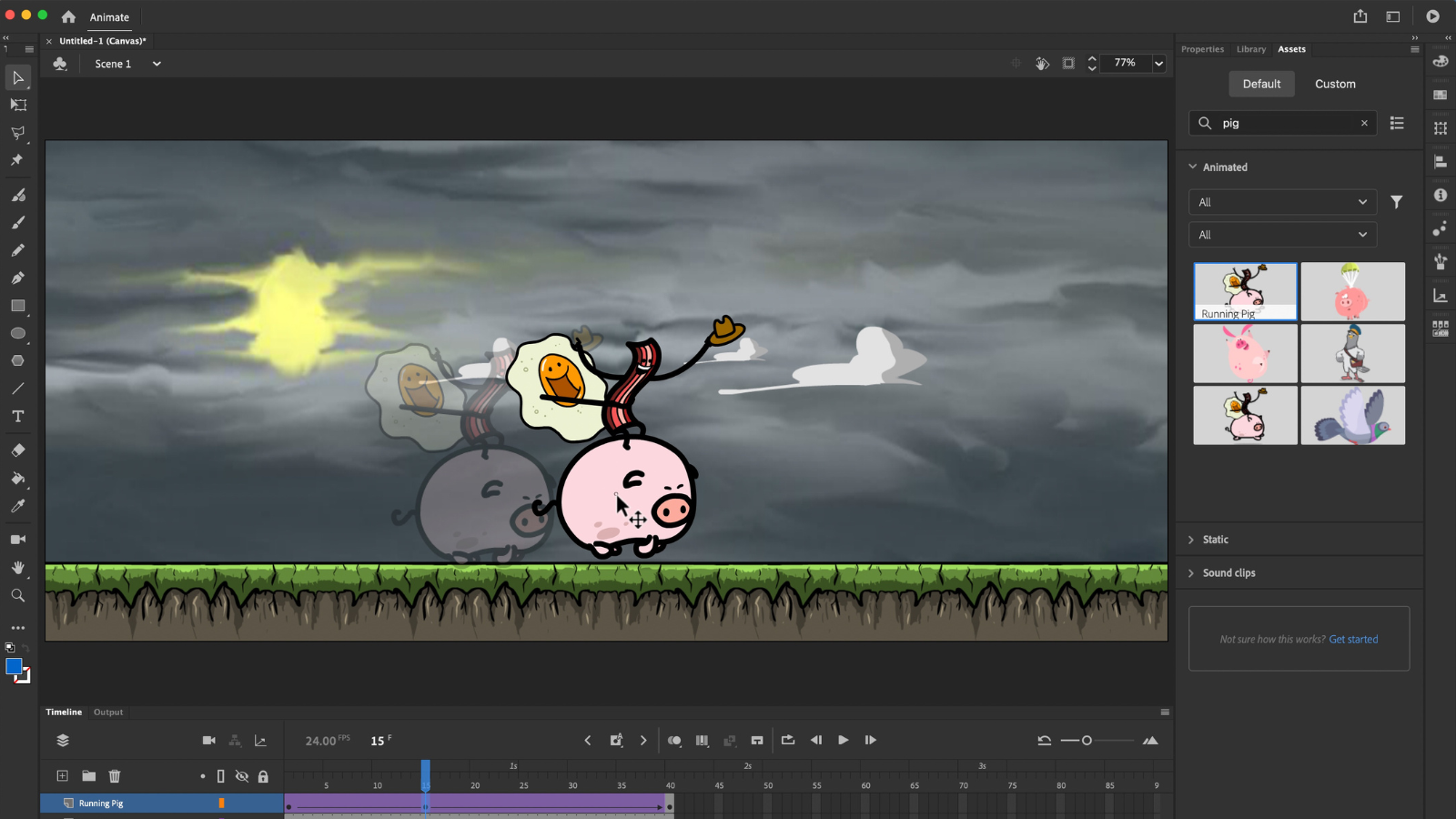
Adobe Animate Is Being Shut Down as the Company Shifts Its Focus Toward AI- Adobe is reportedly winding down Adobe Animate, marking the end of one of the industry’s most well-known 2D animation and interactive content tools, as the company continues to pivot aggressively toward artificial intelligence–driven products and workflows. The move has sparked frustration and concern among animators, educators, and indie creators who have relied on Animate for years as a flexible, artist-focused tool.
Formerly known as Flash Professional, Adobe Animate has a long and complicated legacy. While Flash itself became synonymous with security issues and web bloat in the 2000s, the software later evolved into a modern animation tool used for 2D animation, character rigs, explainer videos, educational content, and lightweight game assets. Even after Flash’s official end in 2020, Animate continued to serve a dedicated user base exporting to HTML5, video, and sprite sheets.
Now, as Adobe leans heavily into its Firefly AI ecosystem, Animate appears to be a casualty of a broader strategic shift — one that prioritizes generative tools, automation, and subscription-driven AI features over traditional, hands-on creative software.
For many creators, the shutdown feels less like a technical necessity and more like a business decision driven by trends and investor pressure. Adobe has spent the last two years positioning itself as an AI-first company, rolling out generative image tools, text-to-video experiments, AI-assisted design features, and workflow automation across Photoshop, Illustrator, Premiere Pro, and After Effects. In that context, a niche tool like Animate — which depends heavily on manual keyframing and frame-by-frame craftsmanship — no longer fits the company’s narrative.
The reaction from users has been swift and emotional. Animators point out that Adobe Animate fills a unique space: it’s more accessible than high-end tools like Toon Boom Harmony, less rigid than timeline-based video editors, and far more animation-friendly than general-purpose design software. For educators in particular, Animate has long been a go-to teaching tool, used in schools and universities to introduce students to animation fundamentals.
Critics argue that Adobe’s increasing reliance on AI risks flattening creative work, replacing skill-building with prompt engineering. While AI tools can accelerate certain tasks, many artists worry that the company is abandoning the needs of working creatives in favor of scalable, demo-friendly features that photograph well in keynotes but fail to replace real workflows.
There is also concern about creative ownership and authorship. AI-generated content raises unresolved questions about training data, originality, and credit — issues that are far from settled in courts or creative communities. By contrast, Animate represented a more traditional, transparent form of creation: what you made was unmistakably your work, frame by frame.
Adobe has not positioned the shutdown as a rejection of animation itself, but rather as a reallocation of resources. The company has emphasized AI-assisted animation features elsewhere in its product lineup, particularly within After Effects and experimental Firefly tools. However, many users see this as cold comfort. Those tools often assume higher-end pipelines and do not replicate Animate’s lightweight, all-in-one approach.
For indie creators, small studios, and freelancers, the loss of Animate is especially painful. Migrating projects to other platforms can be costly and time-consuming, and alternatives often come with steeper learning curves or higher licensing fees. Some fear that this will further consolidate the animation ecosystem, pushing creators toward fewer tools owned by fewer companies.
The shutdown also feeds into a broader anxiety shared across creative industries: that AI development is being prioritized at the expense of people. As companies chase automation and efficiency, artists are increasingly asking whether their tools are being built to empower them — or to replace them.
In that sense, Adobe Animate’s demise feels symbolic. A tool rooted in craft, iteration, and experimentation is being phased out during a moment when the industry is obsessed with speed, scale, and generative output. For long-time users, it feels like the end of an era — not just for a piece of software, but for a philosophy of creation that valued learning by doing over typing a prompt.
As Adobe continues its AI-forward push, the unanswered question remains: who are these tools really for? If the future of creativity is automated, optimized, and abstracted away from the artist’s hand, many fear that something essential is being lost — and Adobe Animate may be one of the first visible casualties of that shift.
SanDisk Rides AI Wave to Blockbuster Quarterly Results | Maya