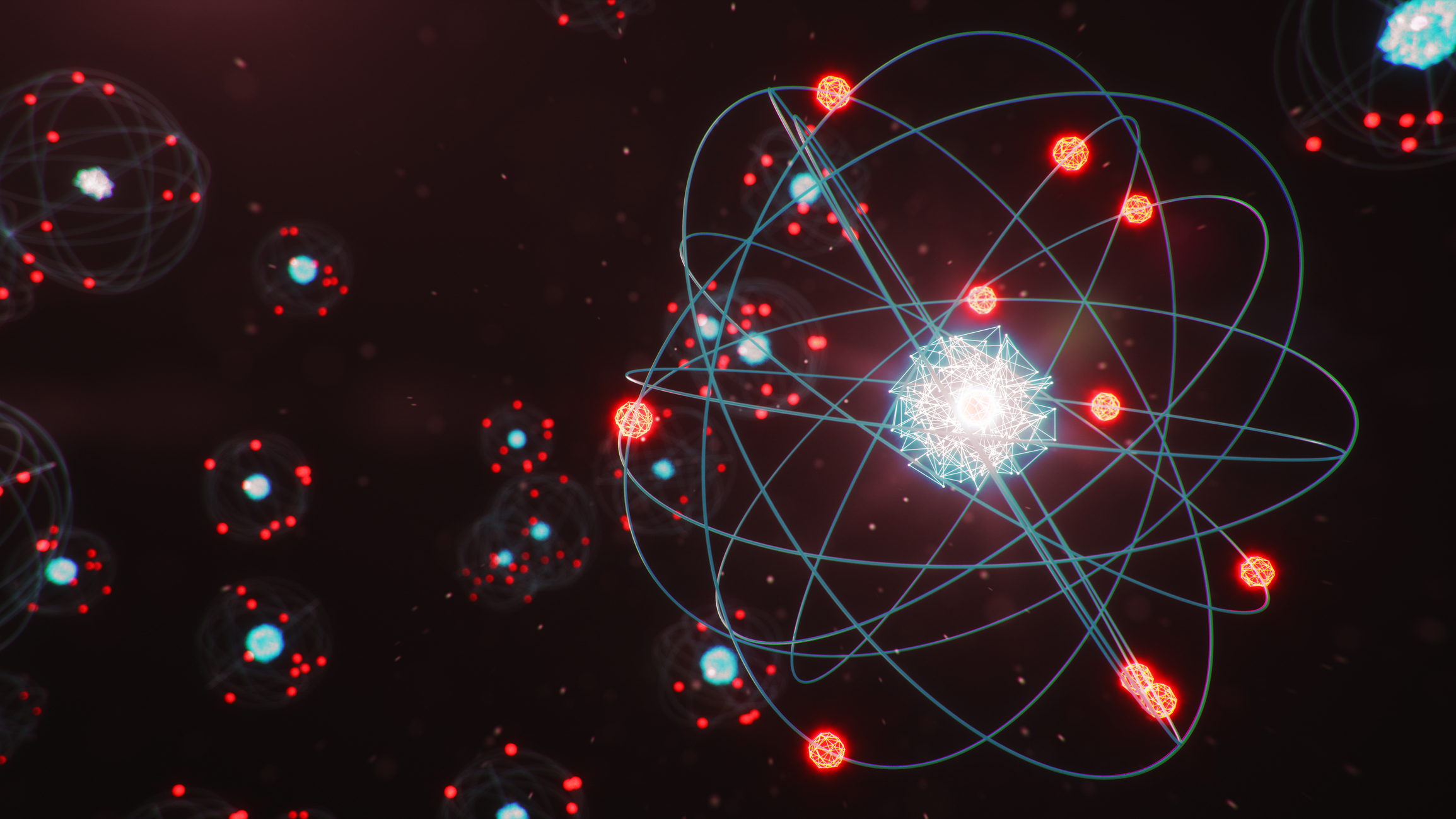
The Next Era of Atomic and Nuclear Science- We stand at the threshold of a new atomic age—one that will make the discoveries of the twentieth century seem like the first tentative steps of a child learning to walk. The coming decades promise to unlock atomic and nuclear phenomena in ways our predecessors could scarcely imagine. From engineering matter atom by atom to harnessing the power that fuels stars, from manipulating quantum states to transforming elements like ancient alchemists dreamed, the next era of atomic and nuclear science isn’t just approaching—it’s already beginning to dawn.
This isn’t science fiction. The technologies, techniques, and theories discussed here are either in development now or represent logical extensions of current scientific trajectories. Welcome to the future of humanity’s relationship with the atomic realm.
Fusion Energy: Bottling the Stars
For decades, fusion power has been the ultimate promise perpetually twenty years away. That’s about to change. Multiple approaches are converging toward the same revolutionary goal: abundant, clean energy from the same nuclear reactions that power the sun.
The International Thermonuclear Experimental Reactor (ITER) in France represents the conventional magnetic confinement approach, using massive magnetic fields to compress hydrogen isotopes until they fuse. But it’s the newcomers shaking up the field that suggest fusion’s breakthrough moment is finally arriving.
Private companies like Commonwealth Fusion Systems are building compact tokamaks using high-temperature superconducting magnets that couldn’t exist a decade ago. These magnets generate magnetic fields strong enough to contain fusion plasmas in devices one-tenth the size of ITER. First Light Fusion pursues inertial confinement using projectiles fired at fusion fuel targets. TAE Technologies explores an alternative fusion approach using hydrogen and boron instead of deuterium-tritium, potentially avoiding radioactive waste entirely.
Most dramatically, in December 2022, the National Ignition Facility achieved fusion ignition—extracting more energy from a fusion reaction than the lasers put in. This wasn’t just a milestone; it was proof that fusion energy isn’t physically impossible, merely extremely difficult engineering.
Within the next two decades, expect the first commercial fusion reactors to come online. By mid-century, fusion could power cities, desalinate oceans, and provide the enormous energy densities needed for interplanetary spacecraft. Imagine a world where energy abundance, not scarcity, shapes civilization—where the fuel supply for fusion reactors (hydrogen from seawater) could power human civilization for millions of years.
Fusion will do more than generate electricity. The intense neutron flux from fusion reactions will enable unprecedented nuclear transmutation capabilities, converting long-lived radioactive waste into stable or short-lived isotopes. The alchemy our ancestors dreamed of will become industrial reality, powered by stellar physics recreated on Earth.
Quantum Engineering: Commanding the Atomic Dance
Quantum mechanics has transitioned from describing what atoms do to prescribing what we want them to do. The next era belongs to quantum engineering—deliberately designing and manipulating quantum states to achieve specific outcomes impossible in classical physics.
Quantum computers are just the beginning. Current quantum processors with hundreds of qubits will scale to millions, then billions. These machines won’t just calculate faster—they’ll simulate molecular and atomic behaviors exactly, because they operate on the same quantum principles. Drug designers will model protein folding perfectly. Materials scientists will predict atomic arrangements with properties we specify in advance: superconductors at room temperature, materials with precisely controlled thermal or electrical properties, substances with exotic magnetic behaviors.
Beyond computation, quantum sensors are reaching sensitivities approaching fundamental physical limits. Atomic clocks now measure time so precisely that relativistic time dilation from elevation changes of mere centimeters becomes detectable. GPS positioning will evolve from meter-level to millimeter-level accuracy. Medical quantum sensors will detect magnetic fields from individual neurons firing, providing brain imaging resolution thousands of times better than current MRI.
Quantum communication networks will emerge, using quantum entanglement to create theoretically unbreakable encryption. China has already launched quantum communication satellites. Within twenty years, major cities will connect via quantum internet backbones where information security is guaranteed by the laws of physics rather than computational complexity.
Perhaps most radically, quantum metrology will enable us to explore whether fundamental constants are truly constant. Atomic clocks precise enough to detect minute variations in the fine structure constant or electron mass could reveal whether the laws of physics themselves evolve over cosmic time scales.
Atomic-Scale Manufacturing: The Age of Atomically Precise Fabrication
Current manufacturing is shockingly crude from an atomic perspective. Even advanced semiconductor fabrication is essentially statistical—we can’t place individual atoms exactly where we want them. That’s changing.
Scanning tunneling microscopes can already position individual atoms. IBM famously spelled out its logo using 35 xenon atoms in 1989. Today’s atomic force microscopes perform lithography at the single-atom level. The next leap is scaling these techniques from laboratory demonstrations to industrial processes.
Atomically precise manufacturing (APM) will revolutionize materials science. Instead of mixing elements and hoping they arrange favorably, we’ll specify exactly where each atom goes. This enables:
Metamaterials with impossible properties: Imagine materials that are simultaneously lightweight, stronger than diamond, and capable of adapting their properties in response to stress or temperature. Or optical metamaterials that bend light in ways that violate conventional optics, enabling perfect lenses or even limited invisibility through light manipulation around objects.
Medical nanomachines: Robert Freitas has designed theoretical “respirocytes”—artificial red blood cells built atom by atom that could carry hundreds of times more oxygen than biological cells. Future surgeons might deploy nanoscale robots that navigate blood vessels, identify cancer cells by their surface proteins, and destroy them mechanically or chemically with single-cell precision.
Programmable matter: Materials composed of microscopic units that can rearrange themselves in response to electrical or magnetic signals. Your phone could physically reconfigure itself—growing a larger screen when needed, extending an antenna for better reception, or hardening its surface before impact.
Quantum dots and atomic-scale electronics: Computing components built atom by atom will transcend silicon’s limitations. Quantum dots—semiconductor crystals just nanometers across—already enable displays with unprecedented color accuracy. Future quantum dot processors might operate at frequencies orders of magnitude higher than current chips while consuming minimal power.
The economic implications are staggering. Why mine rare earth elements from environmentally destructive mines when we could potentially build them atom by atom from abundant elements, rearranged precisely? Manufacturing could shift from subtractive processes (cutting, grinding, milling) to additive atomic assembly with zero waste.
Nuclear Medicine 2.0: Precision Healing Through Isotopes
Nuclear medicine is evolving from blunt instruments to precision scalpels. Current radiopharmaceuticals represent first-generation approaches. The next era will bring molecular-level targeting that makes today’s techniques look primitive.
Theranostics combines diagnosis and therapy using paired radioisotopes. Doctors will use one isotope for imaging to locate every cancer cell in the body, then deploy its therapeutic counterpart to deliver radiation directly to those cells. Prostate-specific membrane antigen (PSMA) targeting is already demonstrating this approach—imaging with gallium-68 PSMA, treating with lutetium-177 PSMA.
The next generation will multiply this specificity. Researchers are developing radiopharmaceuticals that:
- Target specific genetic mutations in cancer cells
- Activate only in hypoxic (low-oxygen) environments characteristic of tumors
- Cross the blood-brain barrier to treat neurological conditions previously inaccessible
- Distinguish between active and dormant cancer cells
- Accumulate in amyloid plaques for Alzheimer’s imaging and potential treatment
Alpha particle therapy represents the frontier. Alpha particles travel only micrometers in tissue but deposit enormous energy—like microscopic shotgun blasts. Attach alpha-emitters to molecules that bind cancer cells, and you create a weapon that destroys tumors while sparing surrounding tissue. Targeted alpha therapy (TAT) could make many cancers curable rather than merely treatable.
Radioisotope production is democratizing. Compact cyclotrons and linear accelerators can now fit in hospital basements, producing medical isotopes on-site rather than shipping them from distant reactors. This solves supply chain vulnerabilities and enables use of isotopes with half-lives too short for long-distance transport.
Looking further ahead, neutron capture therapy may evolve significantly. Current boron neutron capture therapy requires patients to accumulate boron in tumors, then exposes them to neutron beams. Future versions might use engineered nanoparticles that accumulate preferentially in cancer cells and split when struck by neutrons, releasing destructive radiation locally.
Transmutation and Elemental Engineering
Nuclear transmutation—changing one element into another—sounds like medieval alchemy. It’s actually cutting-edge nuclear science with profound implications.
Particle accelerators can already transmute elements, but inefficiently. Fusion reactors will change this equation. The intense neutron environments in fusion chambers could transmute elements on industrial scales.
Radioactive waste remediation is the first application. Long-lived isotopes from nuclear fission—cesium-137, strontium-90, technetium-99—could be transmuted into stable or short-lived forms. The nuclear waste problem that has plagued atomic energy for decades might be solved not through indefinite storage but through transformation.
Rare isotope production for medicine and research will expand dramatically. Currently, many valuable medical isotopes are scarce because they require specific nuclear reactions to produce. Future accelerators and fusion reactors could manufacture any isotope on demand.
Resource creation from abundant materials becomes conceivable. While transmuting lead into gold remains economically impractical (the energy cost exceeds the value), creating specific rare isotopes needed for technology or medicine from common elements makes perfect sense.
More speculatively, could we eventually engineer isotopes with specific nuclear properties? Custom-designing atomic nuclei is extraordinarily difficult given the strong force’s complexity, but quantum simulations might reveal stable nuclear configurations we haven’t discovered naturally. This could lead to entirely new elements with useful properties.
Antimatter: From Exotic Physics to Practical Tool
Antimatter currently exists in vanishingly small quantities, produced at enormous cost. CERN can trap anti-hydrogen atoms for minutes at a time. The total antimatter ever produced wouldn’t power a light bulb for more than moments.
But production efficiency is improving exponentially. As we develop better particle accelerators and more efficient antimatter traps using improved superconductors and laser cooling techniques, antimatter could transition from exotic curiosity to practical tool.
Medical imaging may be antimatter’s first major application beyond research. Positron emission tomography already uses antimatter (positrons from radioactive decay). Future developments might use antimatter beams for ultra-precise imaging or as calibration standards for radiation therapy equipment.
Materials science applications intrigue researchers. Bombarding materials with antimatter creates unique signatures revealing their composition and structure. This could enable non-destructive testing of components where even X-rays are too invasive.
Propulsion remains antimatter’s most dramatic potential application. Antimatter-matter annihilation converts mass to energy with 100% efficiency per Einstein’s E=mc². A theoretical antimatter rocket could reach significant fractions of light speed, making interstellar travel conceivable rather than purely theoretical. Current estimates suggest a crewed mission to Proxima Centauri (4.2 light-years away) could take decades rather than millennia with antimatter propulsion—though producing the necessary antimatter remains far beyond current capabilities.
The challenge isn’t physics but engineering and economics. We need cheaper, more efficient antimatter production and better containment systems. Progress in superconductors, magnetic confinement, and particle accelerator technology suggests antimatter applications might emerge within this century.
Nuclear Clocks and Redefining Precision
Atomic clocks synchronize GPS, power the internet, and enable scientific experiments requiring precise time measurements. But atomic clocks are about to be surpassed.
Nuclear clocks will exploit energy transitions in atomic nuclei rather than electron shells. Thorium-229 has a uniquely accessible nuclear transition that could be excited with ultraviolet lasers. Nuclear transitions are less susceptible to external perturbations than electron transitions, promising clocks potentially 100 times more precise than current atomic clocks.
This isn’t just about better timekeeping. Such precision enables:
- Testing fundamental physics: Are fundamental constants truly constant, or do they drift imperceptibly over time? Nuclear clocks could detect minute variations.
- Gravitational sensing: Time runs differently in different gravitational fields. Precise enough clocks can detect the gravitational field differences between being on the ground floor versus the top floor of a building. This enables “gravitational imaging” to detect underground structures, mineral deposits, or water reserves without drilling.
- Navigation beyond GPS: Deep space navigation requires extraordinary precision. Nuclear clocks could enable autonomous spacecraft to determine their positions without external references.
- Fundamental symmetry tests: Examining whether nuclear transitions change over time tests whether the universe’s fundamental symmetries hold perfectly or break slightly—revealing physics beyond the Standard Model.
Nuclear clocks may redefine how we measure reality itself, detecting phenomena currently invisible to even our most sophisticated instruments.
The Quantum Simulator Revolution
One of quantum mechanics’ greatest ironies is that quantum systems are virtually impossible to simulate on classical computers. The complexity grows exponentially with the number of particles. But what if we simulate quantum systems using other quantum systems?
Quantum simulators—programmable quantum devices designed to mimic specific quantum phenomena—are emerging as transformative research tools. Unlike general-purpose quantum computers, quantum simulators are specialized for modeling atomic and nuclear systems.
Within two decades, quantum simulators will:
- Design novel materials by simulating atomic arrangements and predicting properties before synthesis
- Understand nuclear physics by modeling nucleon interactions too complex for classical calculation
- Develop new catalysts by simulating chemical reactions at the quantum level, optimizing industrial processes
- Explore exotic matter states like time crystals, topological states, and quantum spin liquids
These simulators could unlock atomic-scale phenomena that remain mysterious despite a century of quantum mechanics. We might discover entirely new states of matter or nuclear configurations with technological applications we haven’t imagined.
Isotope Separation and Enrichment Breakthroughs
Separating isotopes—atoms of the same element with different neutron numbers—is energy-intensive and expensive. Current techniques like gas centrifugation or laser isotope separation work, but inefficiently.
Next-generation approaches using atomic-scale manipulation could revolutionize isotope separation:
Laser-based techniques are becoming increasingly sophisticated. Multiple laser frequencies can selectively excite specific isotopes, ionizing them for electromagnetic separation. As laser technology improves, this becomes more practical for challenging separations.
Molecular manipulation at the atomic level might enable separation based on minute mass differences or quantum properties. Scanning probe techniques could theoretically pluck specific isotopes from mixtures.
Efficient isotope separation would:
- Make nuclear fuel enrichment dramatically cheaper and safer
- Provide medical isotopes in abundance
- Enable materials with precisely controlled isotopic composition for quantum computing or fundamental physics research
- Create ultra-pure materials for specialized applications
The Atomic Internet of Things
Imagine sensors so small and efficient they could be deployed by the millions, powered by radioisotope thermoelectric generators no larger than grains of sand. These atomic-powered sensors could:
- Monitor environmental conditions in real-time across entire ecosystems
- Track products through supply chains with millimeter precision
- Create distributed radiation detection networks for nuclear safety
- Enable smart infrastructure that monitors structural integrity continuously
Radioisotope power sources already energize deep-space probes like Voyager and Curiosity. Miniaturization could bring this technology to terrestrial applications, creating sensors that operate for decades without battery replacement or external power.
Combined with quantum communication, these sensors could form unhackable monitoring networks for critical infrastructure, providing security and safety unprecedented in human history.
Educational and Research Accessibility
Perhaps the most transformative aspect of atomic and nuclear science’s next era is democratization. Technologies once confined to national laboratories are shrinking and becoming more affordable.
Desktop particle accelerators for research and medical isotope production are emerging. Tabletop fusion experiments for educational purposes exist. Atomic force microscopes capable of atomic manipulation are becoming affordable for universities that couldn’t dream of such equipment decades ago.
This accessibility will accelerate discovery. When thousands of laboratories worldwide can perform experiments previously restricted to a handful of institutions, the pace of innovation multiplies. The next breakthrough might come from a graduate student at a small university rather than a prestigious national lab.
Open-source designs for radiation detectors, spectroscopy equipment, and other nuclear instrumentation are spreading. Citizen science in nuclear and atomic physics becomes possible—not nuclear reactions in garages, but sophisticated radiation monitoring, isotope identification, and educational experiments that demystify atomic science for the public.
Challenges and Responsibilities
This bright future carries profound responsibilities. Nuclear and atomic technologies inherently involve materials and knowledge that could cause harm if misused.
Proliferation concerns intensify as technologies democratize. Safeguards must evolve alongside capabilities. International cooperation, verification systems, and ethical frameworks need to keep pace with technical progress.
Environmental considerations matter. Even fusion, dramatically cleaner than fission, produces challenges—managing tritium fuel, handling neutron-activated materials, and ensuring reactor safety. Atomic-scale manufacturing must avoid creating novel nanomaterials that might pose environmental or health risks without thorough testing.
Public education becomes critical. Atomic and nuclear science face irrational fears born from weapons and accidents. Building public understanding of both legitimate risks and transformative benefits will determine whether society embraces these technologies or constrains them through fear.
Regulatory frameworks designed for twentieth-century atomic technology may not suit twenty-first-century innovations. Flexible, science-based regulation that protects safety without stifling innovation requires ongoing dialogue between researchers, policymakers, and the public.
Convergence: When Technologies Merge
The most exciting possibilities emerge where atomic and nuclear science converges with other fields:
Quantum biology explores whether quantum effects influence photosynthesis, bird navigation, or enzyme function. If confirmed, we might engineer biological systems using quantum principles, creating organisms or biomolecules with designed quantum properties.
Nuclear astrophysics will advance as quantum simulations reveal how elements form in stellar environments. This informs both cosmology and our ability to recreate those conditions in laboratories.
Atomic-scale bioengineering could create artificial proteins or even artificial life forms designed atom by atom, bridging chemistry, biology, and physics at the most fundamental level.
Climate technology powered by fusion could enable massive carbon capture, atmospheric engineering, or even controlled climate modification with the energy abundance fusion provides.
The 2050 Vision
Imagine the world in 2050 if current trajectories continue:
Cities powered by compact fusion reactors, generating energy too cheap to meter while producing medical isotopes as byproducts. Hospitals treating cancer with isotopes produced on-site, targeting tumors with molecular precision while sparing healthy tissue. Manufacturing facilities assembling products atom by atom with zero waste, creating materials with properties impossible through conventional chemistry.
Quantum computers simulate new drug molecules overnight, testing millions of variations virtually before synthesizing the most promising candidates. Nuclear clocks measure time so precisely they detect gravitational waves passing through Earth. Quantum communication networks secure critical infrastructure against any cyberattack.
Space missions powered by fusion drives explore the outer solar system, considering crewed missions to Jupiter’s moons or Saturn. Quantum sensors map Earth’s subsurface in unprecedented detail, locating resources and monitoring geological stability. Isotope-powered sensors form global monitoring networks for environmental protection and disaster prevention.
This isn’t utopian fantasy—it’s extrapolation from technologies already in development. The pieces exist; we’re assembling them into transformative whole systems.
The Dawn, Not the Destination
The next era of atomic and nuclear science represents not an endpoint but a beginning. Every answer generates new questions. Every capability unlocks new possibilities. Every breakthrough reveals how much we don’t yet understand.
We’re learning to read and edit the universe’s source code—the atomic and nuclear phenomena underlying all matter and energy. With that literacy comes power approaching what earlier generations would consider godlike: commanding individual atoms, transmuting elements, harnessing stellar energy, manipulating quantum reality itself.
Yet we’re still children learning these skills. The full potential of atomic and nuclear science remains barely glimpsed. What seems revolutionary today will seem primitive to our grandchildren. The technologies transforming civilization in 2070 or 2100 might involve aspects of atomic and nuclear physics we haven’t discovered yet.
The atomic age didn’t end in the twentieth century—it’s only now truly beginning. We stand at the threshold of an era when humanity consciously shapes matter and energy at their most fundamental levels, when the quantum realm becomes a canvas for innovation, when the power that lights stars becomes our servant rather than our master.
The future is atomic. The future is nuclear. The future is quantum. And the future is arriving faster than most people realize. The next era doesn’t wait for us to be ready—it demands we rise to meet it, bringing wisdom, responsibility, and imagination to match our technical capabilities.
Welcome to the dawn of the true atomic age. The journey has barely begun.