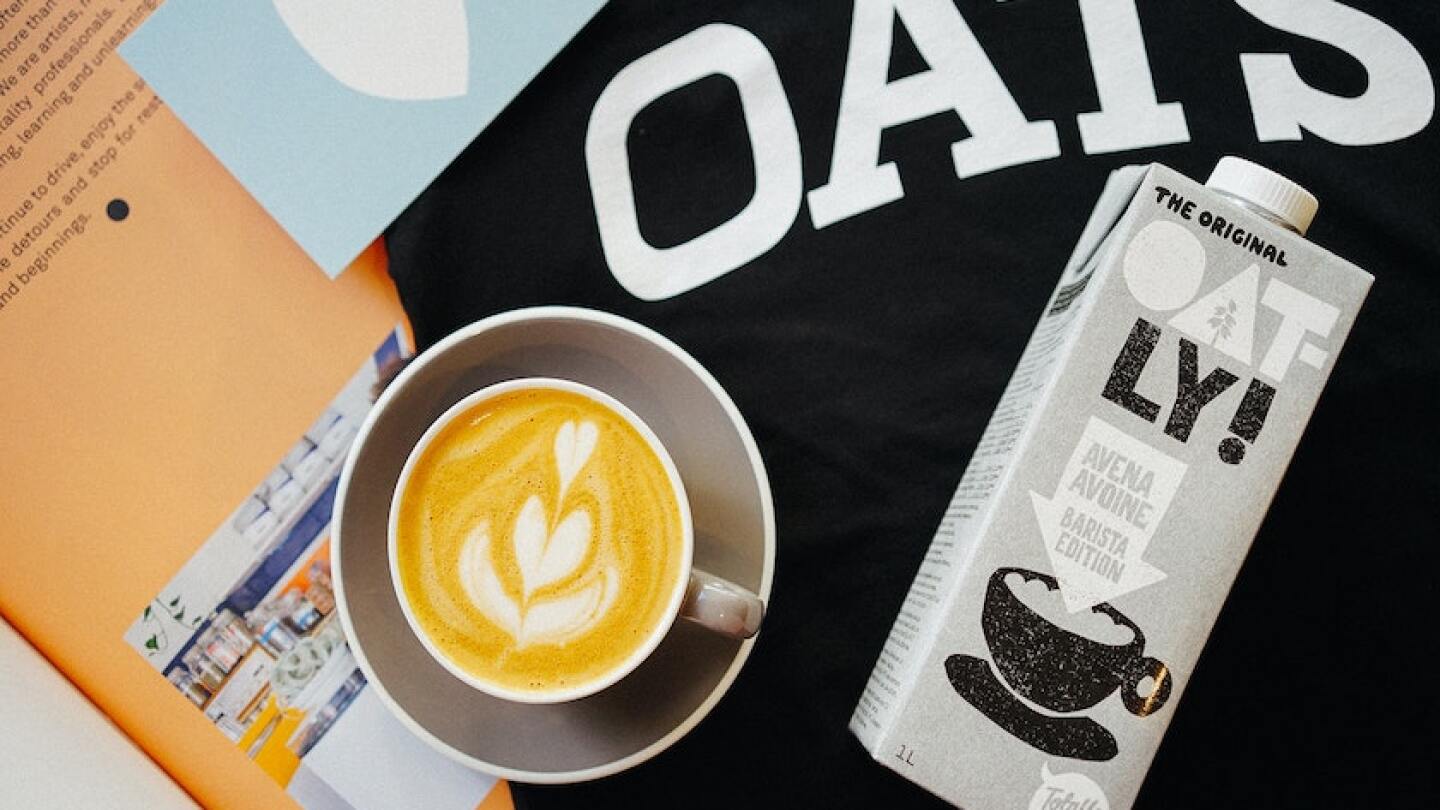
Top UK Court Rules Against Oatly in Landmark Dairy Trademark Case- The UK Supreme Court has delivered a decisive ruling against Swedish oat drink manufacturer Oatly, bringing to an end a years-long legal battle over the company’s attempt to trademark the phrase “Post Milk Generation.” In a unanimous decision, the country’s highest court confirmed that the slogan breaches long-standing rules protecting dairy terminology, marking a significant victory for Dairy UK and reinforcing strict limits on the use of the word “milk” in plant-based branding.
The dispute centered on whether Oatly’s trademark — used in marketing and on merchandise — unlawfully incorporated the protected term “milk” in relation to products that contain no dairy. Under UK law, which mirrors retained EU regulations governing agricultural marketing standards, terms such as “milk,” “butter,” and “cheese” are reserved for products derived from animal milk, subject to narrow exceptions.
Oatly has long positioned itself as a disruptive force in the dairy alternatives market, using bold and often provocative messaging to challenge traditional dairy consumption. “Post Milk Generation” formed part of that branding strategy, intended to signal a cultural shift toward plant-based diets, particularly among younger, environmentally conscious consumers.
However, Dairy UK — the trade body representing Britain’s dairy producers — objected to the trademark application, arguing that it violated the legal protections surrounding dairy designations. The group maintained that even indirect or contextual uses of the word “milk” in connection with non-dairy goods could undermine clear labeling standards and consumer understanding.
The case has moved through multiple levels of the judicial system since Oatly first sought to register the trademark. The UK Intellectual Property Office (IPO) initially ruled the mark invalid, concluding that it conflicted with statutory protections. Oatly successfully appealed that decision in the High Court in 2023, where a judge found that the phrase did not directly describe the oat-based products as milk.
That victory proved short-lived. In 2024, the Court of Appeal overturned the High Court’s ruling, reinstating the IPO’s decision and holding that the trademark did indeed fall foul of the regulations. Oatly then appealed to the Supreme Court, hoping to secure a definitive interpretation in its favor.
Instead, the Supreme Court sided squarely with Dairy UK.
In its judgment, the five-justice panel concluded that the phrase “Post Milk Generation” did not clearly describe any characteristic of Oatly’s products. Rather than indicating that the goods were milk-free or plant-based, the wording was interpreted as targeting a demographic — a generation perceived as moving beyond dairy consumption. Because the mark prominently included the protected term “milk,” and because it was used in connection with non-dairy goods, the court held that it could not stand.
The justices emphasized that agricultural marketing rules are designed to provide clarity and consistency in food labeling. Even creative or indirect uses of protected terms must comply with the regulatory framework. In this instance, the court found that the trademark functioned as a prohibited designation, regardless of its broader marketing message.
For Dairy UK, the ruling represents a reaffirmation of established legal protections. The organization has argued throughout the case that allowing plant-based brands to appropriate dairy terminology — even in slogans — risks blurring the distinction between traditional dairy products and alternatives. The Supreme Court’s decision strengthens the position that such terms carry specific legal meaning and cannot be freely adapted for branding purposes.
For Oatly, the outcome is a setback but unlikely to derail its broader market presence. The company, which sells its products in dozens of countries and has become one of the most recognizable names in plant-based beverages, will continue to market its core products as “oat drink” in the UK, in line with regulatory requirements. However, the loss limits its ability to leverage one of its more culturally resonant slogans in the British market.
The broader implications of the ruling extend beyond Oatly itself. The plant-based food and beverage sector has grown rapidly over the past decade, driven by consumer concerns over health, sustainability, and animal welfare. As the market expands, tensions between traditional agricultural producers and alternative brands have intensified, particularly around labeling practices.
This judgment signals that UK courts are prepared to enforce a strict interpretation of existing rules. Other plant-based companies may now need to review their branding strategies to ensure compliance, especially where dairy-related language appears in trademarks, packaging, or advertising.
At the same time, the case highlights the evolving cultural landscape around food terminology. In everyday conversation, many consumers routinely refer to “oat milk” or “almond milk,” despite legal distinctions. The gap between colloquial usage and regulatory language continues to generate debate, and future challenges could arise as consumer habits shift further.
For now, however, the Supreme Court’s ruling provides clarity: in the UK, dairy terms remain tightly protected under the law. Oatly’s “Post Milk Generation” may resonate as a cultural slogan, but legally, it crosses a line that Britain’s highest court has firmly drawn.
The Major Physical Features of the Earth: A Complete Guide for Students | Maya