
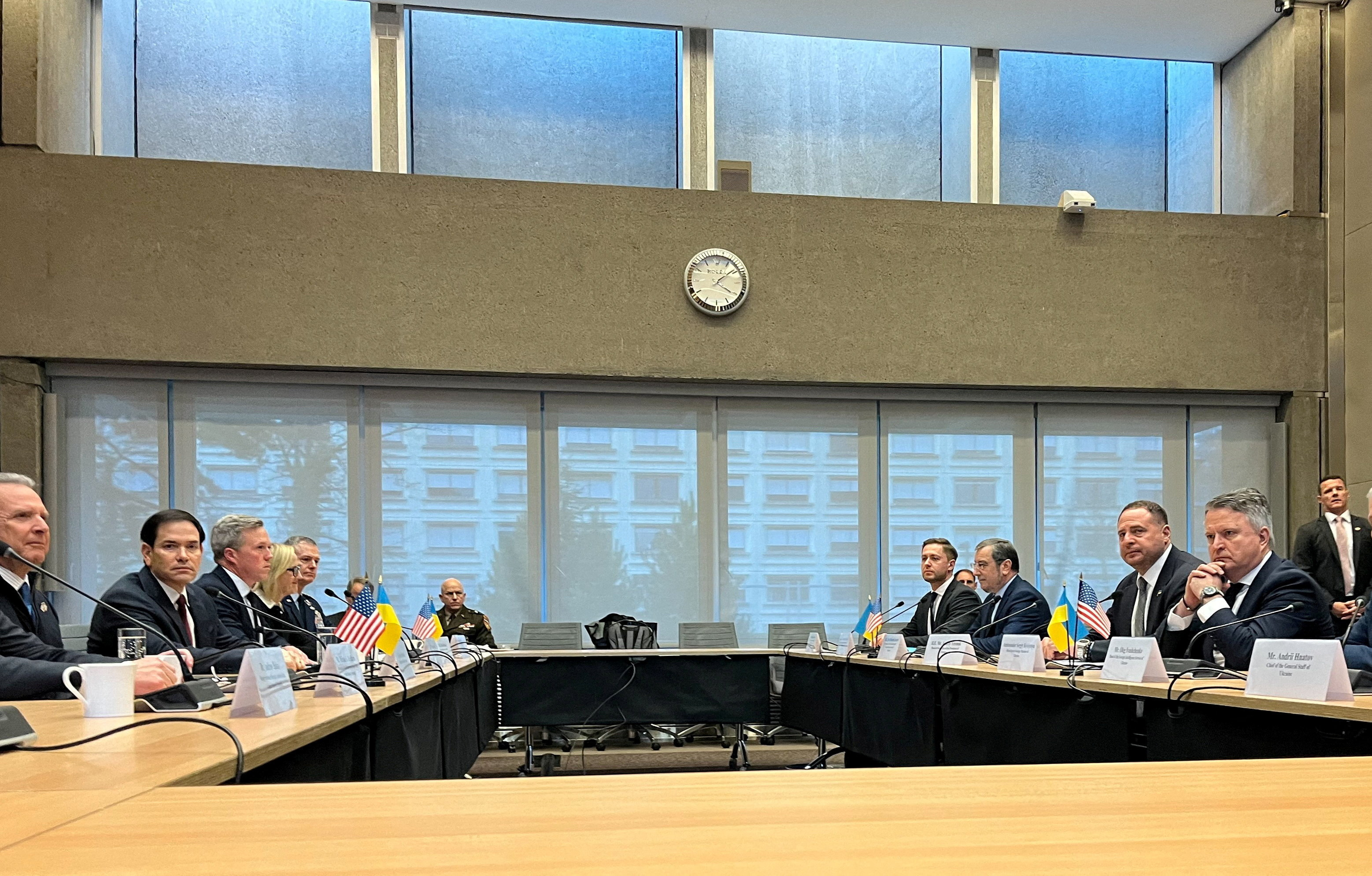
Ukraine War: Trump Cites Taxpayer Burden as Geneva Talks Yield Limited Progress
Former US President Donald Trump has described the ongoing war in Ukraine as “very unfair,” arguing that the conflict has taken a heavy toll not only on lives lost but also on American taxpayers. His remarks came after two days of US-mediated negotiations in Geneva concluded without a decisive breakthrough.
Speaking in Washington, White House spokesperson Karoline Leavitt said the talks between Ukrainian and Russian representatives had produced “meaningful progress,” with all sides agreeing to continue discussions aimed at reaching a peace settlement. However, she emphasized that Trump believes the financial and human costs of the nearly four-year conflict have been disproportionately high.
According to the White House, Trump sees the war as unfair to Russians and Ukrainians who have suffered casualties, as well as to American taxpayers who had been funding military support to Kyiv before his administration halted direct aid shipments.
Table of Contents
ToggleAid Suspension and New Funding Mechanism
In March last year, the Trump administration paused billions of dollars in US military assistance to Ukraine, increasing pressure on Kyiv to pursue negotiations with Moscow. The move temporarily froze key weapons deliveries at a critical stage in the conflict.
Subsequently, Washington and its allies established an alternative arrangement under which NATO member states finance weapons drawn from US stockpiles. The mechanism was designed to sustain Ukraine’s defence capabilities while reducing the direct fiscal burden on the United States.
Kyiv Voices Frustration
Despite Washington’s cautiously optimistic tone, Ukrainian President Volodymyr Zelenskyy signaled dissatisfaction with the outcome of the Geneva talks. He described the discussions as substantive on military matters but lacking sufficient progress on broader political questions.
In his nightly address, Zelenskyy said the results so far were inadequate. While technical and security-related issues were addressed in detail, he noted that sensitive topics — including possible compromises and the prospect of a leaders’ summit — remain unresolved.
Posting on social media, Zelenskyy accused Russia of deliberately slowing the negotiation process at a stage when, in his view, progress could have been accelerated. Talks reportedly ended after just two hours on the second day, underscoring the persistent gaps between the two sides.
Both delegations acknowledged that discussions were challenging. Although they agreed to reconvene, no timeline has been announced.
Among the thorniest sticking points are the future of Russian-occupied territories in eastern Ukraine and control of the Zaporizhzhia Nuclear Power Plant, Europe’s largest nuclear facility, which remains under Moscow’s authority.
Shifting Energy Dynamics
The war continues to influence global energy markets. Recent industry data show that Russian crude accounted for its smallest share of India’s oil imports since late 2022. After Moscow’s 2022 invasion, India significantly increased purchases of discounted Russian oil, at times importing more than two million barrels per day.
However, tightening western sanctions and trade-related considerations have prompted New Delhi to scale back those volumes. Since late last year, China has overtaken India as Russia’s leading buyer of seaborne crude, reflecting shifting geopolitical and economic alignments.
Sanctions and Regional Tensions
On the diplomatic front, Ukraine imposed sanctions on Belarusian President Alexander Lukashenko, accusing Minsk of supporting Russia’s war effort. Zelenskyy pledged to intensify countermeasures against what he described as Belarus’s role in aiding Moscow.
Given that Lukashenko is already subject to US and European sanctions, the move is seen largely as symbolic, though it reinforces Kyiv’s determination to hold Russia’s allies accountable.
Meanwhile, a delegation of Democratic US senators visited Odesa, a vital Black Sea port that has endured repeated attacks. The lawmakers aim to galvanize congressional support for additional sanctions intended to increase economic pressure on Moscow and strengthen Ukraine’s negotiating position.
Adding to regional friction, Hungary announced a temporary suspension of diesel exports to Ukraine, citing unresolved disruptions in Russian oil supplies passing through Ukrainian territory. Kyiv has rejected accusations that it deliberately interfered with those flows.
Uncertain Path Ahead
While Washington maintains that diplomatic channels remain open and incremental progress has been made, the Geneva talks illustrate how far apart the parties remain on core issues. Territorial disputes, energy infrastructure, and security guarantees continue to complicate efforts to reach a comprehensive settlement.
Trump’s framing of the conflict — focusing on both human casualties and financial costs — highlights the domestic political dimension of US involvement. At the same time, Kyiv insists that any agreement must safeguard Ukraine’s sovereignty and territorial integrity.
With negotiations set to continue but no clear timeline in place, the war remains entrenched — diplomatically, militarily and economically — with global consequences that extend far beyond the battlefield.
Top 10 Largest Rivers in the World: Length, Location & Fascinating Facts | Maya


