
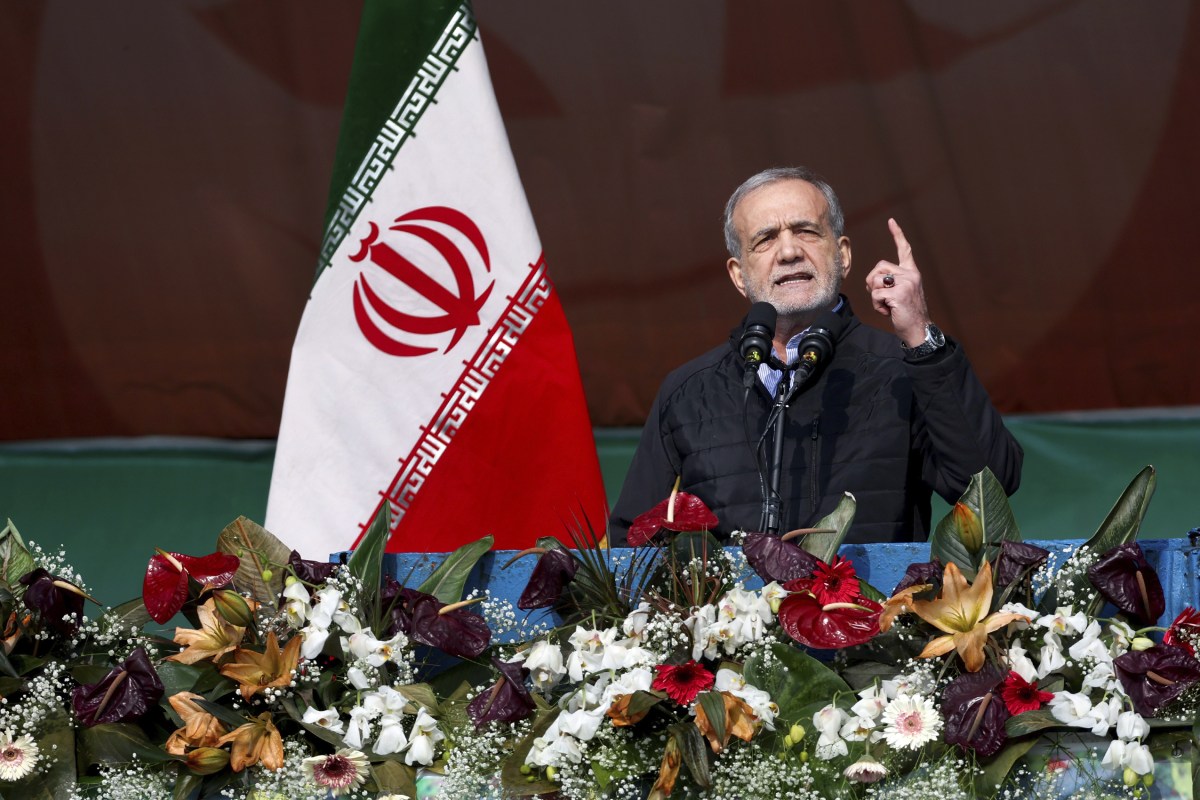
Tehran Defiant as Trump Escalates Nuclear Rhetoric-Iran signaled defiance on Wednesday in response to escalating pressure from Donald Trump, even as it left the door open to a potential diplomatic breakthrough ahead of high-stakes nuclear negotiations in Geneva.
The mixed messaging from Tehran underscores the fragile atmosphere surrounding Thursday’s talks, which come amid a significant U.S. military buildup across the Middle East. Washington has deployed one of its largest concentrations of aircraft and naval assets to the region in decades — a move widely seen as leverage aimed at forcing Iran back into a binding agreement over its nuclear program.
Iranian officials reacted sharply to Trump’s latest remarks, accusing him of spreading misinformation while insisting that diplomacy remains possible if conducted with what they described as mutual respect.
In his State of the Union address late Tuesday, Trump accused Tehran of reviving efforts to expand its missile capabilities and nuclear ambitions despite prior warnings.
“They’ve already developed missiles that can threaten Europe and our bases overseas, and they’re working to build missiles that will soon reach the United States,” Trump said. He also claimed Iran was attempting to restart elements of its weapons program, particularly in the nuclear sphere.
Tehran swiftly rejected those allegations. Iranian Foreign Ministry spokesman Esmail Baghaei dismissed Trump’s statements as “big lies,” accusing Washington of waging what he described as a deliberate campaign of disinformation. In social media posts, Baghaei compared the rhetoric to historical propaganda efforts and insisted Iran’s nuclear and missile programs were being mischaracterized.
At the same time, other Iranian officials struck a more conciliatory tone, suggesting the Geneva negotiations could still produce an agreement if approached through what they termed “honorable diplomacy.” That phrase appears aimed at signaling that Iran is willing to negotiate — but not under explicit threats of military force.
The diplomatic standoff unfolds against a tense regional backdrop. Trump has repeatedly warned that failure to reach a deal could trigger direct military action against Iran. Such a move would risk widening instability in a region still grappling with the aftershocks of the prolonged Israel-Hamas war. Several Middle Eastern governments have quietly expressed concern that open conflict between Washington and Tehran could ignite a broader confrontation.
Iran, for its part, has warned that any strike on its territory would be met with retaliation. Officials have stated that U.S. military installations across the region would be treated as legitimate targets in the event of hostilities — a threat that places tens of thousands of American troops within potential range.
Recent satellite imagery analyzed by independent observers has added further complexity to the dispute. The images appear to show Iran rebuilding portions of missile-production facilities and conducting limited activity at nuclear sites previously targeted in U.S. strikes in June. Tehran maintains that its nuclear program is strictly peaceful and designed for civilian energy and research purposes.
Western governments and the International Atomic Energy Agency have long contended that Iran maintained a covert nuclear weapons effort until 2003. In recent years, Iran has enriched uranium to levels of up to 60% purity — technically below weapons-grade but significantly closer to the 90% threshold required for a nuclear weapon. Iranian officials argue that enrichment levels are reversible and within their rights under international frameworks, though critics view the expansion as leverage in negotiations.
The renewed tensions also come as Iran faces mounting domestic challenges. Widespread protests erupted across the country last month, representing one of the most significant waves of unrest in years. The demonstrations, fueled by economic hardship and political grievances, have further strained relations between Tehran and Western governments.
Trump claimed in his address that at least 32,000 people were killed during the unrest — a figure at the upper end of activist estimates. Independent verification remains difficult. The U.S.-based Human Rights Activist News Agency has documented more than 7,000 deaths so far, while suggesting the true toll may be higher. Iran’s government has released only one official count, stating in January that 3,117 people were killed — a figure widely viewed with skepticism by rights groups.
The disparity in casualty estimates has become another flashpoint in the war of words between Washington and Tehran, with Iranian officials accusing the United States of exaggerating figures to undermine the government.
As diplomats prepare to convene in Geneva, both sides appear to be navigating a narrow path between confrontation and compromise. The United States is signaling resolve through military positioning and tough rhetoric, while Iran is balancing sharp public rebuttals with cautious indications that dialogue remains possible.
Whether Thursday’s talks can produce meaningful progress — or merely deepen mistrust — may determine whether the current crisis shifts toward diplomacy or escalates into something far more dangerous.
Apple’s Touchscreen MacBook Pro Could Redefine the Mac Experience | Maya


