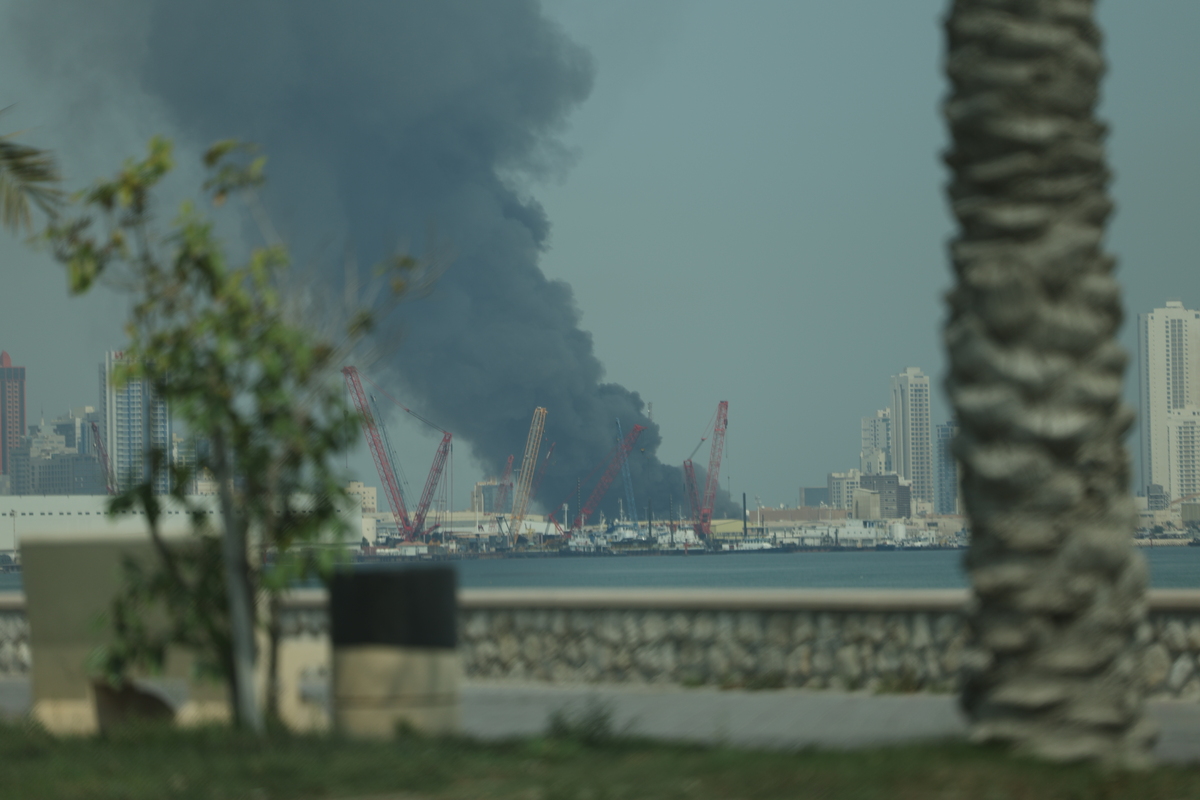
Iran Strikes US-Linked Targets in Bahrain, Hits Amazon Web Services Facility: Business Implications Loom- Tensions in the Gulf region escalated sharply on Wednesday after Iran launched a strike on a business facility in Bahrain, damaging an Amazon Web Services (AWS) data center, according to multiple reports. The attack highlights not only the human and strategic costs of the ongoing regional conflict but also the growing risks to global business infrastructure in areas affected by military tensions.
Bahrain’s Ministry of Interior confirmed that a fire had erupted at a business site “as a result of Iranian aggression,” although officials initially withheld information about which company was impacted and the scale of the damage. Subsequent reporting identified the facility as an AWS data center, part of Amazon’s extensive cloud computing network that powers critical operations for businesses worldwide. The incident raises questions about the vulnerability of key technological assets in regions exposed to geopolitical risk.
Amazon Web Services is one of the largest cloud providers in the world, supporting companies across e-commerce, finance, media, and government services. Any disruption at a data center can have far-reaching consequences, potentially affecting hundreds or thousands of companies that rely on AWS for storage, computing, and connectivity. For firms operating globally, even a localized incident can lead to operational delays, financial losses, and reputational damage.
Analysts warn that this attack reflects a broader trend: modern conflicts increasingly target not just traditional military assets but also the infrastructure that underpins economic and technological systems. “Strikes against cloud data centers and critical business facilities represent a new dimension of warfare,” said one regional security expert. “These attacks are intended to disrupt commerce, signal capability, and exert pressure beyond the battlefield.”
For businesses operating in the Gulf, the strike serves as a stark reminder of the intersection between war and commerce. Bahrain, a small but strategically located nation, hosts a range of technology, finance, and logistics hubs, many of which serve as critical nodes for international trade. A disruption in a single data center could ripple across global supply chains, impacting everything from online retail to cloud-dependent industrial systems.
The ongoing regional conflict, largely centered on tensions between Iran and US-linked entities, has seen increasingly aggressive tactics in recent months. While the human toll remains a central concern, economic targets are now part of the strategic calculus. By striking infrastructure like AWS, Iran demonstrates a willingness to intervene in global commerce indirectly, reminding international businesses that geopolitical risks can quickly translate into operational and financial hazards.
For AWS and Amazon, the incident will likely prompt a review of physical and digital security measures. Cloud companies already employ extensive redundancy and disaster recovery protocols, but attacks in politically unstable regions may require additional contingency planning. For clients who rely on these services, the event highlights the importance of geographic diversification and risk management in technology-dependent operations.
Investors, too, may feel the impact. Companies that experience operational interruptions or reputational concerns due to regional instability can face short-term stock volatility and long-term scrutiny. The strike also underscores the broader economic implications of war, where military actions in one country can have cascading effects on international business, investment flows, and market confidence.
Ultimately, the attack on the AWS facility in Bahrain illustrates how the modern battlefield extends far beyond conventional combat zones. Conflicts increasingly intersect with global commerce, cloud infrastructure, and technological ecosystems, placing companies—and the global economy—squarely in the crosshairs. For firms operating in or dependent on regions affected by geopolitical tensions, the lesson is clear: war is no longer confined to borders; it can strike at the very foundations of business operations.
As the situation develops, both governments and corporations will be watching closely, assessing the damage and reevaluating the strategies needed to protect critical assets. In a world where technology underpins almost every aspect of commerce, the line between war and business continues to blur, making incidents like the Bahrain strike a cautionary tale for companies everywhere. SpaceX IPO Set to Ignite Markets with Record-Breaking Debut | Maya