Iran Agrees to 14-Day Ceasefire, Keeps Military on Alert
In a significant but cautious step toward de-escalation, Iran has agreed to a 14-day ceasefire with the United States, temporarily pausing active hostilities after weeks of rising tensions. While the announcement has lowered immediate fears of a broader conflict, officials on both sides have made it clear: this is not the end of the war, but rather a short window for diplomacy under pressure.
From a U.S. perspective, the ceasefire represents a strategic breathing space—an opportunity to stabilize a rapidly deteriorating situation without conceding long-term leverage in the region. American officials have framed the move as a measured pause, designed to prevent further escalation while testing whether meaningful negotiations with Tehran are still possible.
A Pause Under Pressure, Not a Peace Deal
The agreement, set to last for two weeks, is being described by analysts in Washington as a fragile and conditional halt, rather than a breakthrough. The U.S. has not entered into a formal peace agreement with Iran, and no permanent commitments have been made by either side.
Instead, this ceasefire functions more like a mutual timeout. Military operations are expected to slow or stop temporarily, but both nations remain fully capable—and prepared—to resume action if the situation deteriorates. U.S. defense officials have emphasized that American forces in the region remain fully deployed and vigilant, particularly in key strategic zones.
This caution reflects a broader concern within the U.S. government: that Iran may be using the pause to regroup, reposition, or gain diplomatic advantage, rather than genuinely moving toward de-escalation.
Strategic Importance of the Strait of Hormuz
At the center of this temporary agreement lies the Strait of Hormuz, a narrow but vital waterway through which a significant portion of the world’s oil supply passes. Disruptions in this corridor have global consequences, affecting energy markets and economic stability far beyond the Middle East.
As part of the ceasefire understanding, Iran has signaled that it will allow safe passage for commercial shipping through the strait during the 14-day period. For the United States and its allies, this is a critical development.
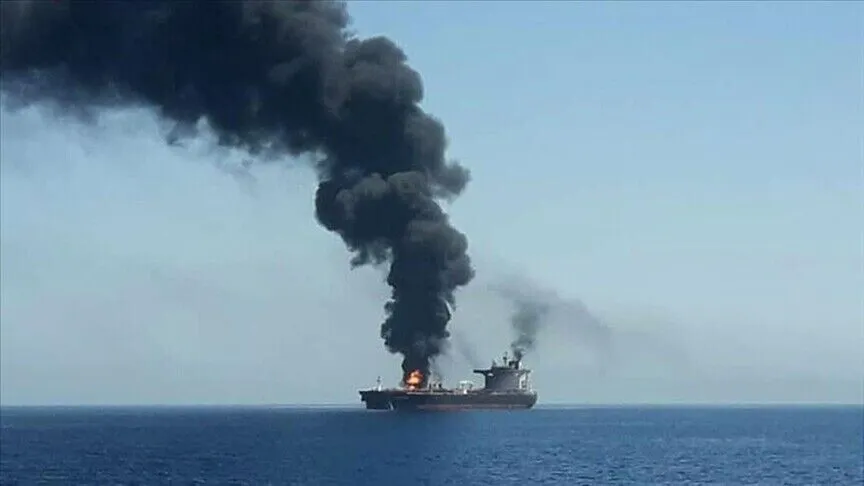
In recent weeks, concerns had grown over potential blockades or attacks on oil tankers, which could have triggered a wider international response. By keeping the strait open, Iran is effectively reducing immediate global pressure—while also signaling that it retains control over one of its most powerful strategic tools.
From Washington’s standpoint, ensuring the uninterrupted flow of maritime trade is a top priority, and this aspect of the ceasefire is being closely monitored.
Diplomacy in Motion
Behind the scenes, intense diplomatic efforts have played a role in bringing both sides to this temporary arrangement. U.S. officials have acknowledged the involvement of regional intermediaries who worked to prevent the situation from spiraling further out of control.
The ceasefire has created a narrow but important opportunity for direct or indirect negotiations. American policymakers are approaching these talks with caution, aware that past attempts at diplomacy with Iran have often stalled over deep-rooted disagreements.
Key issues expected to dominate discussions include Iran’s regional activities, its military posture, and longstanding disputes over sanctions. For the U.S., any long-term agreement would likely need to address concerns about security, stability, and deterrence in the region.
Iran’s Position and U.S. Concerns
Iran has made it clear that the ceasefire does not signal weakness. Its leadership has emphasized that the country remains fully prepared to defend itself, and that its military forces will stay on high alert throughout the two-week period.
From the U.S. perspective, this posture reinforces a critical reality: the ceasefire may reduce immediate violence, but it does not eliminate the underlying risks. American intelligence and defense agencies are continuing to track Iranian movements closely, particularly any signs of military buildup or strategic repositioning.
U.S. officials are also wary of Iran’s broader objectives. There is a belief in Washington that Tehran may seek to use the ceasefire to gain diplomatic concessions, including relief from economic sanctions or recognition of its regional influence.
This creates a delicate balancing act for the United States—engaging in talks without appearing to уступ ground under pressure.
A Region on Edge
Even with the ceasefire in place, the situation across the Middle East remains tense. U.S. military bases, allied forces, and key infrastructure sites are still operating under heightened alert conditions.
There are also concerns about non-state actors and regional allies, who may not fully adhere to the ceasefire or could act independently, potentially undermining the fragile pause. Any such incident could quickly unravel the agreement and push both sides back into open conflict.
For this reason, U.S. officials are emphasizing the importance of strict compliance and clear communication during the ceasefire period. Avoiding misunderstandings or accidental escalations will be critical in maintaining stability.
What the Next Two Weeks Could Bring
The 14-day timeframe is both an opportunity and a risk. On one hand, it provides a chance for diplomacy to gain traction. On the other, it sets a tight deadline for progress.
If negotiations show signs of success, the ceasefire could be extended or transformed into a more durable arrangement. This would mark a significant shift in U.S.-Iran relations, which have been defined by decades of mistrust and confrontation.
However, if talks break down—or if either side perceives a violation of the agreement—the pause could end abruptly. In that scenario, the conflict might resume with even greater intensity, as both sides seek to reassert strength.
From Washington’s viewpoint, the key objective during this period is to test Iran’s intentions while maintaining a strong defensive posture.
The Bottom Line
The 14-day ceasefire between the United States and Iran is best understood as a temporary strategic pause, not a resolution. It reflects a moment of caution in an otherwise volatile conflict, offering a brief window for diplomacy without fundamentally changing the dynamics on the ground.
For the United States, the focus remains on protecting its interests, supporting regional stability, and preventing escalation, while exploring whether a longer-term solution is achievable.
As the clock ticks on this two-week truce, the world will be watching closely. What happens next will depend not only on negotiations, but on the ability of both sides to navigate a deeply complex and fragile situation without tipping back into conflict. Motorola Re-enters Tablet Space with New Moto Pad in the US | Maya