
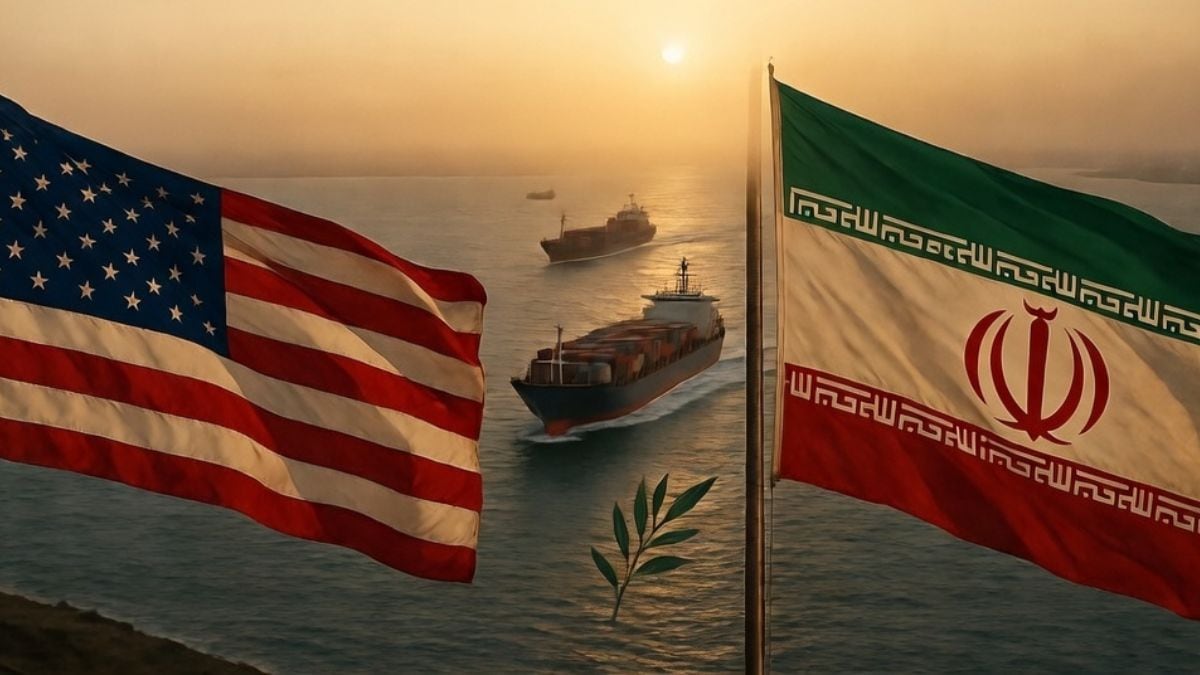
World Powers React as US–Iran Ceasefire Sets Stage for Negotiations- A fragile calm has settled over an increasingly volatile geopolitical landscape after the United States and Iran agreed to a two-week ceasefire, pausing a dangerous cycle of escalation that had raised fears of a wider regional conflict. The truce, announced by Donald Trump, is being widely seen as a critical diplomatic opening, with formal peace talks scheduled to begin in Islamabad in the coming days.
At the heart of the agreement is not just a halt in hostilities, but also a commitment to resume dialogue—something many global leaders have long called for. The ceasefire includes the reopening of the Strait of Hormuz, a vital maritime corridor through which nearly a fifth of the world’s oil supply passes. Its disruption during the conflict had triggered sharp concerns about global energy security, rising fuel prices, and trade instability, making its restoration a key relief point for economies worldwide.
Major world powers have responded with a mix of cautious optimism and strategic restraint, welcoming the pause in fighting while underscoring the challenges ahead.
China was among the first to endorse the ceasefire, framing it as a positive step toward de-escalation. Officials highlighted Beijing’s sustained diplomatic engagement, with Foreign Minister Wang Yi actively communicating with regional and global stakeholders throughout the crisis. China reiterated that it would continue working toward a comprehensive and lasting political solution, positioning itself as a steady advocate for dialogue over confrontation.
Russia, while also acknowledging the ceasefire, adopted a more critical tone toward the events that preceded it. Foreign Ministry spokesperson Maria Zakharova argued that the escalation had demonstrated the limits of military pressure, calling it an ineffective strategy. Meanwhile, Dmitry Medvedev suggested that although the ceasefire reflects a return to “common sense,” the broader consequences—particularly for global oil markets and geopolitical stability—are far from resolved.
In the Middle East, reactions have been more complex. Israeli Prime Minister Benjamin Netanyahu expressed support for Washington’s decision to suspend strikes on Iran, emphasizing the importance of ensuring that Iran does not pose a nuclear or missile threat. However, he made it clear that the ceasefire does not extend to Lebanon, where Israeli forces remain engaged in conflict with Hezbollah. This distinction underscores the limited scope of the truce and highlights the risk that tensions could persist or even escalate on other fronts.
At the global level, the United Nations has called for full adherence to the agreement. Secretary-General Antonio Guterres urged all parties to respect the ceasefire and use it as a foundation for broader peace efforts. He stressed that an immediate reduction in violence is essential to protect civilian lives and address humanitarian suffering, which has intensified during the conflict.
European leaders have similarly welcomed the development, describing it as a “step back from the brink” after weeks of mounting tensions. European Commission President Ursula von der Leyen emphasized the importance of maintaining momentum toward de-escalation, while Antonio Costa and Kaja Kallas called for sustained diplomatic engagement to transform the temporary truce into a durable and enforceable peace agreement.
Despite the broadly positive reactions, some leaders have urged caution against premature celebration. Spain’s Prime Minister Pedro Sanchez offered a pointed reminder that a ceasefire, while welcome, does not erase the destruction, displacement, and loss of life already caused. He called for a renewed commitment to international law and long-term conflict resolution, warning that short-term relief must not overshadow the need for accountability and justice.
India also responded positively, highlighting the ceasefire’s implications for global trade and energy flows. Officials noted that the conflict had disrupted key supply chains and increased uncertainty in international markets. With the Strait of Hormuz reopening, there is cautious hope that stability in oil shipments and maritime navigation will be restored, easing pressure on economies heavily dependent on energy imports.
As attention now shifts to Islamabad, expectations are high but tempered by realism. The upcoming talks are seen as a decisive moment—an opportunity to convert a temporary pause into a structured path toward peace. However, analysts warn that significant challenges remain, including deep-rooted mistrust, regional rivalries, and unresolved security concerns.
Ultimately, while the ceasefire has provided a much-needed break from immediate hostilities, it is only a first step in what could be a long and uncertain diplomatic journey. Whether this moment leads to lasting stability or merely delays further confrontation will depend on the willingness of all sides to engage in meaningful negotiation and compromise.
Budget-Friendly ChromeOS Flex Kit Extends Life of Aging Computers | Maya


