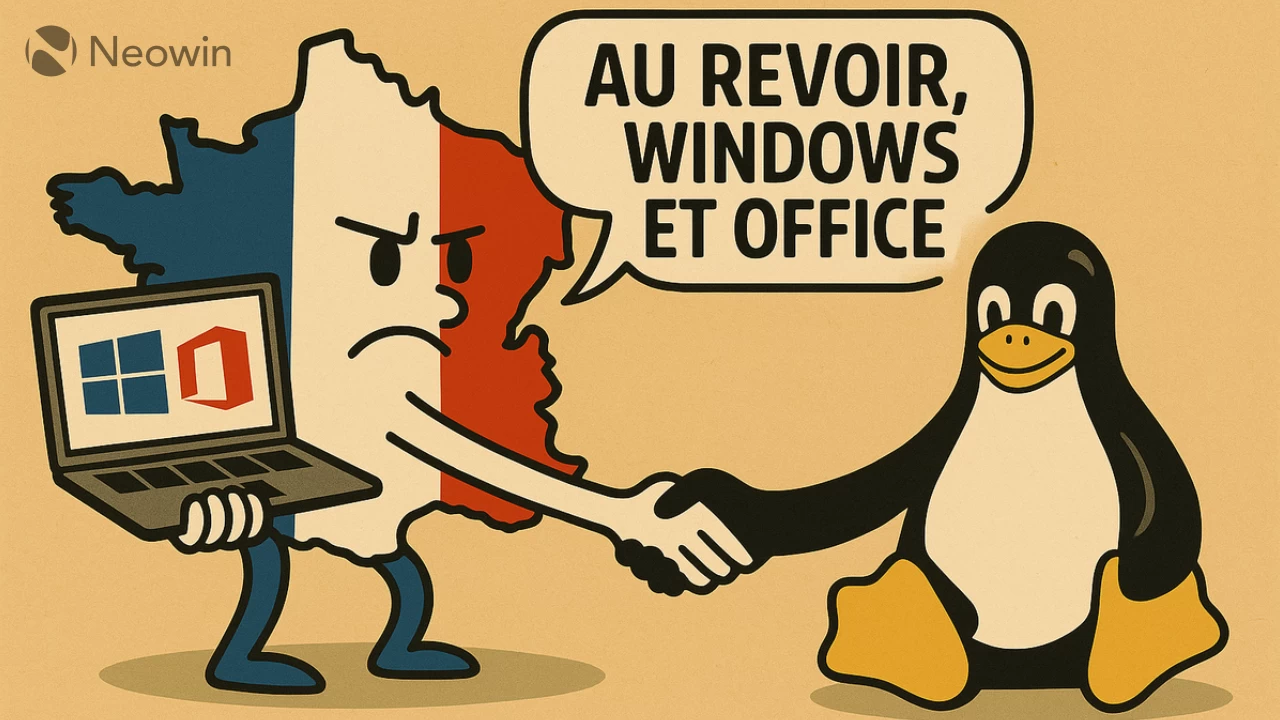
France Moves Toward Linux: A Major Shift for Digital Sovereignty and Tech Independence- France is taking a significant step toward reshaping its digital infrastructure by gradually moving parts of its government computing systems away from Microsoft Windows and toward the Linux operating system. This initiative reflects a broader European push for digital sovereignty, aiming to reduce dependence on foreign—particularly U.S.—technology providers and strengthen control over national data and infrastructure.
At the center of this transition is Linux, an open-source operating system known for being free, customizable, and highly secure. Unlike proprietary systems such as Windows, Linux allows governments and organizations to inspect, modify, and adapt its source code. This flexibility is one of the key reasons it is increasingly attractive to public institutions seeking more control over their digital environments.
French officials have framed the move as a strategic necessity rather than a purely technical upgrade. According to government statements attributed to Minister David Amiel, the objective is to “regain control of our digital destiny.” The concern is not simply cost or performance, but long-term reliance on external vendors whose policies, licensing models, or geopolitical constraints could potentially affect access to essential systems.
The transition is expected to begin with the French government’s digital agency, DINUM (Direction interministérielle du numérique). This agency plays a central role in managing France’s public digital services and infrastructure, making it a logical starting point for such a large-scale migration. However, officials have not yet disclosed a detailed timeline or specified which Linux distributions will be adopted. This suggests the process will be gradual, likely involving pilot programs, testing phases, and incremental rollouts across departments.
One of the strongest motivations behind this shift is data sovereignty. Governments across Europe have increasingly expressed concerns about where their data is stored, who controls access to it, and how dependent they are on foreign cloud providers and software ecosystems. By moving toward open-source solutions like Linux, France aims to ensure that critical systems remain transparent, auditable, and under domestic control.
This decision also aligns with broader European Union discussions about reducing reliance on non-European technology providers. In recent years, EU policymakers have emphasized the importance of building independent digital infrastructure, including cloud platforms, communication tools, and cybersecurity systems developed within Europe. France’s move can therefore be seen as part of a larger continental trend rather than an isolated policy change.
Interestingly, this is not the first step France has taken in this direction. The government has already begun replacing Microsoft Teams in some internal communications with Visio, a French-developed video conferencing tool based on the open-source platform Jitsi. This earlier shift highlights a pattern: prioritizing open-source and locally developed alternatives for critical communication and collaboration tools.
Another important development is France’s ongoing plan to migrate certain national health data systems to a more controlled and “trusted” platform. While details remain limited, this move further underscores the emphasis on protecting sensitive citizen information and reducing reliance on external infrastructures for essential public services.
From a technical standpoint, transitioning from Windows to Linux across government systems is a complex undertaking. It involves more than simply installing new software. Agencies must ensure compatibility with existing applications, retrain staff, redesign workflows, and establish long-term support structures. For a government as large and digitally dependent as France, this is likely to be a multi-year transformation rather than a quick switch.
However, the potential benefits are significant. Linux-based systems can offer greater security, reduced licensing costs, improved customization, and increased resilience against vendor lock-in. For governments, the ability to fully understand and control the underlying software stack is particularly valuable in an era of rising cybersecurity threats and geopolitical uncertainty.
At the same time, challenges should not be underestimated. Migration at this scale can introduce operational risks, compatibility issues, and training burdens for public employees. Success will depend heavily on careful planning, phased implementation, and strong technical support.
Overall, France’s move signals a growing global trend: governments are increasingly reevaluating their dependence on a small number of dominant technology providers. By investing in open-source systems like Linux and prioritizing domestic or European alternatives, France is positioning itself toward a future defined by greater technological independence and strategic autonomy.
Whether this approach becomes a model for other nations remains to be seen, but it is clear that the conversation around digital sovereignty is no longer theoretical—it is actively shaping government technology decisions today.