Rising uncertainty in the Strait of Hormuz as US naval initiative meets disputed reports of attacks: The situation in the Strait of Hormuz has become increasingly tense following a series of conflicting claims involving the United States, Iran, and commercial shipping operators. The developments have triggered renewed concern across global energy markets and maritime industries about the security of one of the world’s most important shipping corridors.
The latest escalation followed an announcement from former US President Donald Trump, who outlined a new maritime operation he described as “Project Freedom.” In his statement posted on Truth Social, he said the US Navy would assist in “guiding” vessels through the Strait of Hormuz, particularly those reportedly stranded or unable to safely navigate the area.
He framed the initiative as a humanitarian measure intended to ensure safe passage for commercial shipping and suggested it would involve cooperation across the United States and certain Middle Eastern states, including Iran. The announcement quickly drew international attention given the strategic importance of the waterway and its history of geopolitical friction.
The Strait of Hormuz serves as a critical passage for global energy supplies, with a large proportion of crude oil and liquefied natural gas shipments from the Gulf region passing through it daily. Because of this, even minor disruptions or perceived risks in the area tend to have immediate effects on shipping costs and global oil prices.
Conflicting reports of military activity
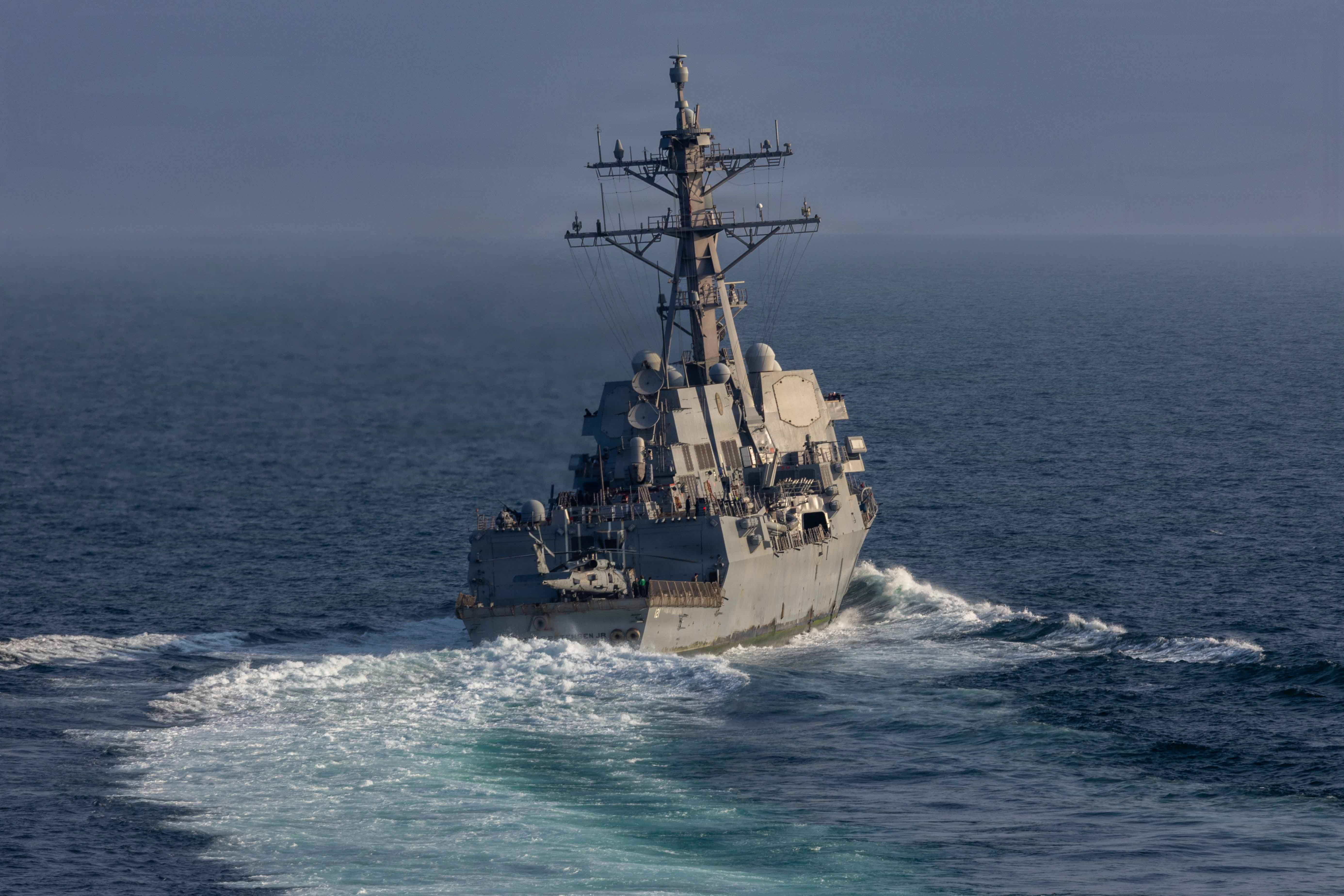
Shortly after the announcement, Iranian-linked media outlets, including the Fars news agency, reported an incident involving a US naval vessel. According to those reports, a US warship attempting to move through the strait was struck by two missiles after allegedly ignoring warnings from Iranian forces. The vessel was said to have withdrawn following the incident.
However, US authorities strongly rejected these claims, stating that no American ship had been hit or forced to retreat. Officials described the reports as inaccurate and unverified, emphasizing that US naval and merchant operations in the region had not been disrupted by any such attack.
At the same time, the United States Central Command issued a separate update indicating that two US-flagged commercial vessels successfully completed transit through the Strait of Hormuz. This suggests that maritime movement is still ongoing, though under increased security monitoring and heightened operational caution.
The contradiction between these accounts has added to the uncertainty surrounding the actual conditions in the waterway. Independent confirmation of the reported missile strike has not been established, and analysts caution that information emerging from the region can often be fragmented, especially during periods of heightened tension.
Shipping sector expresses concern over safety and viability
The international maritime industry has reacted with caution to the evolving situation. Shipping operators, insurers, and seafarer organizations have raised questions about whether any coordinated escort system—such as the one implied under “Project Freedom”—could realistically ensure safe passage in such a volatile environment.
Experts point out that the Strait of Hormuz is a narrow and heavily trafficked corridor where commercial vessels operate in close proximity to military activity. In such conditions, risks may include missile threats, electronic interference, and the potential presence of naval mines or fast-moving patrol craft, all of which complicate safe navigation.
Seafarers’ representatives have also highlighted practical concerns about the proposal. Sascha Meijer, general secretary of the Nautilus seafarers’ union, noted that while crews would welcome improved protection, there are still many unanswered questions. These include whether escort arrangements would provide genuine security, how insurance coverage would be handled in a conflict-risk zone, and whether such operations might unintentionally increase danger rather than reduce it.
Shipping companies are reportedly reviewing risk assessments for the region. War-risk insurance premiums, which are already sensitive to geopolitical instability, could rise further if tensions persist. In some cases, operators may consider delaying voyages or adjusting routes, although alternative passages would significantly increase travel distance, fuel consumption, and operational costs.
Oil markets react to geopolitical uncertainty
Energy markets have responded quickly to the uncertainty. Brent crude prices rose by roughly 2%, reaching around $110 per barrel following the reports. Traders attributed the increase to concerns about possible disruptions in one of the world’s most important oil transit routes.
The Strait of Hormuz plays a crucial role in global energy flows, and even the perception of instability can influence pricing. Analysts say that if tensions were to escalate further or shipping volumes were to be restricted, the impact could extend beyond oil prices to broader inflationary pressures, particularly in countries heavily dependent on imported fuel.
Freight markets may also experience volatility if insurers and shipping companies demand higher premiums or impose stricter operating conditions for vessels transiting the region.
Strategic and diplomatic implications remain unclear
The introduction of “Project Freedom” has raised broader questions about its scope and feasibility. While presented as a humanitarian initiative aimed at ensuring safe passage, the concept of US naval escorts operating in coordination with regional actors introduces significant diplomatic and operational complexities.
The history of US–Iran relations in the Gulf has long been marked by naval confrontations, sanctions enforcement actions, and periodic incidents involving commercial shipping. In such an environment, even routine naval movements can be misinterpreted, increasing the risk of unintended escalation.
Defense observers note that any attempt to coordinate multinational maritime security in the Strait of Hormuz would require clear communication channels and agreed protocols to avoid misunderstandings. Without such frameworks, there is a risk that competing narratives and rapid military responses could intensify rather than reduce tensions.
Outlook: fragile conditions and unresolved questions
At present, the situation remains uncertain, with limited independently verified information about the alleged missile strike and no clear operational details about how “Project Freedom” would function in practice. Commercial vessels continue to transit the Strait of Hormuz, but under heightened alert and increased security awareness.
Key questions remain unanswered: whether the US initiative will develop into a sustained escort mission, how regional powers will respond, and whether any form of cooperative maritime security arrangement is feasible under current political conditions.
For now, global shipping firms, energy traders, and governments are closely monitoring developments. Even without confirmed large-scale disruption, the combination of political announcements, disputed military reports, and market sensitivity ensures that the Strait of Hormuz remains one of the most strategically significant and closely watched waterways in the world.