
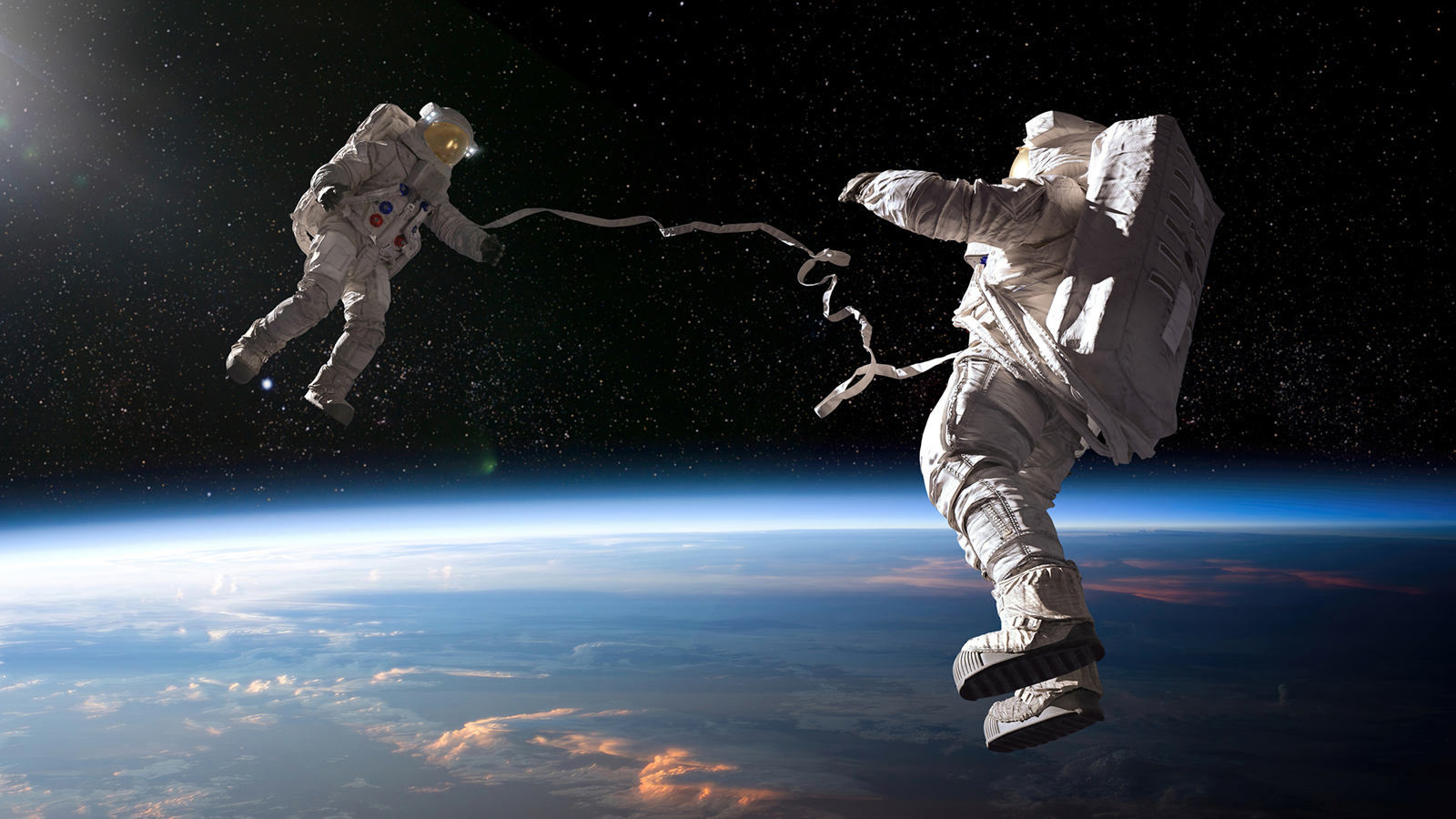
Why does the brain struggle with 3–5 second communication delay in space? A 3–5 second communication delay in space might not sound like much. On Earth, we often wait longer for videos to load or messages to send. But in real-time conversation, especially between astronauts and mission control, even a few seconds of delay changes how the brain functions. It feels awkward, slow, and sometimes confusing.
The reason is not just technology—it is how the human brain is built for fast, back-and-forth interaction.
The brain is built for real-time conversation
Human conversation on Earth is almost instant. When two people talk:
- One speaks
- The other responds within a fraction of a second
- Both constantly adjust tone, timing, and meaning
This rapid exchange is called turn-taking synchronization.
The brain expects:
- Immediate feedback
- Quick correction of misunderstandings
- Continuous social cues (tone, hesitation, interruption)
So when communication is delayed by even 3–5 seconds, that natural rhythm breaks.
Why a few seconds feels so long
A key reason is how the brain perceives time during social interaction.
When you are waiting for a reply:
- The brain becomes highly sensitive to silence
- It starts predicting what should happen next
- Even small gaps feel stretched
A 3-second delay is not just “3 seconds.” In conversation terms, it feels like an unnatural pause where something is missing.
This is especially noticeable in space communication with missions like the International Space Station, where astronauts and ground control must adapt to slight transmission delays depending on signal routing and conditions.
The brain relies on prediction in conversation
One of the brain’s main tricks is prediction. It constantly tries to guess:
- What the other person will say next
- When they will respond
- How the conversation will flow
In normal dialogue, prediction works well because feedback is fast.
But with a delay:
- The brain predicts incorrectly more often
- It sends responses “too early” or “too late”
- Conversation becomes less smooth
This mismatch creates mental effort and discomfort.
Loss of conversational rhythm
Conversation has a natural rhythm, similar to music:
- Speak
- Pause briefly
- Respond
- Adjust instantly
With a 3–5 second delay, this rhythm collapses.
Instead of a smooth exchange, you get:
- Long silences
- Overlapping speech attempts
- Uncertainty about whether the other person is done talking
The brain interprets this as “something is wrong,” even though it is just physics.
Social cues become harder to use
In face-to-face communication, we rely heavily on:
- Facial expressions
- Eye contact
- Body language
- Micro-pauses in speech
These cues help us decide when to respond.
In delayed space communication:
- Audio arrives late
- Feedback is not immediate
- Timing cues become unreliable
So astronauts and mission control lose part of the social “signal system” the brain depends on.
Working memory overload
Another issue is cognitive load.
When there is a delay, the brain has to:
- Hold the original message in working memory
- Wait without reacting
- Prepare a response in advance
- Adjust when new information finally arrives
This increases mental effort.
Instead of a simple conversation, it becomes a task of tracking delayed information streams, which is more like problem-solving than talking.
Why astronauts feel it more strongly
In everyday life, people can tolerate delays in texting or online calls because:
- The interaction is not always urgent
- There is visual context or shared environment
- There is less pressure for immediate response
But in space operations, communication is:
- High-stakes
- Time-sensitive
- Structured and precise
Even small delays feel more noticeable because every message may involve safety-critical decisions.
The illusion of “broken conversation”
With a 3–5 second delay, both sides often experience the same confusion:
- One person thinks the other has finished speaking
- The other is still processing or responding
- Messages overlap or repeat
This creates an illusion that communication is “broken,” even though the system is working correctly.
The brain is simply not adapted to this timing mismatch.
Real-world adaptation strategies
Space agencies train astronauts and controllers to adapt by:
- Speaking in shorter sentences
- Pausing deliberately after each message
- Avoiding interruptions
- Confirming understanding more often
These habits reduce the pressure on the brain’s real-time processing system.
For example, communication protocols used with the International Space Station often include structured call-and-response patterns to reduce confusion.
Why 3–5 seconds is a critical threshold
Interestingly, delays under about 1 second are usually not noticeable. But once delays reach 2–3 seconds:
- Conversation feels unnatural
- Turn-taking breaks down
- Prediction errors increase
At 3–5 seconds, the brain can no longer treat communication as real-time dialogue. It shifts into a “message waiting” mode instead of a conversational mode.
That shift changes everything about how we think, respond, and interact.
A simple analogy
Imagine playing catch with a friend:
- Normally, you throw and immediately adjust based on their catch
- Now imagine a delay where the ball disappears for a few seconds before reappearing
You would hesitate, misjudge timing, and lose rhythm.
That is similar to what happens in delayed space communication. The “ball” is the conversation, and the delay disrupts the timing system the brain depends on.
Closing remarks
The human brain struggles with a 3–5 second communication delay in space because it is designed for rapid, real-time interaction. Conversation depends on instant feedback, prediction, rhythm, and social cues—all of which break down when signals are delayed.
In space missions, even small delays change conversation from a natural exchange into a more deliberate, carefully structured process. Astronauts and mission control can adapt, but it requires conscious effort because it goes against how the brain is naturally wired.
In simple terms, it is not the technology that confuses us—it is the mismatch between human expectations of instant response and the physical limits of communication across space.
First Artificial Womb in Space: Raising Humans Off-Earth | Maya
:max_bytes(150000):strip_icc()/GettyImages-151541875-adcfc13d221e40e4946f571b57180f3d.jpg "How Sputnik 1 Sparked the Space Race")
