Markets Split Between Middle East Fears and AI Euphoria
Global markets are currently being shaped by two completely different forces. On one hand, rising tensions in the Middle East, growing military uncertainty in Europe, and fears of another energy crisis are increasing anxiety among investors and governments. On the other hand, the rapid expansion of artificial intelligence is fueling a historic rally in technology stocks and pushing companies such as Alphabet closer to becoming the world’s most valuable business.
This unusual combination of geopolitical fear and technological optimism is defining the global economy in 2026.
The latest wave of uncertainty began after Donald Trump rejected Iran’s most recent response to a proposal aimed at ending the conflict in the Middle East. The disagreement prolonged instability around the Strait of Hormuz, one of the world’s most critical oil shipping routes. Nearly 20% of global oil and gas trade moves through the narrow passage, meaning any disruption immediately impacts international energy markets.
As concerns over the region intensified, oil prices climbed sharply. Traders fear that prolonged instability or military escalation could further interrupt shipping activity and tighten global supply. Every diplomatic statement from Washington, Tehran, and Gulf nations is now being closely watched because even minor developments are capable of moving markets.
The rise in oil prices affects far more than the energy industry. Higher fuel costs increase transportation expenses, manufacturing costs, and overall inflation. Central banks that had hoped inflation was finally easing now face the possibility of renewed price pressure. If energy prices remain elevated, interest rates could stay higher for longer, slowing growth across major economies.
Europe is already preparing for a more uncertain security environment. More than 40 countries are discussing participation in a European-led naval operation designed to escort commercial ships through the Strait of Hormuz once conditions improve. The plan reflects growing concerns that global security risks are increasing and that Europe may need to rely less on the United States for protection.
Those concerns have deepened after reports suggested Trump may reduce the American military presence in Europe if he returns to office. Diplomats expect additional troop withdrawals from Germany and possibly Italy, while plans for deploying long-range missile systems in Europe could also be reconsidered. Such decisions would force European governments to rethink defense spending and strategic priorities.
Political pressure is also building inside the United Kingdom. Prime Minister Keir Starmer is facing criticism after weak local election results raised doubts about his leadership. Senior Labour figures, including Angela Rayner, have urged the government to shift direction quickly. At the same time, Nigel Farage and Reform UK are gaining support by focusing on voter frustration over inflation, immigration, and economic insecurity.
Across Europe, traditional political parties are struggling to maintain public confidence. Slower economic growth, rising living costs, and security concerns have strengthened populist movements in several countries. Governments are being forced to balance military spending, energy security, and domestic economic pressures while already dealing with tight public finances.
Yet despite these geopolitical concerns, investors remain highly optimistic about artificial intelligence.
No company represents this transformation more clearly than Alphabet, the parent company of Google. Only a year ago, many analysts believed Alphabet was falling behind in the AI race after the success of ChatGPT and Microsoft-backed OpenAI. There were growing fears that Google’s dominance in online search could weaken for the first time in decades.
That perception has changed dramatically.
Alphabet is now viewed as one of the strongest AI companies in the world because of the breadth of its technology ecosystem. The company controls Google Search, Android, YouTube, Google Cloud, digital advertising platforms, and advanced AI infrastructure. This gives Alphabet the ability to integrate AI into products already used by billions of people every day.
Investors increasingly believe the company is uniquely positioned to benefit from the next stage of AI development. Alphabet’s market value has risen rapidly, narrowing the gap with Nvidia, the chipmaker at the center of the AI hardware boom. Nvidia remains essential because its advanced processors power most large AI systems. However, many analysts believe Alphabet could eventually capture greater long-term value because it controls both AI tools and the platforms where those tools are distributed.
The difference between the two companies reflects a larger shift in the AI economy. Nvidia provides the technology powering AI systems, while Alphabet owns many of the digital services where AI will ultimately be used.
Alphabet’s recent stock performance highlights the scale of investor confidence. The company experienced one of its strongest monthly gains in decades as enthusiasm around its AI strategy accelerated. Investors who once feared Google could lose relevance are now betting the company will become one of the biggest winners of the AI revolution.
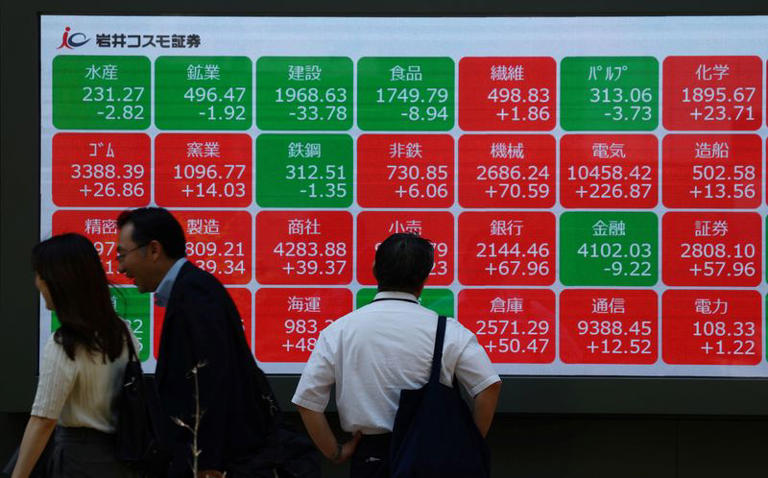
This optimism surrounding AI has helped keep American stock markets close to record highs despite rising geopolitical tensions elsewhere in the world.
That contradiction is becoming one of the defining characteristics of the global economy. Traditionally, wars, oil shocks, and military uncertainty weaken investor confidence and push markets lower. Today, however, excitement surrounding artificial intelligence and large technology firms is outweighing many of those fears.
As a result, market gains are increasingly concentrated in a small number of major technology companies linked to AI, cloud computing, and semiconductors. Meanwhile, many traditional industries remain vulnerable to slower economic growth and higher operating costs caused by inflation and energy volatility.
The recent rise in fuel prices is also accelerating changes in consumer behavior, particularly in Europe. Demand for affordable electric vehicles has increased significantly as households search for alternatives to expensive petrol and diesel. Interest in lower-cost EV models has surged, especially among middle- and lower-income consumers looking to reduce transportation expenses.
This shift reflects a broader global transition. Governments and consumers are increasingly viewing clean energy and electrification not only as environmental goals but also as ways to reduce dependence on unstable fossil-fuel markets. Automakers are now under pressure to produce cheaper electric vehicles while countries invest heavily in renewable energy infrastructure.
Beyond economics and politics, recent events have also exposed how fragile global systems remain. The hantavirus outbreak aboard the MV Hondius cruise ship, which forced emergency repatriation measures and health monitoring for passengers, reminded governments of the continued importance of international health coordination. While the situation is far smaller than the Covid-19 pandemic, it still highlights how quickly risks can spread across borders.
Taken together, these developments show a world entering a new phase of competition and uncertainty. Countries are focusing more heavily on defense, energy security, supply-chain resilience, and technological leadership. The era of stable globalization that dominated previous decades appears to be weakening.
For businesses, investors, and policymakers, the challenge is managing two powerful realities at the same time. One is a world becoming increasingly divided by geopolitical tensions and economic fragmentation. The other is a technological transformation driven by artificial intelligence that could reshape industries and generate enormous wealth.
At the moment, financial markets appear more focused on the promise of AI than the dangers of global instability. However, history shows that geopolitical crises can quickly disrupt economic optimism if conflicts intensify or energy supplies become severely affected.
For now, the global economy remains caught between two powerful narratives — fear driven by geopolitical uncertainty and excitement fueled by the extraordinary rise of artificial intelligence.
UK Monitors Returning Cruise Passengers After Hantavirus Exposure | Maya