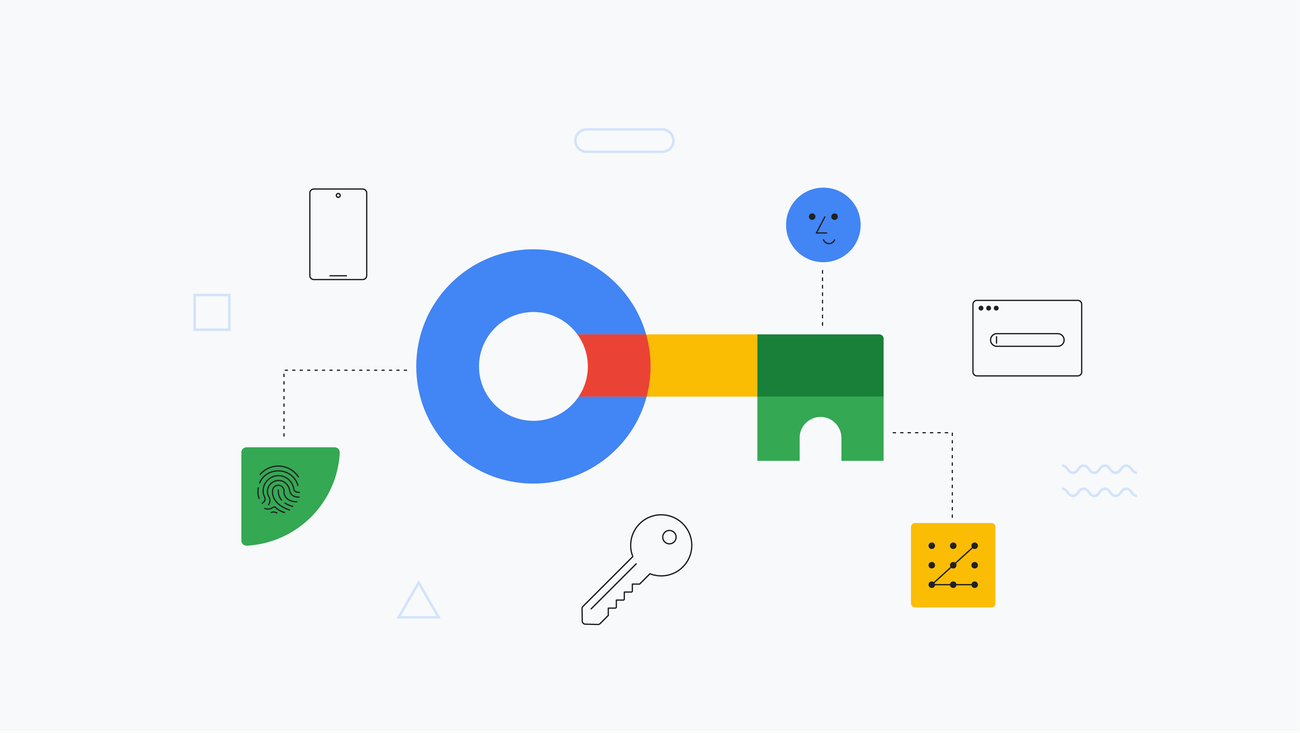
How Weak Recovery Methods Undermine Passkey Security
Passkeys are widely being promoted as the next major leap in digital security, designed to replace traditional passwords and significantly reduce phishing attacks. Built on cryptographic authentication tied to a user’s device, passkeys eliminate the need to remember or type passwords and make it far harder for attackers to steal login credentials through fake websites or social engineering.
But despite their promise, major technology companies are now warning that passkeys alone do not fully secure online accounts. The weakness does not lie in the passkey system itself, but in the supporting infrastructure around it—especially account recovery methods and fallback authentication options.
Both Google and Microsoft have recently highlighted this issue, stressing that account security is only as strong as its weakest link. In Microsoft’s words, “each account is only as secure as its weakest credential.” That means even if a user enables passkeys, the presence of weaker backup methods such as passwords, SMS codes, or insecure recovery processes can still expose the account to attack.
The central concern is that attackers are shifting their focus. Instead of trying to break passkeys directly—which is extremely difficult—they are increasingly targeting recovery flows. These are the systems designed to help users regain access if they lose their device or cannot authenticate normally. In many cases, these recovery systems rely on older, less secure methods that were never designed to withstand modern phishing or automated attacks.
Google has acknowledged this risk while still strongly supporting passkeys. The company describes them as “an easier and safer way to access online accounts compared to passwords and even traditional multi-factor methods.” However, it also warns that passkeys should not be treated as a standalone solution. Users are still advised to enable two-step verification (2SV) to provide an additional layer of defense, particularly in situations where someone might attempt to impersonate the account owner or claim that a passkey has been lost.
This concern becomes more serious when considering automated account recovery systems. If an attacker can exploit a weak verification method during the recovery process, they may be able to bypass stronger authentication protections entirely. In such cases, the strength of a passkey becomes irrelevant because the attacker never needs to defeat it directly.
Microsoft has been especially vocal about this emerging risk. The company identifies account recovery as a growing attack surface, noting that many systems still retain passwords or SMS-based authentication “just in case.” While these fallback options are intended to improve user convenience and accessibility, they also introduce vulnerabilities. SMS-based codes, in particular, are increasingly considered weak due to risks such as SIM swapping, interception, and social engineering attacks.
To address this, Microsoft recommends stronger recovery mechanisms. In higher-security environments, it suggests using a passkey on a secondary trusted device or requiring identity verification through government-issued ID and biometric checks. These methods align with recommendations from the National Institute of Standards and Technology (NIST), which advocates for high-assurance recovery processes in sensitive accounts.
For everyday users, Google recommends strengthening account protection through two-step verification methods that do not rely on SMS. Instead, it encourages the use of Google Prompts or authenticator apps, which generate time-based codes on a user’s device. These methods are significantly more resistant to interception compared to text message-based authentication.
Both companies agree on one key point: SMS-based one-time passwords should be phased out. While once considered a standard security tool, they are now widely recognized as one of the weakest forms of multi-factor authentication.
The broader message emerging from these warnings is that passkeys are a major improvement, but not a complete solution. They significantly reduce the risk of password theft and phishing, but they do not eliminate the importance of secure account recovery systems. If those systems remain weak, attackers will simply shift their strategies to exploit them instead.
This shift in attacker behavior is already underway. Cybercriminals are increasingly targeting impersonation tactics, social engineering, and automated recovery abuse rather than attempting to break cryptographic authentication directly. As a result, security is becoming less about a single login method and more about the overall strength of the entire authentication ecosystem.
In practice, this means organizations and users must think beyond passkeys alone. A secure system requires consistent protection across every possible entry point, including backup authentication, recovery processes, and device trust mechanisms. If any one of these layers is weak, the entire account can still be compromised.
Ultimately, passkeys represent a significant step forward in online security, but they are not a final solution. Their effectiveness depends heavily on how well the surrounding infrastructure is designed and maintained. Without strong recovery protections and the elimination of outdated authentication methods, even the most advanced login system can still leave users exposed.
Markets Split Between Middle East Fears and AI Euphoria | Maya