AI Warfare Is Here — And the U.S. Military Is Already Training for It- The age of artificial intelligence-powered warfare is no longer a distant vision of the future. It is unfolding now, with autonomous vehicles, intelligent drones, and AI-assisted battlefield systems becoming an increasingly visible part of military operations. Recent U.S. military exercises have demonstrated just how rapidly armed forces are integrating AI into combat planning and execution, raising both excitement and concern about the future of warfare.
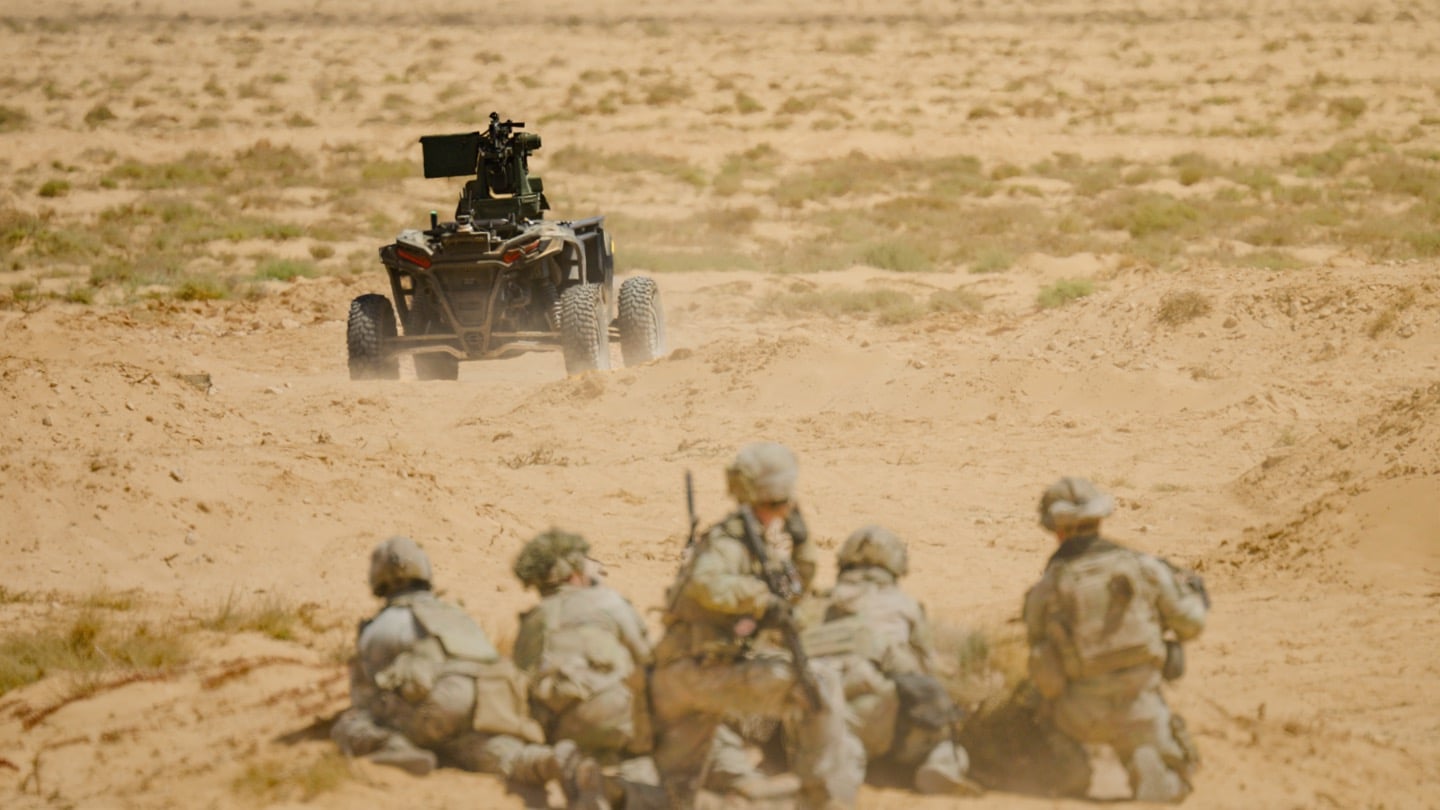
One of the most significant examples came during African Lion 2026, a large multinational military exercise held in Morocco. The event brought together troops from dozens of countries, but the spotlight fell on the United States and its growing use of AI-enabled technologies. From autonomous ground vehicles to advanced data-analysis platforms, the exercise offered a glimpse into how tomorrow’s battles could be fought.
Among the systems tested were robotic vehicles capable of operating with minimal human input, reconnaissance drones equipped with AI-powered sensors, and command systems designed to process massive amounts of battlefield information in real time. Military officials say these technologies are intended to improve speed, accuracy, and coordination in combat situations where seconds can determine the outcome.
A major focus of the exercise was the military’s effort to shorten what is known as the “kill chain”—the sequence of identifying a threat, analyzing intelligence, making a decision, and carrying out an action. Traditionally, this process can take hours as information moves through multiple levels of command. With AI tools analyzing surveillance feeds and battlefield data almost instantly, commanders can receive recommendations in minutes rather than hours.
At the center of this transformation is Project Maven, the Pentagon’s flagship artificial intelligence initiative. Originally developed to help analyze drone footage, the program has evolved into a broader effort to integrate machine learning across military operations. AI systems can now scan thousands of images, identify patterns, flag suspicious activity, and provide intelligence assessments at a speed impossible for human analysts alone.
Supporters argue that the benefits are substantial. AI can reduce the workload on soldiers, improve situational awareness, and help military units respond more quickly to emerging threats. Autonomous systems can also perform dangerous tasks such as reconnaissance, mine detection, and route clearance, potentially reducing casualties among frontline troops.
Military planners increasingly view autonomous technologies as a force multiplier. Rather than replacing human soldiers, they are designed to augment their capabilities. A small unit equipped with AI-enabled surveillance and autonomous support vehicles can achieve results that previously required much larger forces. In an era where militaries are expected to do more with fewer personnel, such advantages are difficult to ignore.
The Pentagon’s growing commitment to AI is reflected in its spending priorities. Recent defense budget proposals have directed billions of dollars toward artificial intelligence, autonomous drones, advanced computing systems, and next-generation battlefield networks. Officials believe these investments are necessary to maintain a competitive edge as other major powers rapidly develop similar technologies.
However, the rise of AI warfare has sparked intense debate among policymakers, ethicists, and military experts. Critics warn that increased reliance on autonomous systems could create new risks, particularly when lethal force is involved. One of the biggest concerns is whether machines could eventually be trusted to make life-and-death decisions without meaningful human oversight.
While U.S. military leaders insist that humans will remain responsible for final targeting decisions, advances in autonomy continue to blur the line between assistance and control. As algorithms become more sophisticated, questions about accountability, transparency, and unintended consequences become increasingly difficult to answer.
There are also fears that AI could accelerate the pace of conflict. Because machines can process information and react far faster than humans, future battles may unfold at a speed that leaves little time for deliberation. Some experts worry this could increase the risk of miscalculations, accidental escalation, or unintended military engagements.
The United States is not alone in this race. Countries around the world are investing heavily in military AI, from autonomous drone swarms to AI-assisted targeting systems. Recent conflicts have already demonstrated how rapidly emerging technologies can reshape the battlefield, providing a preview of what future wars may look like.
The message from military exercises such as African Lion is clear: AI is no longer an experimental tool operating on the margins of warfare. It is becoming a core component of modern military strategy. The challenge now is ensuring that technological innovation advances alongside ethical safeguards and human accountability.
As artificial intelligence becomes more deeply embedded in military operations, the future battlefield may be defined not only by soldiers and weapons, but by algorithms, autonomous machines, and decisions made at machine speed. The era of AI warfare has arrived—and militaries around the world are preparing for what comes next. 007: First Light Sets New Sales Record for IO Interactive | Maya