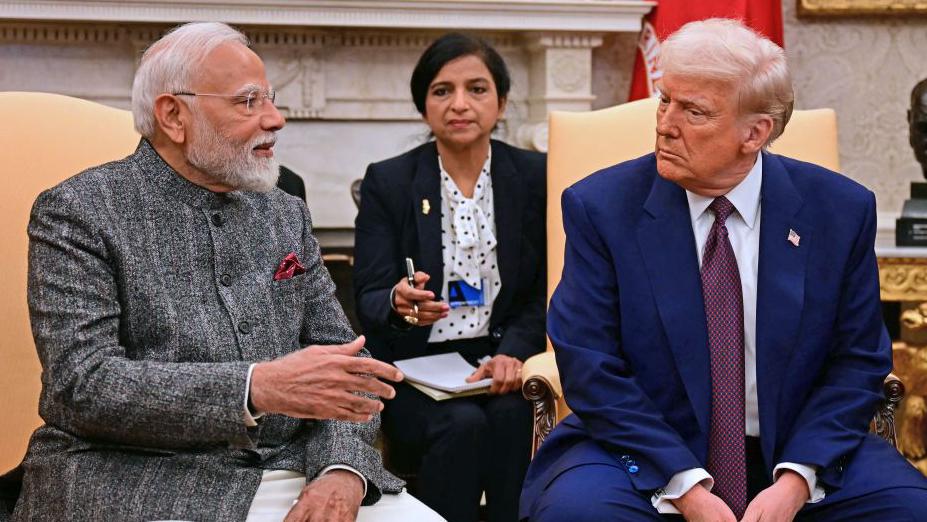
India Among Countries Facing Higher US Tariffs in New Trade Proposal-India could face a new 12.5% tariff on exports to the United States under a proposed trade measure announced by the Office of the US Trade Representative (USTR), as Washington intensifies efforts to crack down on goods allegedly linked to forced labour practices.
The proposal follows a series of investigations conducted under Section 301 of the US Trade Act, a legal mechanism that allows the US government to take action against foreign trade practices it considers unfair or harmful to American interests. According to the USTR, dozens of economies have failed to establish or effectively enforce restrictions on imports believed to be produced using forced labour, prompting the recommendation for additional duties.
Under the proposal, India has been grouped with several major economies that could face a higher tariff rate of 12.5%. Other countries in this category include China, Japan, South Korea, Vietnam, Taiwan, Brazil, Switzerland, and the United Kingdom. The proposed levy would apply to a wide range of imports entering the US market from these countries if the measure is approved.
US officials said that 54 economies were found to have failed to adequately prohibit and enforce restrictions on forced-labour-related imports, leading to their inclusion in the higher-tariff bracket. The move reflects Washington’s growing focus on labour standards within global supply chains and its efforts to encourage trading partners to adopt stronger enforcement mechanisms.
A second group of economies, including Canada, Mexico, the European Union, Indonesia, Ecuador, and Pakistan, would face a lower tariff of 10%. According to the USTR, these countries have taken some steps to address forced labour concerns but have not implemented or enforced their policies effectively enough to avoid penalties.
Announcing the proposal, US Trade Representative Jamieson Greer said that inadequate enforcement by trading partners has created an uneven playing field for American workers and businesses. He argued that products made using forced labour can enter international markets at lower costs, undermining companies that adhere to labour standards and increasing competitive pressure on domestic industries.
“The failure of our most important trading partners to address the importation of goods made with forced labor is unacceptable,” Greer said while outlining the administration’s position. He added that the United States expects all trading partners to take meaningful action to ensure global trade does not incentivise exploitative labour practices.
For India, the proposal could have significant implications given the importance of the US as one of its largest export destinations. Indian exports to the US span a broad range of sectors, including engineering goods, pharmaceuticals, chemicals, textiles, auto components, gems and jewellery, and consumer products. Any increase in import duties could affect pricing and competitiveness for Indian manufacturers seeking access to the American market.
Trade analysts note that while a 12.5% tariff would not automatically lead to a decline in exports, it could increase costs for importers and potentially reduce demand in sectors where competition is intense. Companies may also need to reassess supply chains and pricing strategies if the proposal is ultimately implemented.
However, the proposed tariff regime includes several exemptions. Products such as beef, coffee, and certain fruits and nuts would be excluded from the additional duties. Some textiles and apparel products are also expected to receive exemptions, while goods traded under existing North American trade arrangements between the US, Canada, and Mexico would remain outside the scope of the new measures.
The latest proposal comes after a period of legal and political scrutiny over US trade policy. Earlier this year, court rulings challenged portions of President Donald Trump’s broader tariff framework, prompting the administration to pursue alternative legal avenues to establish more durable trade restrictions. The Section 301 investigations are widely viewed as part of that strategy.
The tariff proposal remains subject to a public consultation process before any final decision is taken. Written comments can be submitted until July 6, while public hearings are scheduled to begin on July 7. Stakeholders, including businesses, industry groups, and foreign governments, are expected to participate in the review process and present their views on the potential impact of the proposed duties.
As discussions continue, the proposal is likely to draw close attention from major US trading partners, including India. While several countries have so far opted for negotiations rather than retaliatory action, the prospect of new tariffs could add fresh complexity to ongoing trade talks and global economic relations in the months ahead.
How Anthropic Became a Trillion-Dollar Company Before Going Public | Maya