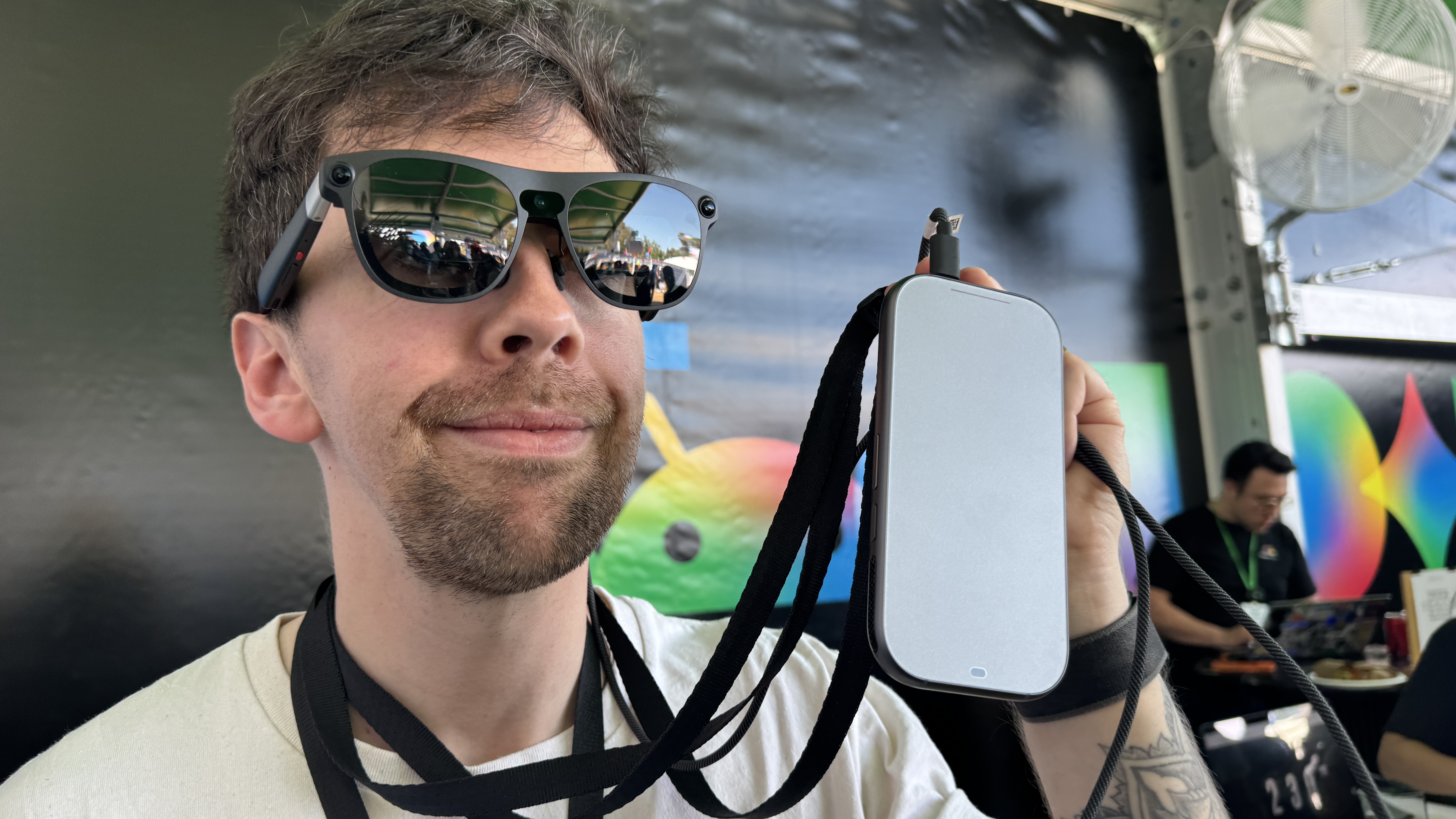
Microsoft Tests AI-Enabled Wearables as Next Computing Platform- Microsoft is taking another step toward the future of artificial intelligence by experimenting with wearable and desktop devices designed specifically for AI-powered interactions. The company recently showcased a pair of prototype gadgets during its annual developer conference, offering a glimpse into how people may access AI tools beyond traditional computers and smartphones in the years ahead.
The experimental devices were introduced by Microsoft executive Steven Bathiche, who presented two hardware concepts currently being tested within the company. The first is a small cube-shaped desktop device equipped with a touch-sensitive display and voice controls. Designed to sit on a user’s desk, the gadget aims to provide quick and convenient access to AI services without requiring users to switch between multiple applications or screens.
The second concept is a wearable AI-enabled badge that can be clipped to a belt, attached to clothing, or worn around the neck. The device is intended to serve as a hands-free gateway to AI-powered assistance, allowing users to interact with digital tools while remaining focused on their work. By combining voice interaction with portable hardware, Microsoft is exploring ways to make AI more accessible throughout the day.
The prototypes are not consumer products at this stage. Microsoft emphasized that both devices remain in the research and testing phase. The company has not announced any plans for a commercial launch, and executives described the gadgets as exploratory concepts rather than finalized products. However, several hundred Microsoft employees are already using the devices as part of internal pilot programs designed to evaluate their usefulness and gather feedback.
Speaking about the company’s vision, Microsoft Chief Executive Officer Satya Nadella described these devices as examples of a potential “new form factor” for computing. The term refers to the physical design and interaction model of technology products. Just as desktop computers gave way to laptops and smartphones transformed mobile computing, Microsoft believes artificial intelligence could inspire entirely new categories of devices built around AI-first experiences.
The company’s latest experiments reflect a broader shift occurring across the technology industry. As AI assistants become more capable, technology firms are increasingly searching for hardware that can support continuous and natural interactions with intelligent systems. Rather than opening a laptop or unlocking a smartphone every time assistance is needed, future users may rely on dedicated AI devices that remain available throughout the day.
Industry observers have noted that wearable AI technology is emerging as a key area of interest among major technology companies. The goal is to create products that allow users to access information, complete tasks, and communicate with AI systems in a faster and more intuitive manner. Microsoft’s prototypes suggest the company is evaluating how such experiences could fit into professional environments where efficiency and productivity are priorities.
The wearable badge concept is particularly significant because it focuses on workplace applications rather than entertainment or fitness tracking. Unlike traditional wearables that monitor health metrics or deliver smartphone notifications, Microsoft’s design appears centered on providing immediate access to AI-driven support. Employees could potentially use such devices to retrieve information, manage schedules, summarize content, or interact with workplace software through simple voice commands.
The project also demonstrates Microsoft’s continued interest in developing innovative hardware. In previous years, the company invested heavily in mixed-reality technology through HoloLens, a headset that combined digital content with the physical world. Although HoloLens targeted enterprise and industrial users, the newly revealed AI concepts represent a different approach, focusing on lightweight, everyday devices that can seamlessly integrate into routine workflows.
Artificial intelligence has become one of Microsoft’s biggest strategic priorities, particularly following its investments in advanced AI technologies and the integration of AI features across its products and services. By experimenting with dedicated hardware, the company is examining whether future AI experiences may benefit from devices specifically designed around conversational and context-aware interactions.
While it remains uncertain whether either prototype will eventually reach the market, the concepts provide valuable insight into Microsoft’s long-term thinking. The company appears to be exploring a future in which AI is not confined to screens but is instead woven directly into daily activities through compact, specialized devices.
For now, the wearable badge and desktop cube remain research projects, but they highlight Microsoft’s ambition to redefine how people engage with artificial intelligence. As AI continues to evolve, the search for new hardware formats could play a major role in shaping the next chapter of personal and workplace computing. The Era of Personal Branding in 2026: Why It Matters More Than Ever | Maya