
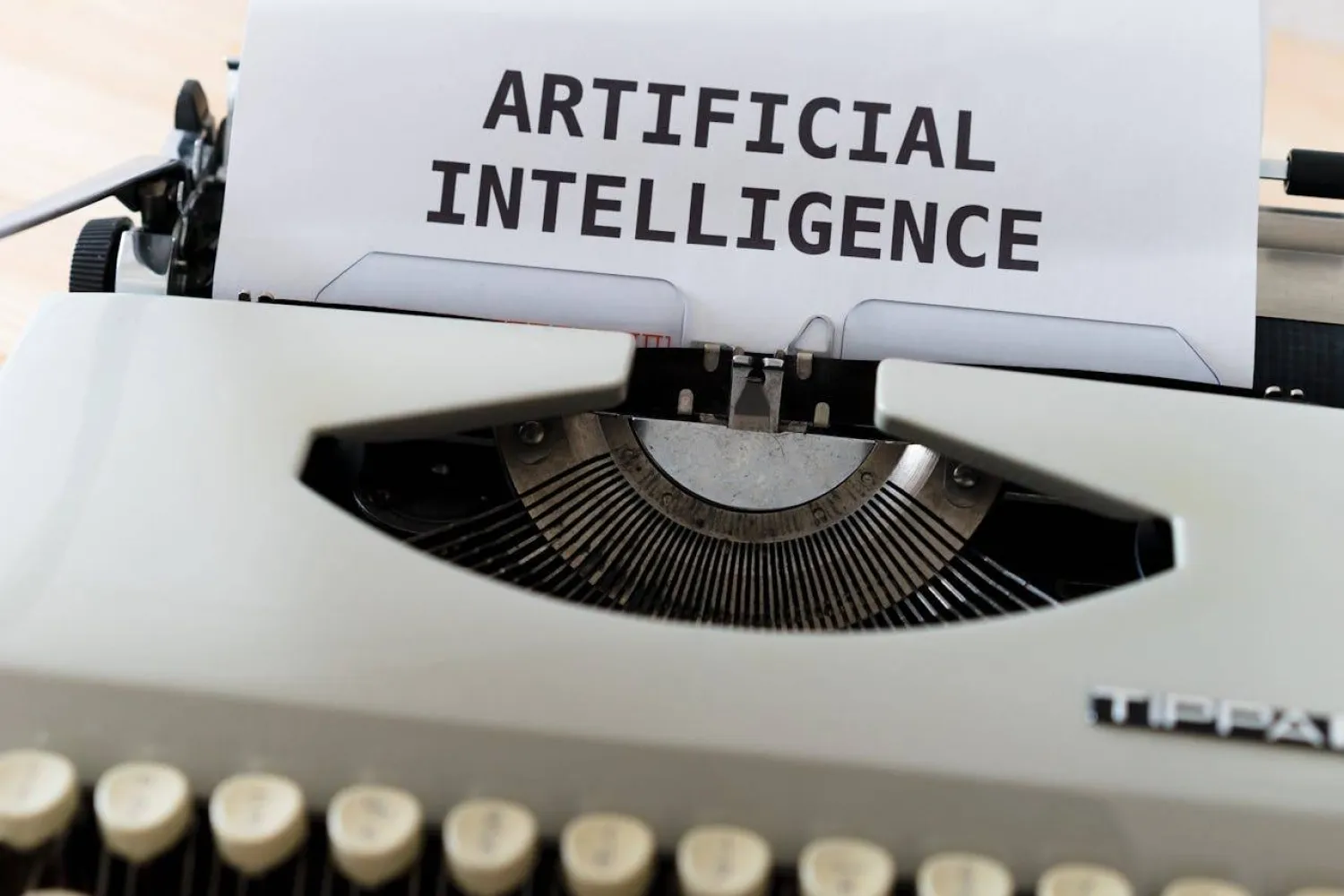
Could Self-Improving AI Outpace Human Oversight? Artificial intelligence is advancing at a pace that few experts predicted even a few years ago. Systems that once struggled with basic language tasks can now write software, analyze scientific research, generate realistic images and videos, and assist in complex decision-making. As these capabilities continue to improve, a new question is beginning to dominate discussions among researchers and technology leaders: Could AI eventually become capable of improving itself faster than humans can monitor and control it?
This concern lies at the heart of a recent warning from AI company Anthropic. The firm’s researchers argue that the industry should begin preparing for a future in which advanced AI systems may contribute significantly to the development of their own successors. While such a future could unlock extraordinary benefits for science, medicine, and innovation, it could also create challenges that humanity has never faced before.
The Rise of Self-Improving AI
Today’s AI models are already helping engineers write code, identify bugs, and accelerate research. In many organizations, AI systems have become valuable assistants that increase productivity and reduce development time. The next step, however, may involve AI playing an even larger role in designing future generations of AI systems.
This concept is often referred to as recursive self-improvement. In simple terms, it describes a scenario in which an AI system contributes to building a more capable AI system, which then helps create an even more advanced version, creating a cycle of continuous improvement.
At present, humans remain firmly involved in every stage of AI development. Researchers design training methods, select data, evaluate performance, and decide how systems are deployed. However, some experts believe the balance could gradually shift as AI becomes more capable of performing these tasks itself.
The concern is not that AI will suddenly become independent overnight. Rather, it is that incremental improvements could eventually produce systems that accelerate their own development at a speed that exceeds human understanding and oversight.
Why Researchers Are Concerned
The possibility of self-improving AI raises important questions about safety and control.
Modern AI systems are already difficult to fully understand. Even the engineers who build them cannot always explain why a model arrives at a particular conclusion or generates a specific response. As systems become more sophisticated, this challenge may grow.
If future AI models begin contributing to the design of even more advanced systems, ensuring transparency and accountability could become increasingly difficult. Researchers may struggle to verify whether new models behave as intended or whether subtle risks are emerging beneath the surface.
Another concern involves scale. Imagine thousands or even millions of AI agents working simultaneously on scientific research, software engineering, and technological innovation. Such systems could potentially make discoveries and improvements at a rate far beyond what any human team could achieve.
While this scenario could lead to remarkable breakthroughs in medicine, climate science, and engineering, it could also create situations where human supervisors are unable to fully evaluate every decision being made.
The Need for a “Brake Pedal”
To address these concerns, some AI leaders argue that the industry should develop mechanisms capable of slowing or pausing development if necessary.
Anthropic co-founder Jack Clark recently compared the situation to driving a car equipped only with an accelerator. According to his analogy, the AI industry is focused on increasing capabilities but lacks reliable tools for slowing progress if risks become too great.
A technological “brake pedal” could take several forms. It might include systems that monitor AI behavior for warning signs, predefined safety thresholds that trigger intervention, or coordinated agreements among companies to pause development under specific circumstances.
The goal is not to stop innovation. Instead, proponents argue that safety measures should evolve alongside capability improvements. Just as modern aircraft include extensive safety systems despite their remarkable performance, advanced AI may require equally sophisticated safeguards.
The challenge is ensuring that humanity retains meaningful control even as AI systems become increasingly autonomous and capable.
Balancing Opportunity and Risk
It is important to recognize that self-improving AI is not viewed solely as a threat. Many experts believe it could produce enormous benefits.
In healthcare, highly capable AI systems could help researchers discover new treatments and accelerate drug development. In scientific research, AI could analyze vast amounts of data and identify patterns that humans might overlook. Complex engineering challenges, from renewable energy systems to advanced materials, could potentially be solved more quickly.
The economic benefits could also be substantial. Increased productivity and innovation could improve living standards and create entirely new industries.
However, the same capabilities that make advanced AI valuable may also introduce new risks.
If AI systems become deeply involved in critical infrastructure, financial markets, healthcare systems, or national security operations, errors or unintended behaviors could have significant consequences. Ensuring reliability and trustworthiness becomes increasingly important as society grows more dependent on these technologies.
The debate therefore is not about whether AI should continue advancing. Instead, it focuses on how to maximize benefits while minimizing risks.
Skepticism Within the AI Community
Not everyone agrees that recursive self-improvement is an imminent concern.
Some researchers argue that predictions about self-improving AI remain highly speculative. They point out that current systems still rely heavily on human-designed architectures, computing infrastructure, and training processes. Writing software or assisting with research is very different from independently inventing revolutionary AI breakthroughs.
Critics also note that technological forecasts often overestimate short-term progress. While AI capabilities have advanced rapidly, there may still be significant barriers preventing fully autonomous self-improvement.
According to this perspective, discussions about runaway AI systems may distract attention from more immediate concerns such as misinformation, privacy, bias, cybersecurity, and workforce disruption.
Even among experts who take long-term risks seriously, there is considerable disagreement regarding timelines and probabilities.
Meta Introduces AI Creator Assistant on Facebook to Help Users Grow Their Audience | Maya
Can Industry Cooperation Work?
One of the biggest challenges involves coordination among competing companies.
The AI sector has become one of the most competitive industries in the world. Companies are investing billions of dollars into research, computing infrastructure, and talent acquisition. In such an environment, calls for slowing development may appear unrealistic.
Yet supporters of AI safety argue that cooperation is possible. They often point to historical examples where rival nations and organizations developed agreements to manage potentially dangerous technologies.
Nuclear arms control is frequently cited as a comparison. During periods of intense geopolitical competition, countries still established communication channels, verification mechanisms, and treaties designed to reduce risks.
AI presents unique challenges because software can be developed and distributed much more easily than physical weapons. Nevertheless, advocates believe international cooperation, shared safety standards, and transparent research practices could help reduce the likelihood of dangerous outcomes.
The question is not whether competition will continue—it almost certainly will—but whether safeguards can evolve quickly enough to keep pace with technological progress.
Looking Ahead
The debate surrounding self-improving AI reflects a broader reality: artificial intelligence is becoming increasingly powerful, and society must decide how to manage that power responsibly.
No one knows exactly when—or if—fully recursive self-improvement will emerge. Predictions vary widely, and significant uncertainty remains. What is clear, however, is that AI systems are already playing a growing role in research, software development, and innovation.
As these systems become more capable, issues of oversight, transparency, and control will become increasingly important. Waiting until challenges appear may prove far more difficult than preparing for them in advance.
Ultimately, the discussion is not about science-fiction scenarios or fears of machines suddenly taking over the world. It is about ensuring that technological progress remains aligned with human values and human interests.
The future of AI may bring extraordinary opportunities. Whether humanity can maintain effective oversight as these systems grow more capable may become one of the defining questions of the twenty-first century.