Nvidia Dismisses Kyber Delay Rumors as It Presses Ahead With Next-Generation AI Infrastructure- Nvidia has rejected claims that its next-generation Kyber AI server platform has been delayed until 2028, insisting that development remains on schedule despite reports suggesting major engineering setbacks.
The speculation emerged after semiconductor research firm SemiAnalysis reported that Kyber had encountered significant design and manufacturing challenges. According to the report, the platform’s new architecture could force Nvidia to postpone the product by about a year. The company, however, responded by stating that its product roadmap remains unchanged and that it continues to execute according to its planned timeline.
A Major Shift in AI Server Design
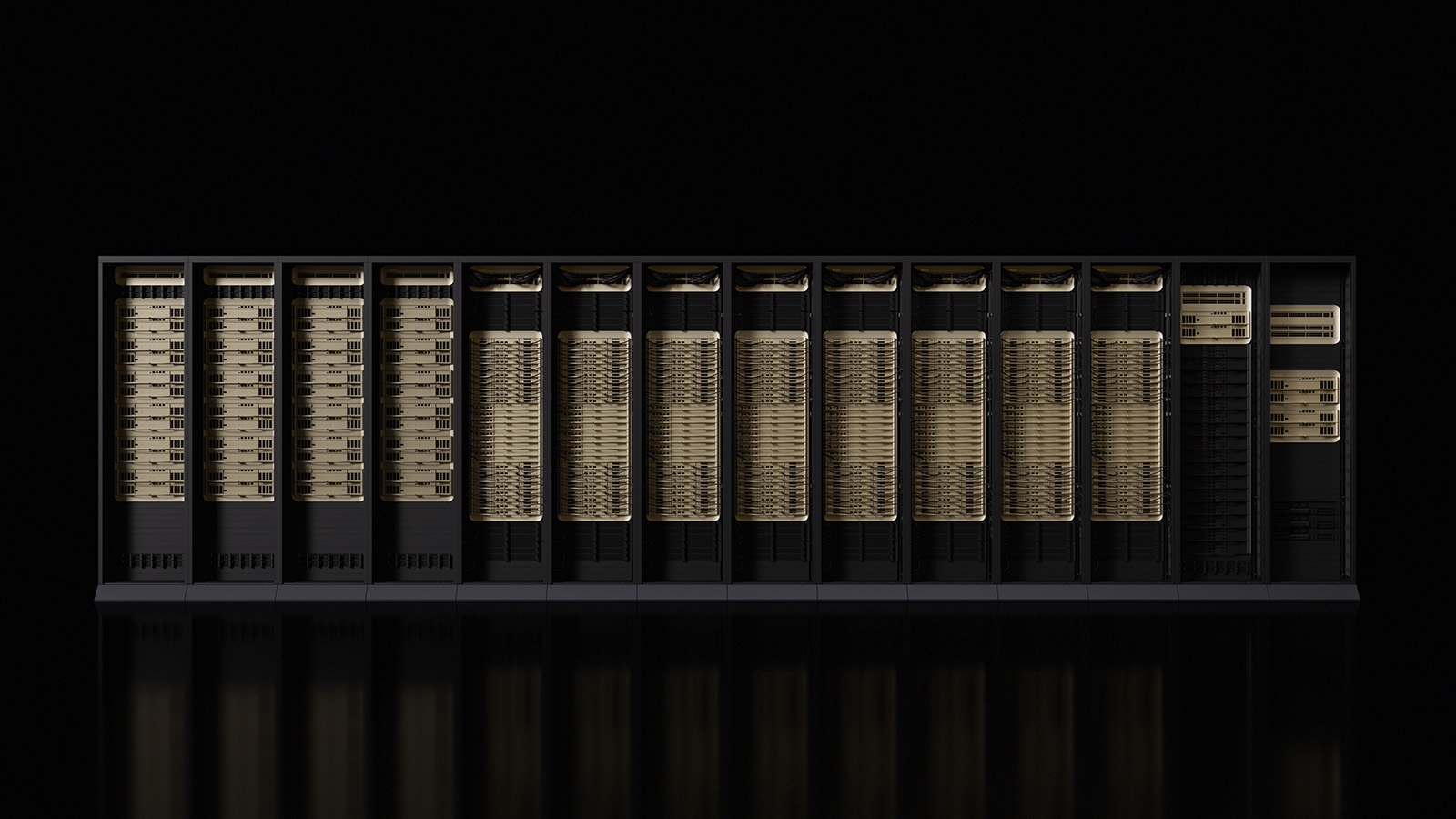
Kyber represents one of Nvidia’s most ambitious data center projects. Unlike current AI server systems that arrange compute modules horizontally, Kyber introduces a vertical rack design intended to maximize computing density within each cabinet.
The redesigned system is expected to increase the number of graphics processing units (GPUs) in a single server from 72 to 144. By doubling GPU capacity, Nvidia aims to deliver substantially greater computing power for training and running increasingly complex artificial intelligence models while improving data center efficiency.
The Kyber platform is scheduled to launch alongside Nvidia’s Vera Rubin Ultra architecture during the second half of 2027. Before that, the company plans to introduce the Vera Rubin platform later this year, continuing its strategy of releasing new AI computing platforms on an annual basis.
AI Demand Continues to Drive Strong Growth
Nvidia has been one of the biggest beneficiaries of the rapid expansion of artificial intelligence. Years before generative AI became mainstream, the company invested heavily in adapting its graphics processors for machine learning workloads, giving it a substantial advantage as demand for AI infrastructure accelerated.
That leadership has translated into remarkable financial growth. Nvidia’s revenue climbed from $26.9 billion in fiscal 2023 to $215.9 billion in fiscal 2026. Analysts expect that figure to approach $393 billion in fiscal 2027 as cloud providers, enterprises, and AI developers continue expanding their computing capacity.
The company’s stock has reflected this momentum, rising more than 840% over the past five years. Although shares have gained approximately 22% over the past year, performance has moderated during the last six months as investors have diversified into other companies benefiting from AI-related spending.
Competition Is Becoming More Intense
Despite maintaining a dominant position in AI accelerators, Nvidia is facing growing competition across the industry.
Advanced Micro Devices (AMD) is developing its own large-scale AI server platform featuring 72 GPUs, targeting customers that require high-performance computing for artificial intelligence applications.
At the same time, several of Nvidia’s largest customers are investing heavily in proprietary AI chips. Google continues expanding the use of its Tensor Processing Units (TPUs), while Amazon is promoting its custom Trainium and Inferentia processors through its cloud computing business. These efforts are intended to provide customers with alternative AI hardware while reducing reliance on external suppliers.
Demand for supporting technologies has also benefited other semiconductor companies, including memory manufacturers that supply high-bandwidth memory used in advanced AI systems.
Market Focus Remains on Execution
Reports of possible delays attracted attention because Nvidia’s product roadmap plays a central role in expectations for the broader AI industry. However, the company’s firm denial and the limited reaction in its share price suggest investors remain focused on official guidance rather than unconfirmed reports.
With AI infrastructure spending expected to remain strong over the coming years, Nvidia’s ability to deliver the Vera Rubin and Kyber platforms on schedule will be closely watched. Successfully executing its roadmap would reinforce the company’s leadership in AI computing, while any unexpected delays could create opportunities for competitors seeking to gain market share. Microsoft Announces 4,800 Job Cuts, Xbox to Lose 20% of Workforce | Maya