
Apple’s Secret Budget MacBook Might Redefine the Lineup- Apple may be preparing to shake up its laptop strategy in a way few expected. Rumors suggest the company is close to unveiling a new entry-level MacBook — one that could become the most affordable Mac in years and potentially reshape the entire lineup.
For over a decade, Apple’s notebook range has largely revolved around premium positioning. Devices like the MacBook Air and MacBook Pro have steadily evolved into powerful, polished machines with price tags to match. Even when Apple kept older chips like the M1 in circulation to offer a lower starting price, the company never truly entered the “budget laptop” category in the way many PC manufacturers have.
That may be about to change.
A Different Kind of Mac
What makes this rumored model particularly intriguing is not just its expected lower price — it’s the strategy behind it. Reports indicate that Apple could power the device with an A-series chip rather than the M-series processors currently used across the Mac lineup.
Specifically, the laptop is rumored to feature the A18 Pro, the same chip introduced in the iPhone 16 Pro. Built on a second-generation 3-nanometer process, the A18 Pro includes a 6-core CPU, a 6-core GPU, and a 16-core Neural Engine designed for AI-driven tasks.
If Apple follows through with this plan, it would mark the first time a Mac runs on an A-series chip instead of an M-series processor. While both chip families are built on Apple silicon architecture, they are typically designed for different product categories — A-series for iPhones and entry-level iPads, M-series for Macs and high-performance tablets.
The move suggests Apple could be targeting efficiency and cost savings over raw power. For everyday tasks such as web browsing, document editing, streaming, and light multitasking, the A18 Pro’s strong single-core performance could deliver a smooth experience. Multi-core workloads may lag behind higher-end Macs, but that may not matter for the audience Apple appears to be targeting.
Design: Familiar, Yet Strategic
Design rumors suggest the new MacBook will resemble the MacBook Air, featuring an aluminum chassis and a 12.9-inch or 13-inch display. However, Apple may take a slightly different approach to materials and internal components to keep costs down.
There has been speculation about a thinner and lighter form factor due to the chip’s low power requirements. However, Apple could instead prioritize battery life and affordability over extreme thinness. A slightly thicker chassis would allow for a larger battery while reducing manufacturing complexity.
Interestingly, some observers see echoes of Apple’s discontinued 12-inch MacBook from 2015 — a lightweight, minimalist device that emphasized portability over performance. That machine was ahead of its time in many ways, but limited by Intel’s low-power chips. With Apple silicon now far more efficient, a modern reinterpretation could find stronger footing.
A Splash of Color
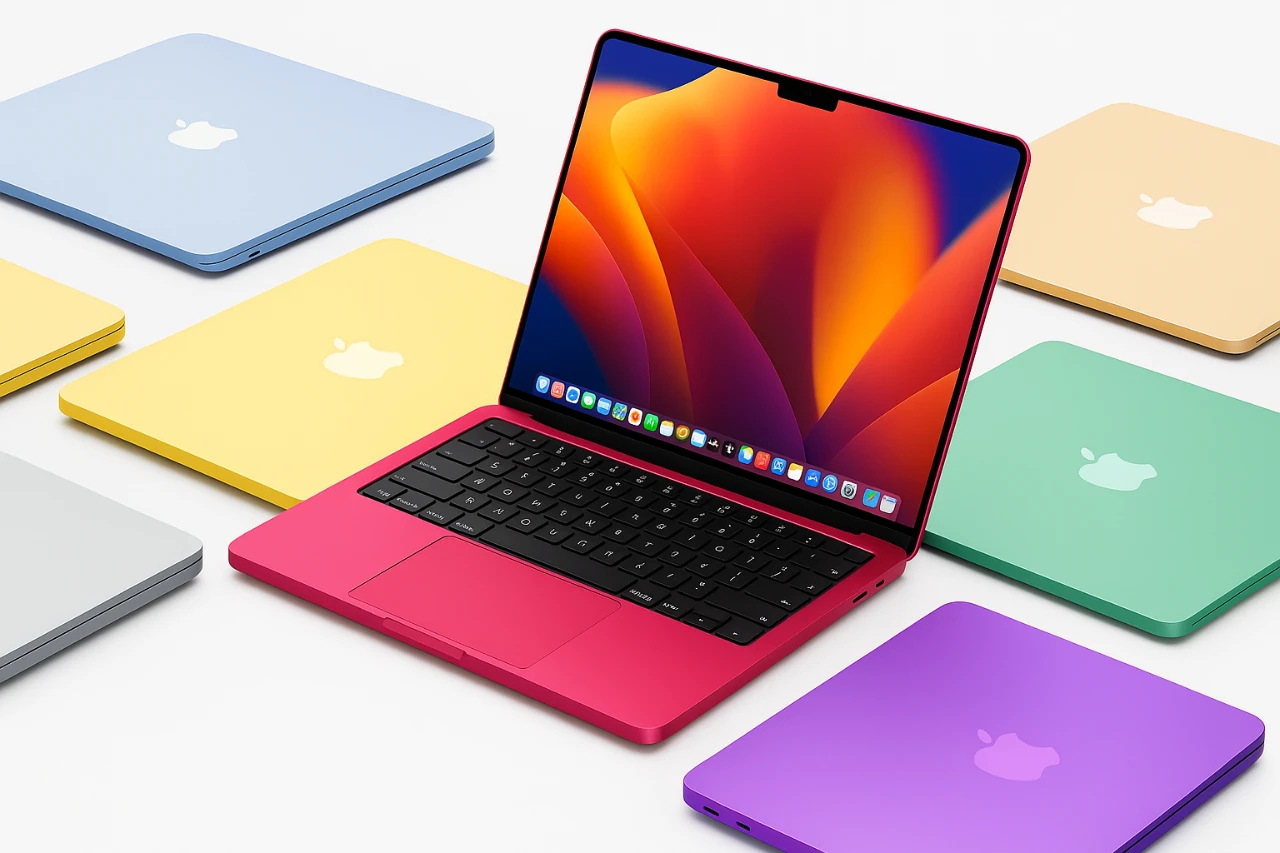
Another shift may come in the form of color options. Unlike the typically subdued tones of Apple’s professional Macs, this new model could arrive in brighter shades similar to those offered on the iPad.
Respected analyst Ming-Chi Kuo has suggested that yellow, blue, pink, and silver could be among the launch colors. A more playful palette would signal that this MacBook is aimed squarely at students, casual users, and first-time Mac buyers rather than creative professionals.
Color has become a subtle but powerful marketing tool for Apple. Bright finishes suggest accessibility and fun, while muted tones communicate productivity and power. By adopting livelier options, Apple could visually distinguish this budget Mac from its higher-end siblings.
Who Is It For?
The biggest question isn’t what the laptop will look like — it’s who Apple wants to reach.
A lower-priced MacBook could significantly strengthen Apple’s presence in education, a market long dominated by Chromebooks and inexpensive Windows laptops. Schools often prioritize battery life, durability, and price over advanced performance. An A18-powered MacBook could check those boxes while introducing more students to the macOS ecosystem.
It could also appeal to everyday consumers who primarily rely on smartphones and tablets but occasionally need a traditional laptop. For them, the difference between an A-series and M-series chip may be largely irrelevant in daily use.
At the same time, Apple must carefully position this device to avoid cannibalizing MacBook Air sales. Pricing will be critical. If it sits meaningfully below the Air, it could expand the market. If the gap is too small, customers may simply opt for the more powerful model.
A Strategic Shift
If these rumors prove accurate, Apple’s “secret” budget MacBook may represent more than just a new product — it could signal a broader shift in strategy. By introducing a more affordable entry point, Apple would be acknowledging that growth opportunities lie not only in premium upgrades but also in accessibility.
The company has already blurred the lines between its devices through shared silicon architecture and software ecosystems. An A-series Mac would take that integration even further, reinforcing Apple’s control over its hardware stack.
Ultimately, the success of this rumored MacBook will hinge on two factors: price and battery life. If Apple can deliver strong endurance, solid everyday performance, and an attractive starting price, this model could carve out a new space in the lineup — and perhaps redefine what a Mac can be.

