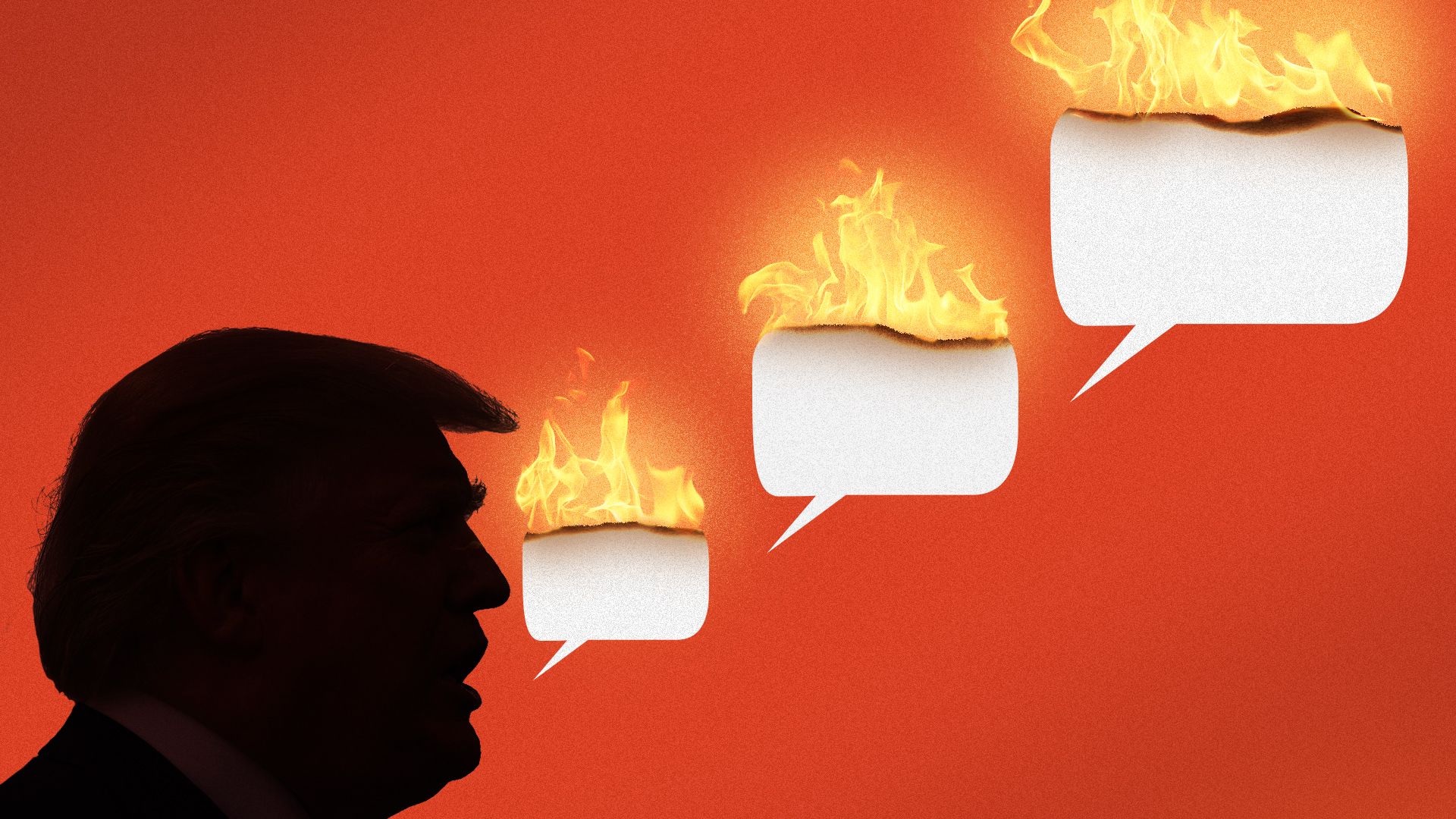
Backlash Grows Over Video Critics Say Echoes Historic Racist Tropes- Backlash continued to build on Wednesday after a video shared by President Donald Trump drew widespread condemnation from civil rights groups, historians, and political opponents, who say it relied on imagery rooted in centuries-old racist stereotypes.
The video, which circulated for several hours on the president’s social media account before being removed, depicted former President Barack Obama and former First Lady Michelle Obama using imagery critics say dehumanises Black people by likening them to apes — a trope long associated with white supremacist propaganda. While supporters of the president have argued the video was taken out of context or intended as satire, critics say its meaning is neither subtle nor accidental.
“This is one of the oldest racist caricatures in existence,” said one civil rights advocate. “It has been used historically to justify enslavement, segregation and violence. When it appears in modern political messaging, it carries that history with it.”
The White House has not issued a detailed explanation for why the video was shared, instead dismissing criticism as politically motivated. However, the prolonged delay in removing the post — which remained visible for more than 12 hours — has become a central focus of the controversy, raising questions about editorial oversight and accountability at the highest levels of government.
For many observers, the incident fits a broader pattern. Trump and his family were sued by the US Department of Justice in the 1970s for alleged housing discrimination against Black renters, a case settled without an admission of wrongdoing. In the late 1980s, Trump took out full-page newspaper advertisements calling for the death penalty following the arrest of five Black and Latino teenagers in the Central Park jogger case. Even after the men were exonerated decades later, Trump continued to question their innocence.
During the Obama presidency, Trump also became the most prominent proponent of the false “birther” conspiracy theory, which claimed Barack Obama was not born in the United States and therefore not a legitimate president. The claim has been widely described by scholars as racially motivated and was repeatedly debunked.
Critics argue that this history makes it difficult to view the latest incident in isolation.
“This didn’t come out of nowhere,” said a historian of race and media. “What’s changed is not the existence of racist imagery, but how openly it is now circulated and defended.”
The episode comes amid growing concern over the rise of hate speech online. Multiple academic studies have documented increases in racist, antisemitic and anti-Muslim language on social media platforms over the past decade, often spiking during periods of political tension or international conflict. Researchers have warned that repeated exposure to such content can have lasting effects on mental health, particularly among minority communities.
Social media companies have long struggled to balance free expression with moderation, but critics say the challenge becomes more acute when the source of controversial content is a sitting president.
“When the most powerful political figure in the country shares something like this, it sends a signal,” said one digital rights researcher. “Even if it’s later removed, the message has already been amplified to millions.”
The incident has also reignited debate about how racism is recognised and discussed in public life. Defenders of the video have pointed to intent, irony, or selective readings of the content, arguments that critics say miss the point entirely.
“Racism doesn’t require explicit slurs to be effective,” said a spokesperson for a UK-based anti-racism organisation. “It often operates through symbols, insinuation and plausible deniability. That’s why these images persist — and why they’re so damaging.”
For many parents and educators, the controversy feels personal. Several have spoken about the difficulty of explaining such imagery to children who encounter it online or through news coverage, a conversation that previous generations hoped might become less necessary over time.
Instead, critics warn, the boundaries of acceptable discourse appear to be shifting.
“What we’re seeing is the normalisation of ideas that were once considered beyond the pale,” said one sociologist. “That doesn’t happen overnight. It happens when each incident is explained away, minimised, or reframed as outrage culture.”
As criticism continues to mount, pressure is growing on the White House to clarify how such content was approved and what steps, if any, will be taken to prevent similar incidents in the future. For now, the controversy has underscored a broader concern: that imagery once relegated to the fringes of extremist ideology is increasingly finding its way into mainstream political communication.
Whether this episode marks a turning point or simply another step in that trajectory remains to be seen. What is clear, critics say, is that the debate it has sparked extends far beyond a single video — touching on history, power, and the responsibilities that come with an unparalleled public platform.