Black Holes Explained: Science, Myths, and Mind-Blowing Facts
Black holes are among the most fascinating and mysterious objects in the universe. Once considered purely theoretical, they are now confirmed cosmic phenomena thanks to modern astronomy and powerful telescopes. Despite their scientific validation, black holes continue to inspire myths, popular culture, and questions that challenge our understanding of physics.
What Exactly Is a Black Hole?
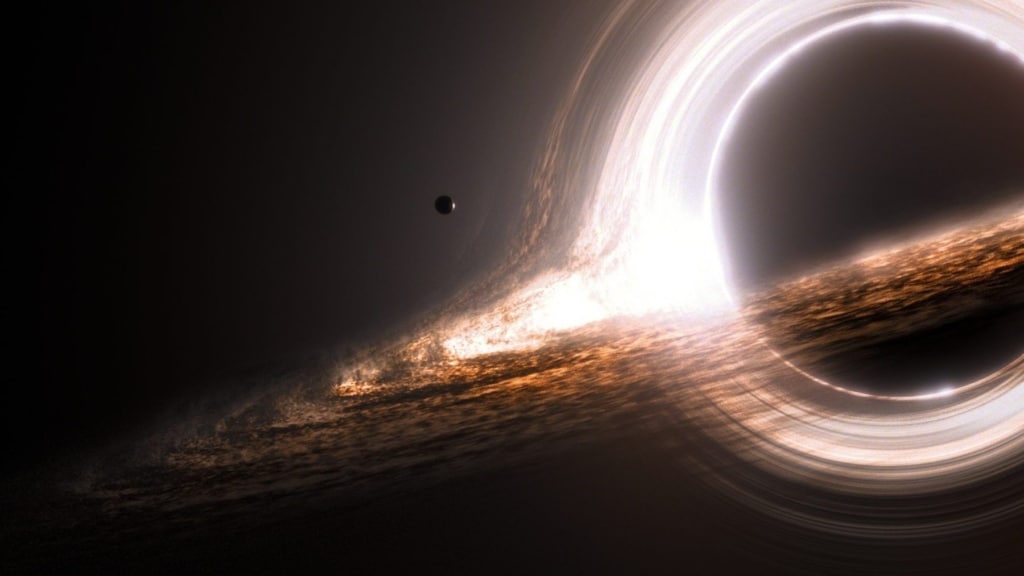
A black hole is a region of space where gravity is so intense that nothing—not even light—can escape its pull. This extreme gravity arises when massive stars collapse under their own weight at the end of their life cycles. The boundary around a black hole beyond which nothing can escape is called the event horizon.
Types of Black Holes
Scientists categorize black holes into several types based on mass and origin:
-
Stellar Black Holes: Formed from collapsing massive stars, typically 5–50 times the mass of the Sun.
-
Supermassive Black Holes: Millions to billions of times the Sun’s mass, residing at the centers of galaxies, including Milky Way Galaxy.
-
Intermediate Black Holes: Masses between stellar and supermassive, rare and still not fully understood.
-
Primordial Black Holes: Hypothetical tiny black holes formed in the early universe.
How Scientists Study Black Holes
Since light cannot escape black holes, scientists rely on indirect methods to detect them:
-
Accretion Disks: Material falling into a black hole heats up and emits X-rays, which telescopes can detect.
-
Gravitational Effects: Black holes influence nearby stars and gas, revealing their presence.
-
Gravitational Waves: Collisions of black holes produce ripples in spacetime, detected by observatories like LIGO.
The 2019 release of the first-ever image of a black hole by the Event Horizon Telescope offered visual proof of their existence, capturing the shadow of the supermassive black hole in the galaxy Messier 87.
Myths and Misconceptions
Black holes are often misunderstood in popular culture, inspiring fear and fascination.
-
They Suck Everything In: Black holes don’t actively pull everything around them; objects can orbit safely at a distance.
-
Instant Destruction: Falling into a black hole is a slow, complex process due to tidal forces, not instant obliteration (except near the singularity).
-
Gateways to Other Universes: While fascinating in theory, no evidence supports black holes as portals to other dimensions.
Mind-Blowing Facts About Black Holes
-
Time Dilation: Near a black hole, time slows down dramatically due to extreme gravity—a prediction of Einstein’s theory of general relativity.
-
Spaghettification: Objects stretching toward a black hole experience extreme tidal forces, elongating them like spaghetti.
-
Hawking Radiation: Theoretical physicist Stephen Hawking proposed that black holes emit radiation, slowly evaporating over time.
-
Galactic Anchors: Supermassive black holes influence the formation and structure of galaxies, acting as cosmic architects.
Black Holes and the Future of Space Exploration
Studying black holes isn’t just academic—it has practical implications for understanding the universe:
-
Testing Physics: Black holes push the boundaries of general relativity and quantum mechanics.
-
Mapping the Universe: Observing their interactions with stars and gas helps map galaxies and cosmic structures.
-
Gravitational Wave Astronomy: Black hole mergers open a new era in astronomy, allowing scientists to study events invisible to traditional telescopes.
Why They Captivate the Human Imagination
Black holes symbolize mystery, extreme physics, and the limits of human knowledge. From movies to science fiction, they capture the imagination while offering a genuine scientific frontier for discovery. Their combination of danger, beauty, and mind-bending physics makes them enduring symbols of cosmic wonder.
The Ongoing Quest to Understand Black Holes
Despite decades of research, many questions remain: How do supermassive black holes form so quickly in the early universe? What happens at the singularity, where gravity is infinite? Could black holes one day provide energy or insights into space-time travel? Each answer uncovers more mysteries, ensuring that black holes will continue to fascinate scientists and the public alike.
Black holes remind us that the universe is full of enigmas that challenge perception, push scientific boundaries, and inspire awe. They are not just cosmic vacuum cleaners—they are fundamental to understanding the forces that shape galaxies, stars, and possibly the fabric of reality itself.
How Experimental Science Drives Technological Revolutions | Maya