Canada Plays Key Role in Historic Artemis II Moon Mission with Canadarm3 Technology
Wednesday marked a historic day for space exploration as NASA’s Artemis II mission prepares to carry humans toward the moon for the first time in half a century. But beyond the milestone for humanity, the mission also represents a significant achievement for Canada, which is contributing critical technology to the program through its advanced robotics sector.
Mike Greenley, CEO of MDA Space, described the mission as “really the opening of a new phase” for Canada’s space economy. His company is currently developing Canadarm3, an AI-driven robotic arm designed to operate on the lunar surface, under a $1 billion contract from the Canadian Space Agency. The arm is expected to launch no earlier than 2029 but is already establishing Canada as a key player in human deep-space exploration.
By contributing Canadarm3, Canada has secured opportunities for lunar science experiments, technology demonstrations, and two astronaut flights, according to the CSA. This partnership is part of NASA’s larger Artemis program, which aims to not only return humans to the moon but also lay the groundwork for sustainable lunar operations. “With this program, we’re opening up the return to the moon and creating the foundation for living and working there,” Greenley said from Florida ahead of the Kennedy Space Center launch.
The Artemis II mission itself is slated to last nearly ten days and will serve as NASA’s first crewed test flight for deep-space systems. The mission will carry a four-person crew, including Jeremy Hansen, marking the first time a Canadian astronaut will participate in a lunar journey. Backup astronaut Jenni Gibbons has been assigned to ensure a Canadian presence even if unforeseen issues arise. Greenley noted that the mission is not just a moon milestone but also a stepping stone toward Mars, with future missions in 2028 planned to include two lunar landings.
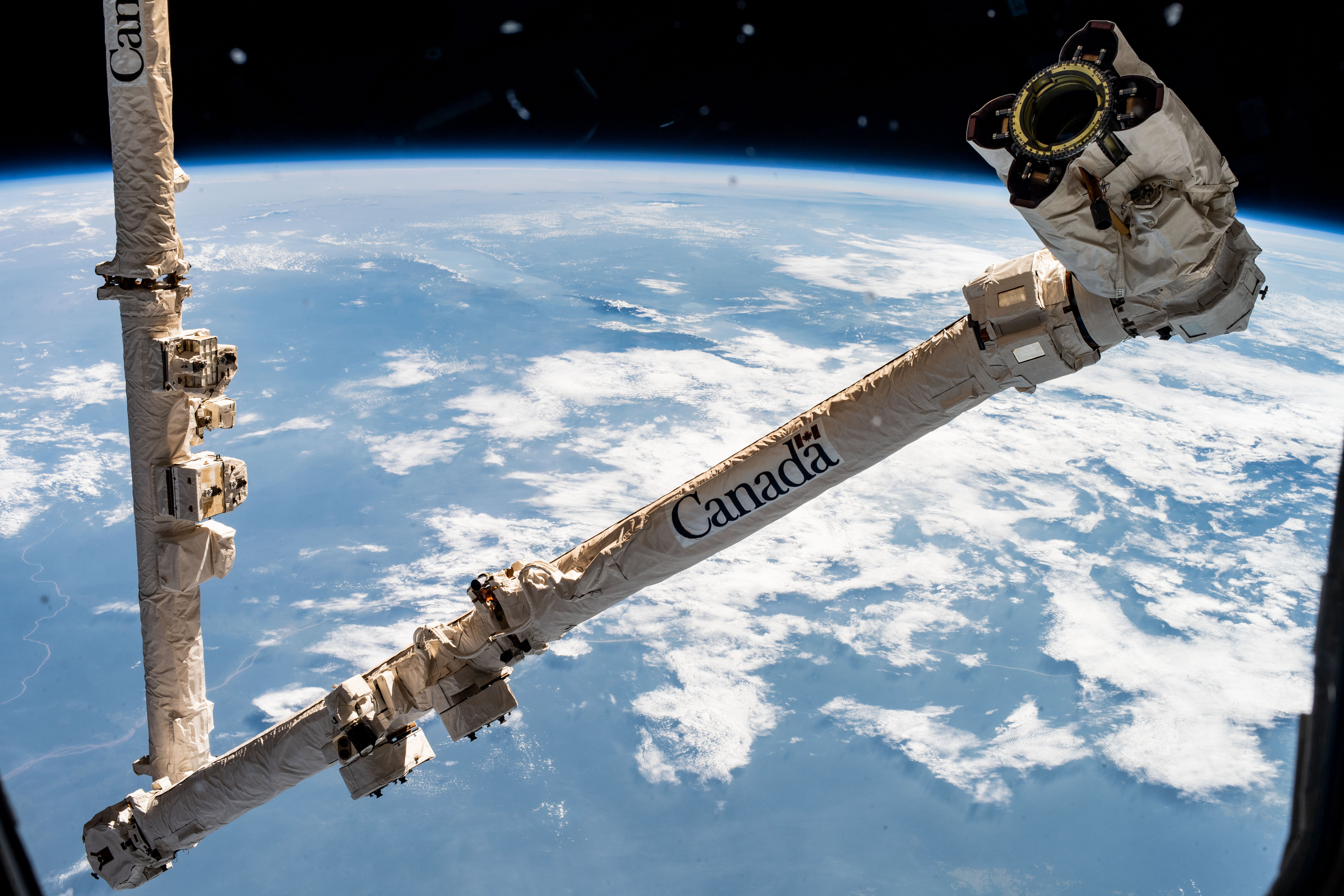
MDA Space is no stranger to high-profile space projects. In addition to Canadarm3, the company has received $250 million for International Space Station robotics operations and $44.7 million for the RADARSAT+ Earth observation mission. Canada has a storied history in space robotics, providing Canadarm1 and Canadarm2, which were critical to space shuttle missions and operations aboard the ISS.
While the Canadarm3 development continues smoothly, NASA’s strategic adjustments for Artemis II have slightly altered its initial usage plan. Greenley said MDA is exploring ways to adapt the robotic technology originally designed for the space station for lunar surface operations. Tasks such as unloading cargo, daily maintenance, and managing materials on the moon will all rely on robotics capable of operating in harsh lunar conditions, including dealing with dust and temperature extremes.
Canada’s expertise in extraterrestrial robotics is not limited to the moon. MDA Space has deployed technology on Mars rovers for the past 15 years and is currently designing a new rover for the European Space Agency aimed at detecting signs of life. The transition from space station to lunar surface will require adjustments for gravity differences, including modifications to joint strength and arm length, but Greenley considers it a feasible adaptation.
Ultimately, the Artemis program serves a broader vision. Greenley emphasizes that the lunar missions are practice for Mars exploration, providing critical insights into building habitats, generating fuel, producing food, and establishing sustainable operations far from Earth. Decades of research on human performance aboard the ISS are being applied to ensure astronauts can thrive in deep-space environments.
“The lunar program is important for science on the moon, but it’s also a training ground for humans to go even further—to Mars and beyond,” Greenley said. With Canada contributing cutting-edge robotics technology and astronauts to the crew, the nation is poised to remain a key partner in humanity’s next giant leap.
Timeline of the Gulf Crisis: From Rising Tensions to Open Conflict | Maya