
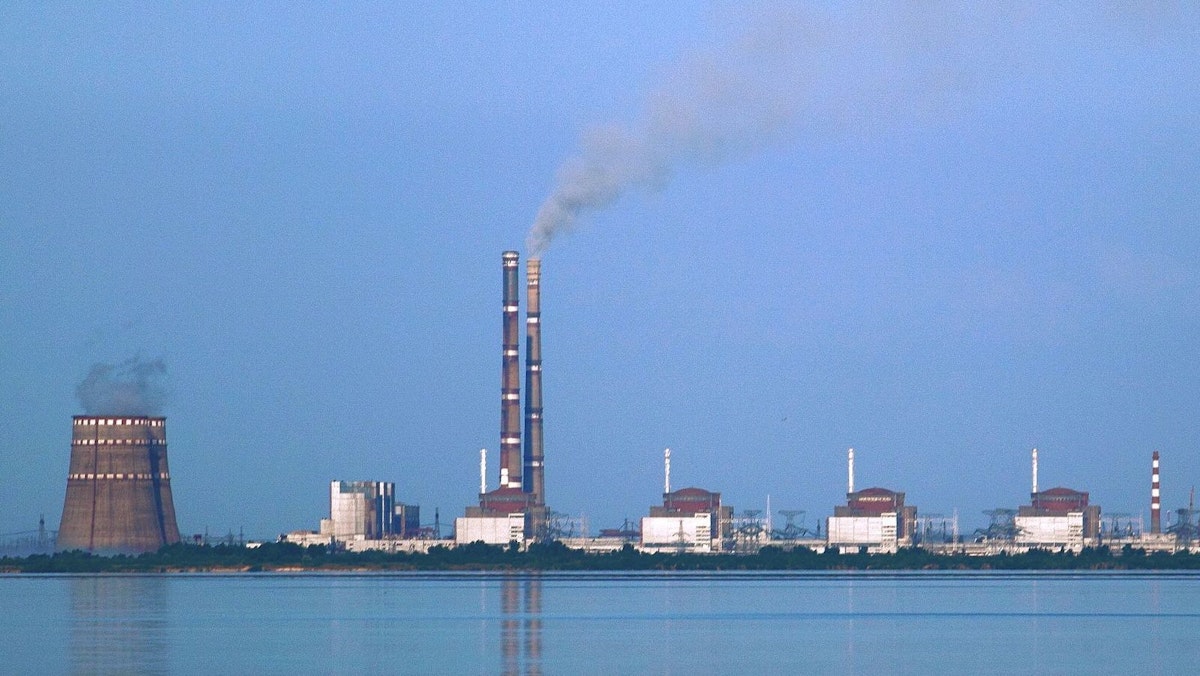
Could the Fate of Zaporizhzhia Nuclear Plant Decide the Peace Talks? KYIV, Ukraine — As the world watches the protracted conflict between Ukraine and Russia, one question grows more urgent by the day: what will happen to the Zaporizhzhia nuclear power plant, and could its fate determine the future of peace negotiations? The sprawling facility, the largest nuclear plant in Europe and among the top ten worldwide, has been under Russian occupation since the early stages of the invasion. Its status is no longer just a technical or environmental concern—it has become a central political issue in ongoing talks to end a war that has lasted more than a decade in some form.
Ukrainian President Volodymyr Zelenskyy recently traveled to Florida to meet former U.S. President Donald Trump, discussing a 20-point peace plan that has drawn international attention. At the center of the discussions are security guarantees from the United States lasting 15 years. Zelenskyy, however, argues that such a period is too short to prevent future aggression and has proposed extending the guarantees to 50 years. He believes that long-term commitments are essential not just for military deterrence, but for ensuring Ukrainian sovereignty and national confidence.
Yet even these guarantees, which would require approval from the U.S. Congress and other allied parliaments, may not address the biggest challenge: the control and safety of Zaporizhzhia itself. The plant is located in Russian-occupied territory, and Moscow has made it clear it will not accept the deployment of NATO troops in Ukraine. Could international monitors provide sufficient oversight to prevent accidents or military misuse? How much trust can Ukraine place in Russian assurances, especially after years of conflict over Crimea and the Donbas region?
The risk is not theoretical. Zaporizhzhia houses six nuclear reactors and has a history of technical incidents. Any miscalculation, whether military or administrative, could lead to a disaster affecting millions across Ukraine and neighboring countries. This raises a larger question for the peace talks: can a settlement be considered viable if the nuclear plant remains a potential flashpoint? Some experts warn that without concrete, enforceable measures around Zaporizhzhia, any ceasefire or peace deal could be precarious.
Beyond the plant itself, there are other unresolved issues. Who withdraws from which territories? How long will any ceasefire last? And crucially, how will the Ukrainian public weigh in on the proposed plan? Zelenskyy has insisted that the peace plan must be approved in a national referendum, a move that requires at least 60 days of ceasefire to safely conduct. Moscow has yet to signal willingness to halt hostilities even temporarily, leaving the referendum—and any democratic validation of the plan—in limbo.
International involvement continues to shape the negotiations. French President Emmanuel Macron has announced that Kyiv’s allies will meet in Paris in early January to finalize each country’s concrete contributions to Ukraine’s security guarantees. Will these contributions include technology and monitoring systems to keep Zaporizhzhia safe? Or will they be limited to military assurances that cannot directly address the nuclear plant’s vulnerabilities?
Trump, meanwhile, has suggested he is open to extending U.S. guarantees beyond 15 years, though the details remain unclear. Could this flexibility persuade Zelenskyy to accept a compromise, even if it falls short of the 50-year term he desires? And if Ukraine’s top priorities—territorial control, nuclear safety, and public approval—are not fully addressed, will the peace talks collapse once again, leaving the region in continued uncertainty?
Experts point out that the Zaporizhzhia question is emblematic of larger challenges in the conflict. While territorial disputes and military presence are critical, the nuclear factor introduces a non-negotiable risk. A single misstep at the plant could undo months—or years—of diplomatic progress. It also raises the stakes for international actors: how far will allies be willing to go to enforce security measures at a live nuclear site? What happens if a ceasefire is violated near a reactor?
As the talks proceed, analysts warn that both Ukraine and Russia must confront uncomfortable truths. For Ukraine, there is the tension between securing guarantees and protecting the nuclear facility. For Russia, there is the reality that maintaining control over Zaporizhzhia under global scrutiny carries enormous risk—both reputationally and operationally. Can both sides find a solution that satisfies strategic interests without creating a potential nuclear crisis?
Ultimately, the fate of Zaporizhzhia may decide the fate of the peace plan itself. Can security guarantees alone ensure lasting peace if the plant remains a potential flashpoint? Will international monitors be enough to prevent accidents or provocations? And perhaps most importantly, will Ukrainians be able to cast their votes on a plan that could shape their nation’s future for decades, or will the war continue to dictate their lives?
For now, these questions hang in the balance. The Zaporizhzhia nuclear plant is more than just a power station—it has become a symbol of both the stakes of the conflict and the fragility of the current peace process. Its future may determine not only whether Ukraine can secure lasting safety and sovereignty, but also whether Europe can avoid a potential nuclear catastrophe in the heart of the continent.

