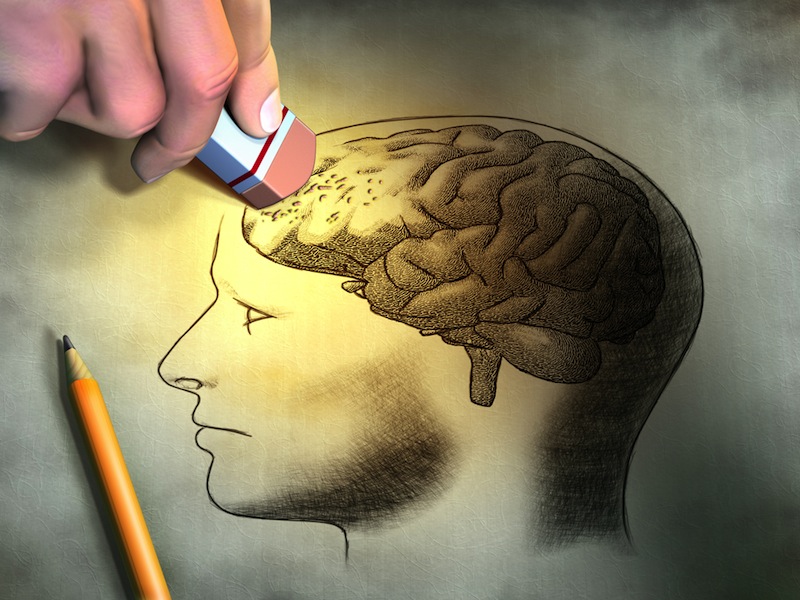
Do Forgotten Memories Leave a Trace in Our Brain? Have you ever wondered if memories that seem lost forever still exist somewhere in your brain? Maybe it’s a childhood birthday party, a long-forgotten math lesson, or a fleeting moment from years ago. You can’t recall it consciously, but could your neurons still “remember” it in some way? Neuroscience has made enormous strides in understanding how memories form and fade, but the question of whether forgotten memories leave detectable physical or electromagnetic traces remains largely unexplored. Let’s dive into the science behind memory, forgetting, and the tantalizing possibility of hidden traces in our brains.
What happens when we forget something?
Forgetting is often thought of as a simple disappearance—a memory that was once there is now gone. But the reality is more complex. Memories are encoded as networks of neurons communicating through electrochemical signals. These networks, called engrams, can strengthen or weaken over time depending on how often they’re activated.
When you forget, it’s not always that the memory is erased. Instead, the connections that make it accessible may weaken, or competing memories may interfere. In some cases, the memory may become “latent,” meaning it’s inaccessible to conscious recall but still exists in some form within the neural circuits. This raises the intriguing possibility that even “forgotten” memories might leave detectable signatures in the brain.
Could these traces be physical?
Scientists know that memories involve changes in the structure and function of neurons. Synapses—the connections between neurons—can grow stronger, weaker, or even new ones can form as part of learning. Long-term potentiation (LTP), a process where repeated activation strengthens synapses, is considered a key mechanism of memory storage.
If a memory becomes inaccessible, it’s possible that some of these structural changes persist, even when you can’t consciously recall the memory. Think of it like footprints in sand: the tide may erase the obvious marks, but faint impressions remain. Detecting these faint traces, however, is a huge challenge. They are microscopic, spread across complex networks, and often mixed with countless other signals from ongoing brain activity.
What about electromagnetic signals?
Neurons communicate using electrical impulses. When millions of neurons fire together, they generate electromagnetic fields that can be measured outside the skull using techniques like electroencephalography (EEG) or magnetoencephalography (MEG). Could forgotten memories produce detectable electromagnetic “echoes”?
Theoretically, if latent memory traces involve subtle patterns of neural activity that persist over time, they might influence the brain’s electrical landscape. Detecting these faint signals would require extremely sensitive tools and clever experimental designs. Researchers would need to compare brain activity related to memories that are consciously accessible versus those that are inaccessible but may still exist at a latent level.
Has anyone tried to detect these traces?
Direct evidence in humans is scarce, mostly because current technology limits our ability to detect the microscopic changes underlying individual memories non-invasively. Most research on memory traces, or engrams, comes from animal studies. In rodents, scientists can label and reactivate neurons involved in specific memories using advanced genetic techniques. Remarkably, some “forgotten” memories can be artificially reactivated, suggesting that the underlying neural traces persist even when the animal shows no behavioral evidence of recall.
In humans, some studies have hinted at residual traces of “forgotten” experiences. Functional MRI (fMRI) research has shown that cues related to memories we cannot consciously recall can still subtly activate associated brain regions. Similarly, studies on implicit memory—where past experiences influence behavior without conscious awareness—suggest that the brain retains some information even after explicit recall is lost.
Why is this question important?
Understanding whether forgotten memories leave detectable traces has far-reaching implications. First, it could fundamentally change how we think about memory itself. If memories never fully vanish, then “forgetting” is more about accessibility than erasure. This could influence education, therapy, and strategies for skill retention.
In medicine, detecting residual memory traces could help in conditions like Alzheimer’s or other dementias. If latent memories persist even after apparent cognitive decline, new therapies might aim to reactivate them or strengthen the remaining networks. Similarly, understanding the electromagnetic signatures of latent memories could improve brain-computer interfaces or neurofeedback technologies.
On a philosophical level, it challenges the notion of what it means to remember. Are we defined only by the memories we can consciously access, or do the echoes of forgotten experiences subtly shape who we are?
What are the challenges in detecting these traces?
Despite its allure, detecting residual memory traces in humans is extremely difficult. Non-invasive methods like EEG and MEG provide excellent temporal resolution but limited spatial resolution, making it hard to pinpoint tiny neural circuits. fMRI offers better spatial resolution but measures blood flow rather than direct electrical activity, which is only an indirect proxy for neuronal firing.
Additionally, the brain is noisy. Billions of neurons fire constantly, creating a dynamic background that can mask the faint signatures of latent memories. Designing experiments that can isolate these signals requires innovative approaches, often combining behavioral tests, machine learning, and advanced imaging techniques.
Could we ever “read” forgotten memories?
It’s tempting to imagine a future where we could scan a person’s brain and recover lost memories. However, even if traces exist, they are likely highly distributed, context-dependent, and subtle. Current science is far from being able to reconstruct detailed forgotten experiences. But incremental progress is being made. For example, machine learning algorithms can now detect patterns of neural activity associated with specific types of memory, and research in rodents shows that artificially activating engram neurons can bring back forgotten behaviors.
A realistic near-future goal is not mind-reading in the science fiction sense, but detecting residual patterns that indicate whether a memory exists in some latent form. This could be a first step toward therapies that help recover forgotten skills or mitigate memory loss.
What’s next for this line of research?
The study of forgotten memories is still in its infancy. Researchers are exploring new non-invasive methods to detect faint neural traces, including ultra-high-resolution imaging, advanced EEG and MEG signal processing, and computational models that can predict latent memory networks. Animal studies continue to provide a blueprint, showing that even memories that seem erased behaviorally may persist in the neural architecture.
Ultimately, this line of inquiry could transform our understanding of the human mind. Forgetting might not be the loss we assume it is, but rather a veil that obscures a deeper layer of memory traces quietly shaping our thoughts, behaviors, and identity.
Conclusion
So, do forgotten memories leave a trace in the brain? The evidence is still circumstantial, but growing. Animal studies, indirect human experiments, and our understanding of neural plasticity all suggest that traces of seemingly lost memories may persist at a microscopic or electromagnetic level. Detecting and understanding these traces is a daunting challenge, but one with potentially profound implications for neuroscience, medicine, and our very concept of memory.
Next time you can’t recall that forgotten birthday or fleeting childhood moment, consider this: your brain may still remember it, even if you do not. The memory might be sleeping, quietly shaping who you are, waiting for science to awaken it.