
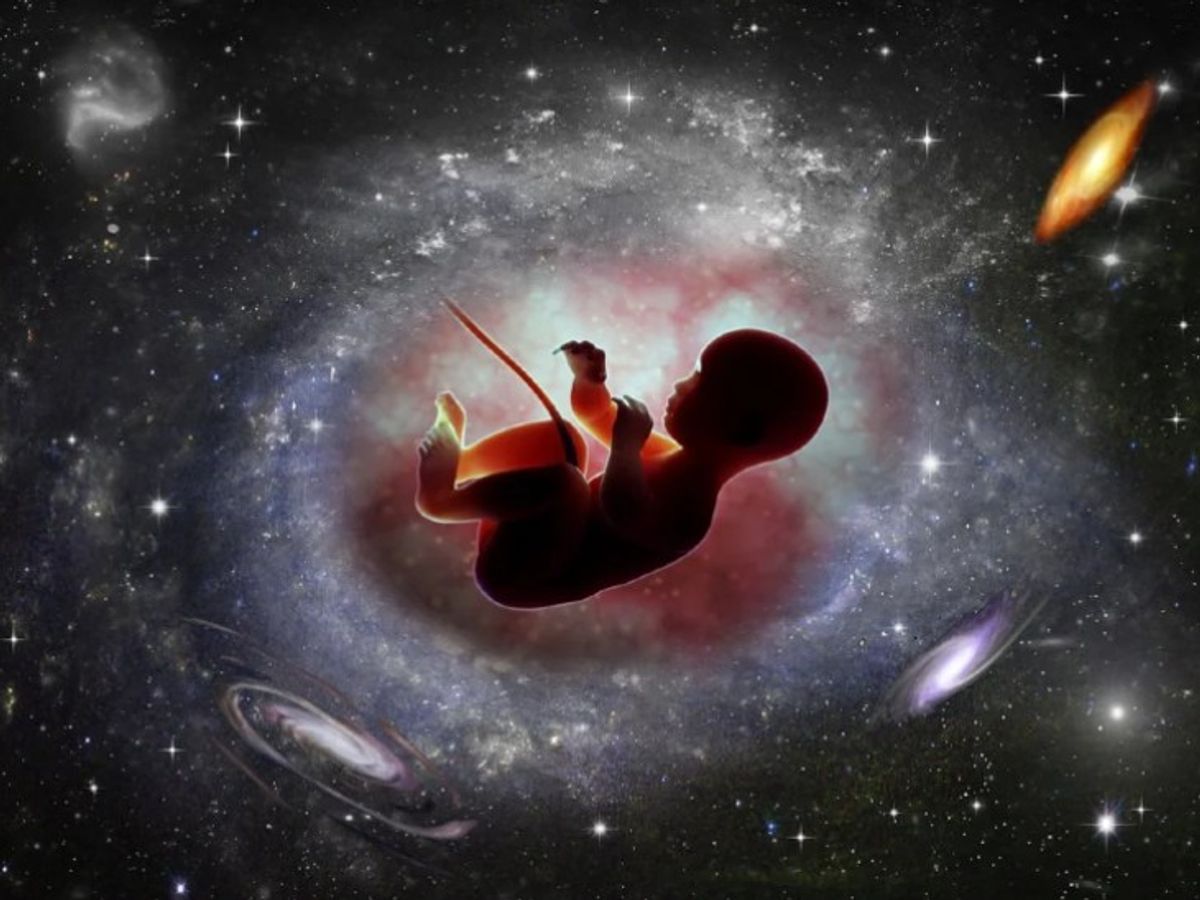
First Artificial Womb in Space: Raising Humans Off-Earth- Picture this: a tiny human embryo developing inside a bioreactor orbiting Mars, entirely outside a human body. This is not science fiction—it’s the emerging frontier of artificial womb technology, or ectogenesis, combined with off-world colonization.
As humanity plans to settle the Moon, Mars, and orbital habitats, artificial wombs could allow human populations to grow off-Earth without the physiological risks of pregnancy in microgravity. But they also raise profound ethical, medical, and societal questions.
What Is an Artificial Womb?
An artificial womb is a biomedical device that mimics the human uterus, providing oxygen, nutrients, and waste removal for embryos or fetuses. Core components include:
-
Amniotic fluid simulation – Supports cushioning, temperature regulation, and nutrient transfer.
-
Blood or nutrient circulation system – Replicates oxygen and nutrient delivery like the placenta.
-
Hormonal and chemical regulation – Ensures proper fetal development.
-
Environmental control – Manages temperature, pressure, and protection from radiation (critical in space).
On Earth, artificial wombs are being tested for premature infants. In space, they could be a tool for human reproduction and population sustainability where natural pregnancy is high-risk.
Why Space Pregnancy Is Risky
Microgravity and radiation make human reproduction in space extremely challenging:
-
Musculoskeletal issues – Bones and muscles weaken without gravity, affecting fetal development.
-
Radiation exposure – Cosmic rays can damage DNA and increase cancer risk.
-
Cardiovascular stress – Pregnancy alters heart function, which is further complicated in microgravity.
-
Psychological and logistical challenges – Long-duration missions make natural childbirth difficult.
Artificial wombs bypass these risks, allowing safe gestation without endangering the mother.
Scenario: The First Orbital Birth
Imagine the year 2045:
-
A space station orbiting Mars houses the first artificial womb designed for full-term gestation.
-
An embryo is placed in the womb, which provides controlled oxygen, nutrients, and hormonal signals.
-
AI and robotic systems continuously monitor development, adjusting for microgravity effects and shielding from cosmic radiation.
-
After nine months, a healthy baby is delivered inside a pressurized birthing chamber, ready for life in a human-habitable habitat.
This scenario demonstrates technical feasibility, but it also triggers ethical and societal debates.
Ethical Dilemmas
1. Rights of Off-Earth Children
-
Do children gestated in artificial wombs have the same rights as Earth-born humans?
-
How do we ensure mental, emotional, and social development when the child begins life in artificial or robotic care?
2. Parental and Societal Responsibility
-
Who is responsible for a child born in space?
-
If AI systems manage fetal development, do humans retain moral responsibility, or does responsibility shift to the technology?
3. Consent and Autonomy
-
A fetus cannot consent to gestation in space or artificial wombs.
-
Do parents or space agencies have the ethical right to engineer the environment or genetics for off-world survival?
4. Psychological and Sociological Impact
-
How will children raised partially or entirely off-Earth develop psychologically?
-
Could artificial wombs contribute to inequality, with certain colonies or societies prioritizing “engineered” humans?
Technical Challenges in Space
-
Microgravity Adaptation – Fluid dynamics in wombs are different in low-gravity environments.
-
Radiation Shielding – Cosmic rays can harm DNA, requiring advanced shielding.
-
AI Monitoring Systems – Continuous fetal monitoring must be autonomous and highly reliable.
-
Nutrient Synthesis and Delivery – Space habitats may need closed-loop systems to supply nutrients.
Even with these systems, scientists must consider long-term health effects, from bone density to immune system development, unique to space-born humans.
Q&A: Off-Earth Ectogenesis
Q: Can artificial wombs produce fully healthy humans in space?
A: In principle, yes, but long-term studies are needed on developmental effects of microgravity, radiation, and isolation.
Q: Who would “parent” a space-born child?
A: Likely a combination of human caregivers, AI monitoring systems, and mission planners—raising ethical and legal questions.
Q: Will these children adapt to Earth if they ever return?
A: There may be physiological differences (muscle strength, bone density, cardiovascular system). Rehabilitation and adaptation programs would be required.
Q: Could we engineer humans to thrive off-Earth from conception?
A: Technologically possible, but highly controversial. It raises ethical concerns about eugenics, autonomy, and societal inequality.
Why Artificial Wombs Could Be Essential for Space Colonization
-
Population sustainability – Colonies can grow even if natural pregnancy is risky or impossible.
-
Health and safety – Eliminates pregnancy-related complications in harsh environments.
-
Resource efficiency – Reduces life-support demands on pregnant humans.
-
Scientific knowledge – Understanding human development in space could improve medicine and biology on Earth.
Artificial wombs may accelerate humanity’s expansion into the solar system, providing a controlled environment for human life where natural gestation is dangerous.
Expert Perspectives
Dr. Maya Chen, space biologist:
“Artificial wombs are not just a technological challenge—they are an ethical frontier. They force us to ask what it means to be human and how we care for the first generation of space-born humans.”
Prof. Lars Feldman, aerospace engineer:
“Shielding, microgravity adaptation, and autonomous monitoring are the engineering hurdles. The real challenge is integrating these systems safely into habitats that can sustain life long-term.”
Dr. Anika Patel, ethicist:
“Consent, autonomy, and societal impact are paramount. Space-born children may be pioneers, but we must ensure they are not treated as mere experiments.”
Looking Toward 2030 and Beyond
While full-term space gestation may still be decades away, near-term developments include:
-
Artificial womb prototypes on Earth for preterm infants.
-
Microgravity experiments studying embryonic development in low-gravity environments.
-
AI-assisted monitoring systems that could later be adapted for orbital or Martian habitats.
-
Ethical frameworks and space law discussions on the rights of off-Earth humans.
By mid-century, artificial wombs may allow humanity to expand its presence in space safely, but only with careful ethical oversight and technical mastery.
Scenario: A Society of Space-Born Humans
Imagine a settlement on Mars with 50 children gestated in artificial wombs:
-
They are raised in AI-assisted educational pods, with limited human contact at first.
-
Nutritional and environmental controls are tailored to Martian gravity and radiation levels.
-
Psychologists design social interactions to support healthy emotional and cognitive development.
This raises questions about identity, belonging, and psychological health. Will these space-born humans feel like pioneers, or like engineered experiment subjects?
Key Takeaways
-
Artificial wombs could revolutionize space colonization by allowing safe human reproduction off-Earth.
-
Ethical questions about rights, consent, and autonomy must guide their use.
-
Technical challenges include microgravity adaptation, radiation shielding, and autonomous monitoring.
-
Space-born humans will require careful social, psychological, and legal planning to thrive.
Key Takeaways
The first artificial womb in space represents more than biotechnology innovation—it is humanity’s first attempt to raise life entirely outside Earth. It challenges us to confront questions about life, ethics, and responsibility in an environment where survival depends on engineering, AI, and human foresight.
Artificial wombs may allow us to expand across the solar system, but they force a deeper reflection: what does it truly mean to be human, and how will our first generations off-Earth shape the future of civilization?
The cosmos may soon host humans who never saw Earth, born in orbiting laboratories or Martian habitats—a profound leap for science, ethics, and humanity itself.


