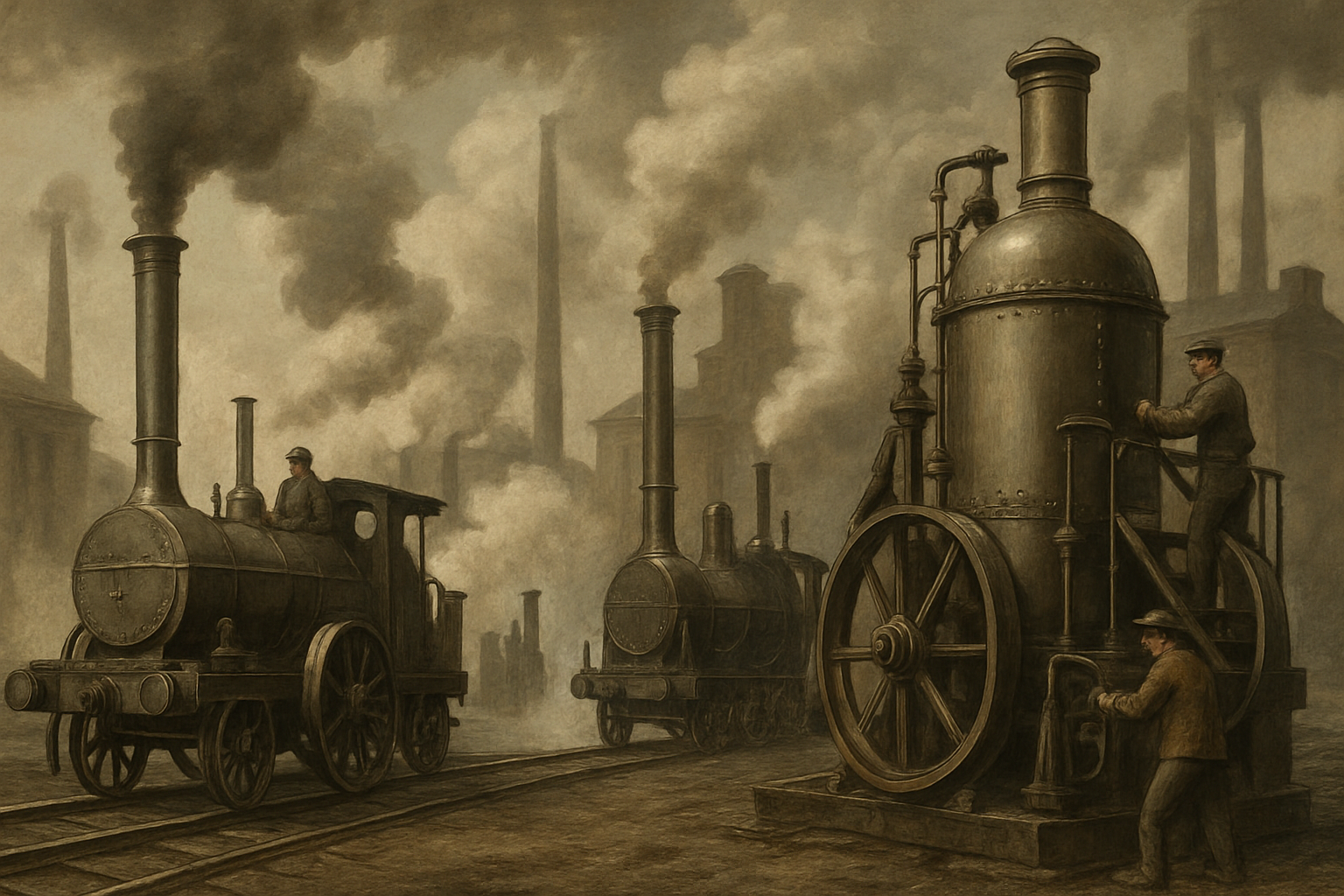
History of Technology: From Steam Engines to the AI Revolution –Technology is one of humanity’s greatest driving forces. It has shaped our societies, transformed daily life, and opened new possibilities for work, travel, communication, and knowledge. From the first steam-powered machines to the era of artificial intelligence, every technological leap has marked a turning point in human history. This article explores the major stages of technological development, the innovations that defined each era, and the impact these changes continue to have on our world.
Table of Contents
Toggle1. The Age of Steam: Powering the Industrial Revolution
Before the 18th century, most societies depended on manual labor, animals, or simple water- and wind-powered systems. The advent of the steam engine changed everything. In the late 1700s, inventors such as James Watt improved early designs to create engines that could power machines more efficiently than ever before.
Key Impacts of the Steam Engine
-
Industrialization: Factories powered by steam engines transformed manufacturing. Goods that once took weeks to produce could now be made in days.
-
Transportation: Steam-powered trains and ships shrank distances, making travel and trade faster and more reliable.
-
Urban growth: People moved from rural areas to cities to work in factories, giving rise to new urban centers and lifestyles.
The steam engine marks the beginning of modern industrial society. It sparked the shift from handmade goods to mass production and set the stage for future technological breakthroughs.
2. Electricity and the Second Industrial Revolution
The late 19th century witnessed another major transformation: the widespread use of electricity. Scientists like Michael Faraday and inventors such as Thomas Edison and Nikola Tesla developed systems that brought electric power into homes, factories, and streets.
Important Inventions of the Electrical Age
-
Light bulbs that allowed extended working hours and safer homes
-
Electric motors that replaced steam power in many industries
-
Telegraphs and telephones, enabling rapid communication across continents
Electricity brought convenience and efficiency to daily life. It made possible new inventions such as elevators, electric trains, and early appliances like fans and refrigerators. This period also saw the rise of chemical industries, steel production, and more advanced machines.
3. The Mechanical Age Gives Way to the Digital Age
By the mid-20th century, technology took another leap forward: the shift from mechanical and electrical systems to digital computing.
Early Computers
The first computers, like ENIAC and UNIVAC, were huge machines that filled entire rooms. They relied on vacuum tubes and performed simple calculations for military, scientific, and business applications. Despite their size and limitations, they demonstrated the potential of digital logic.
Transistors and Microprocessors
The invention of the transistor (1947) and later the integrated circuit dramatically reduced the size and cost of computers. By the 1970s, microprocessors made personal computers (PCs) possible.
Rise of Software
During the 1980s and 1990s:
-
Operating systems (like early versions of Windows and Mac OS) transformed computers into user-friendly tools.
-
Word processors, spreadsheets, and early digital graphics programs changed education, business, and science.
-
Video games and home computers introduced digital entertainment to millions of people.
The digital revolution was not only about machines—it reshaped how humans interacted, worked, and learned.
4. The Internet Era: A Connected World
Perhaps no invention changed modern life more than the internet. Originally created in the late 20th century for military and academic use, the internet became publicly accessible in the 1990s.
Transformative Impacts
-
Communication: Email, instant messaging, and later social media platforms connected billions of people.
-
Information: Search engines and digital libraries gave unprecedented access to knowledge.
-
Economy: Online shopping, online banking, and e-commerce redefined global trade.
-
Entertainment: Streaming platforms, digital music, online gaming, and video sharing transformed culture.
The internet revolutionized every industry—from finance to healthcare—and laid the foundation for more advanced technologies like cloud computing, big data, and artificial intelligence.
5. Mobile Technology and the Rise of Smart Devices
In the early 21st century, computing became portable. Smartphones, tablets, and wearable devices made technology personal and always accessible.
Key Innovations
-
Touchscreen smartphones combined communication, photography, navigation, and computing in one device.
-
GPS technology enabled real-time location tracking, revolutionizing travel and logistics.
-
Mobile apps created new industries, from ridesharing to food delivery to online learning.
Mobile technology shifted how people consume media, socialize, shop, and access information—anytime and anywhere.
6. The Age of Automation and Robotics
As digital power increased, industries began adopting robotics and automation.
Applications
-
Factories used robots for precision manufacturing.
-
Hospitals used robotic arms for delicate surgeries.
-
Drones entered fields such as filmmaking, agriculture, and environmental monitoring.
Automation increased efficiency and accuracy but also raised questions about job displacement and the skills needed for future work.
7. Artificial Intelligence: The Most Transformative Technology Yet
The development of artificial intelligence (AI) marks a new technological frontier. While early AI systems focused on narrow tasks—like recognizing handwriting or playing chess—modern AI can learn patterns, understand language, and even generate original content.
Major Areas of AI Development
-
Machine learning: Algorithms that learn from data to make predictions.
-
Natural language processing: AI that can understand and generate human language (e.g., language models and chatbots).
-
Computer vision: AI that identifies objects in images or videos.
-
Generative AI: Systems capable of creating text, music, images, code, and more.
Impact of AI
AI is transforming:
-
Healthcare, through diagnostic tools and drug discovery
-
Transportation, with self-driving cars and navigation systems
-
Education, with personalized learning platforms
-
Business, through automation, analytics, and customer service
-
Creative industries, through AI-assisted art, design, and writing
AI represents the most powerful tool humans have created—one that mirrors aspects of human reasoning and creativity.
A Journey of Continuous Innovation – Final Thoughts
From the steam engine that powered the first factories to the AI tools shaping modern communication and science, the history of technology is a story of constant transformation. Each invention builds on earlier discoveries and solves new challenges. Technology has extended human capabilities, reshaped societies, and created interconnected global communities.
As we move further into the age of intelligent machines, humanity faces new opportunities and responsibilities. Understanding our technological past helps us navigate the future—one where innovation will continue to redefine what is possible.