
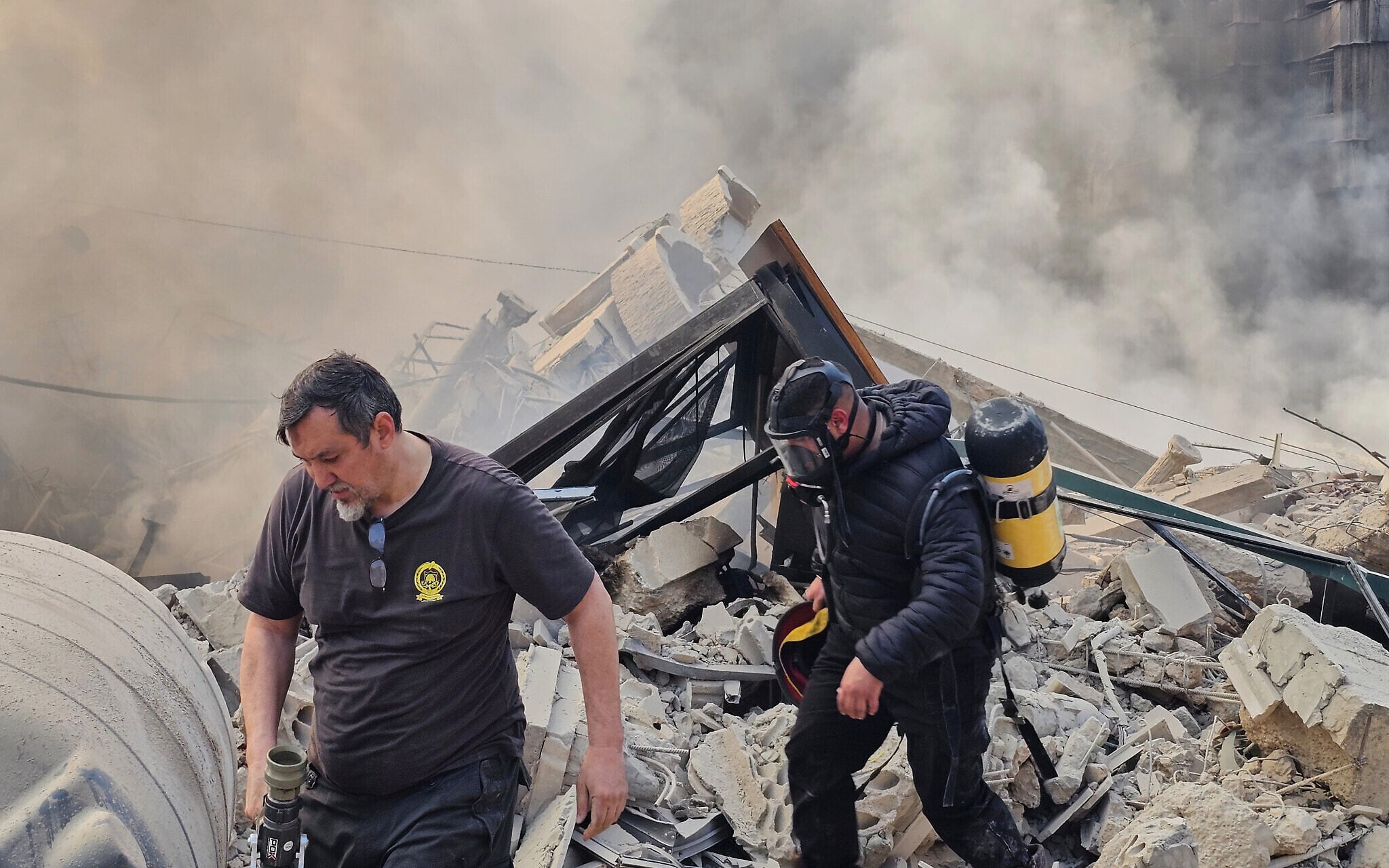
IDF Threatens Iranian Officials as Hezbollah Fires on Central Israel
Hezbollah launched a major rocket and drone assault on central and northern Israel on Tuesday, marking its first long-range attack since the outbreak of the U.S.–Israel war with Iran. The escalation comes as Israel responded with a wave of airstrikes targeting Hezbollah infrastructure in southern Lebanon, and issued unprecedented warnings to Iranian officials operating in Lebanon, demanding they leave within 24 hours or face targeted action.
The Lebanese militant group, backed by Tehran, resumed attacks after a long hiatus, retaliating for the killing of Iranian Supreme Leader Ayatollah Ali Khamenei in a coordinated strike by the U.S. and Israel. On Tuesday, Hezbollah fired several rockets toward Tel Aviv and the Haifa area, setting off sirens across central and northern Israel. Two rockets were intercepted by Israeli air defenses, while a third landed in an open area, causing no injuries.
In addition to the strikes on central Israel, Hezbollah targeted northern border areas with dozens of rockets and several drones. One rocket hit a residential home in a border community, injuring a resident. Hezbollah claimed responsibility for firing at Israeli Merkava tanks near the villages of Kfar Shouba and Kfarkela. The group also claimed to have shot down an Israeli drone.
A senior Hezbollah official told regional media that after more than a year of abiding by a ceasefire, the group’s patience had ended in response to continued Israeli strikes on Lebanese territory. “The Zionist enemy wanted an open war, which it has not stopped since the ceasefire agreement,” said Mohamoud Komati. “So let it be an open war.”
Israeli Military Response
In retaliation, the Israel Defense Forces (IDF) launched a series of airstrikes targeting Hezbollah positions across southern Lebanon. The IDF reported striking around 60 locations, including weapon depots, missile launchers, command centers, and other operational infrastructure. Some of the strikes also targeted infrastructure linked to Hezbollah and Hamas in the cities of Sidon and Tyre.
The IDF said one of the strikes hit a Hezbollah rocket launcher used in attacks on the Golan Heights. A drone strike killed a Hezbollah operative along with several other members of the group who had fired an anti-tank missile at Israeli troops near the village of Arnoun. The IDF emphasized that all strikes were preceded by evacuation warnings for civilians living near targeted sites, covering over 80 villages across southern Lebanon.
Threats to Iranian Officials
In an unusual escalation, Israel directly warned Iranian officials in Lebanon to leave the country within 24 hours. Army spokesman Col. Avichay Adraee said, “After that, there will be no safe place for representatives of the Iranian regime in Lebanon, and the IDF will target them wherever they are found.” The warning underscores Israel’s determination to hold Tehran accountable for regional destabilization and signals a potential expansion of military operations against Iranian personnel in Lebanon.
Prime Minister Benjamin Netanyahu, visiting Palmachim Airbase with Defense Minister Israel Katz and IDF Chief of Staff Lt. Gen. Eyal Zamir, said that Hezbollah had made a “very big mistake” by attacking Israel. Netanyahu stressed that the military would respond forcefully and continue to defend Israeli citizens. “Hezbollah is dragging Lebanon into a war solely because of the death of that mass murderer [Khamenei], with whom they have no connection,” Netanyahu said.
Casualties and Humanitarian Impact
The escalation has already had a severe impact on Lebanese civilians. Local authorities reported at least 50 deaths and 335 injuries, with tens of thousands displaced due to airstrikes and ongoing shelling. Many families have fled from southern towns and villages, seeking safety further north or across the Lebanese border into Syria.
The UN High Commissioner for Refugees (UNHCR) reported a surge in crossings from Lebanon into Syria, with 10,629 people entering Syria on Monday alone, compared to the usual 3,900–4,400 daily crossings. The majority were Syrians who had been living in Lebanon, though a smaller number of Lebanese citizens were also reported among the refugees.
Syrian Border Reinforcements
In response to the escalating conflict, Syria has reinforced its border with Lebanon, deploying additional troops and rocket units to prevent infiltration by Hezbollah or other militant groups. Syrian military officials stated that the reinforcements aim to curb arms and drug smuggling and to prevent regional instability from spilling into Syrian territory. Damascus has emphasized that these measures are defensive, with no intention of launching attacks against neighboring countries.
Internal Lebanese Actions
The Lebanese government has also taken steps to assert control over Hezbollah’s operations. The Lebanese army reportedly arrested 12 armed Hezbollah members at checkpoints after Prime Minister Nawaf Salam labeled Hezbollah’s military actions “illegal.” Lebanese President Joseph Aoun informed foreign ambassadors from Saudi Arabia, Qatar, the United States, France, and Egypt that Hezbollah had fired rockets from areas north of the Litani River, which are nominally under army control.
U.S. Reaction
The conflict has drawn attention from U.S. lawmakers, with Republican Senator Lindsey Graham urging Washington to take more direct action alongside Israel. He called on the U.S. to strike Hezbollah, arguing that the group has American blood on its hands and operates as a proxy for Iran in Lebanon.
Broader Regional Implications
The latest escalation between Hezbollah and Israel represents a dangerous intensification of the Iran–U.S.–Israel conflict in the Middle East. Israeli airstrikes, Hezbollah rocket attacks, and threats against Iranian officials signal a potential widening of the war, with civilians bearing the brunt of the violence.
Thousands have already been displaced, and the humanitarian situation continues to worsen, raising concerns over a regional refugee crisis. Analysts warn that prolonged fighting could destabilize neighboring countries, increase refugee flows, and disrupt trade and energy routes in the region.
The Bottom Line
Hezbollah’s renewed attacks, coupled with Israel’s aggressive airstrikes and warnings to Iranian officials, have significantly escalated the conflict in Lebanon and northern Israel. With casualties mounting and tens of thousands displaced, the situation remains highly volatile.
The confrontation underscores the fragile balance of power in the region and highlights the risk of broader military escalation involving Hezbollah, Iran, and Israel. As both sides intensify their operations, the humanitarian, political, and security consequences for Lebanon, Israel, and the wider Middle East are likely to be severe.
The coming days will be critical in determining whether this escalation can be contained or if it spirals into a broader regional conflict, with far-reaching consequences for stability, security, and civilian populations across the Middle East.
Do Japan and South Korea Have Surprising Cultural Similarities? | Maya

